
How to Find and Fix Bottlenecks to Boost Throughput
Boost Throughput by Fixing Process Bottlenecks
Discover proven strategies to identify and fix bottlenecks, optimize production flow, and boost business performance for lasting operational improvement.
This article will explain in clear steps how to pinpoint BOTTLENECKS hampering business throughput and apply PROCESS IMPROVEMENT techniques for continuous growth. The guide covers understanding the impact of bottlenecks, practical methods to identify them using time studies and quality tools, and actionable steps to implement lasting improvements. Readers will gain insights to optimize production flow and enhance overall performance.
Bottlenecks are the hidden saboteurs of productivity – tiny restrictions that can reduce an entire process to a trickle. Imagine a bustling highway with multiple lanes merging into a narrow one-lane bridge; no matter how many vehicles rush onto the highway, the overall flow is determined solely by that constrained segment. This analogy encapsulates the core truth: every production line, every business process, is only as fast as its slowest, limiting step. In today’s agile and data-driven business arena, understanding and eliminating these chokepoints is the difference between fleeting efficiency and sustainable operational excellence.
Understanding the Impact of Bottlenecks
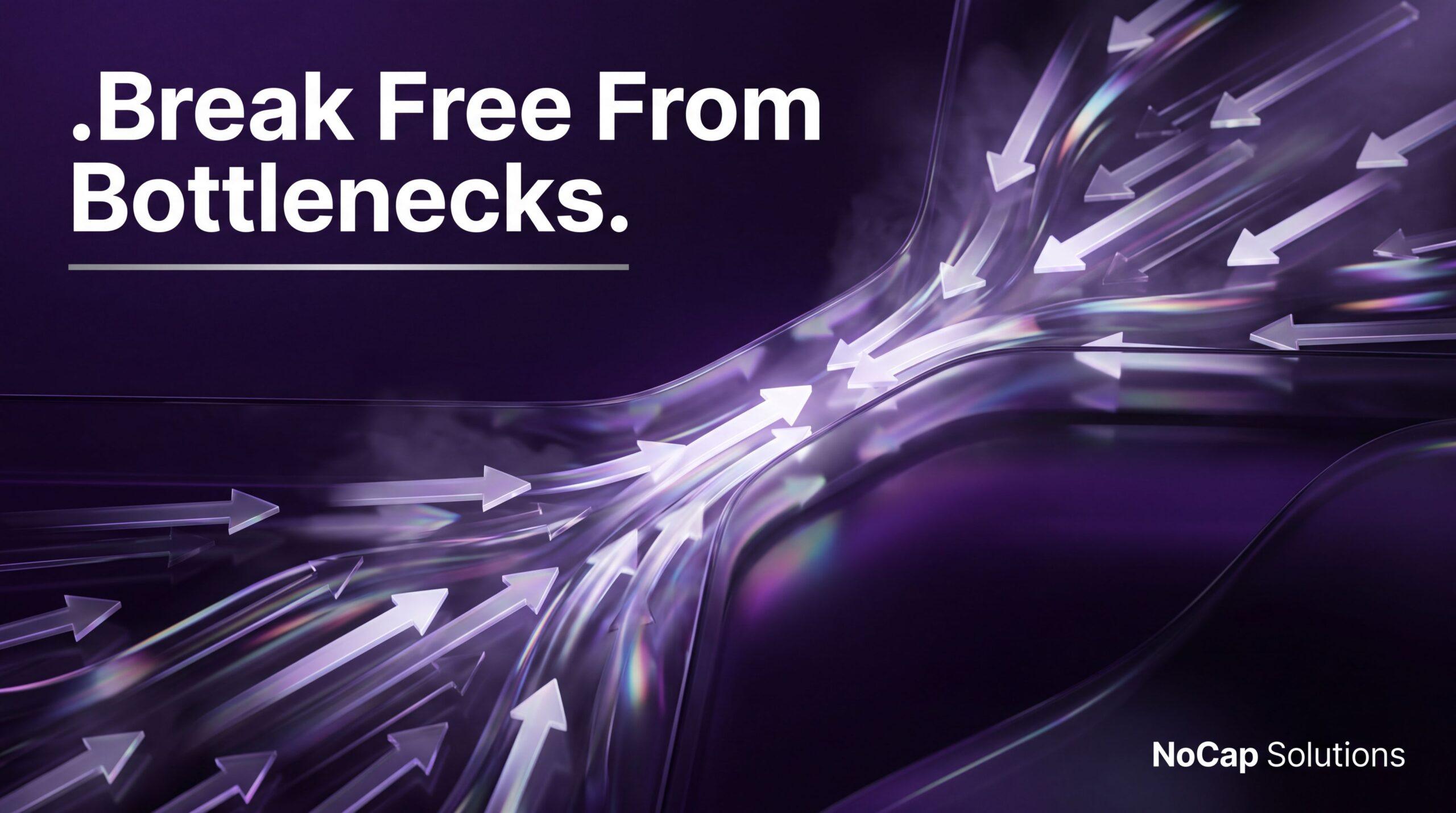
In any production or business process, multiple streams of work come together to produce outcomes, much like various arrows converging onto a single endpoint. In an ideally balanced system, every stage works in harmony to deliver peak output. Yet, reality often diverges from this norm. A process might begin with four distinct flows – each representing different teams, machines, or system components – but closer to the endpoint, the capacity might shrink drastically to just two outputs. This dramatic narrowing down is the essence of a bottleneck.
The Flow of Production and the Limiting Factor
At the heart of any operational system is the concept of flow. Visualize a production line where different sections process data, assemble components, or drive customer interactions. Even if one section of the process operates at an extremely high capacity, the overall throughput is capped by the segment that functions slower than the rest. In the metaphor of the arrows, even a production line humming at 18,000 arrows per minute loses its advantage if the final segment can only funnel out two arrows at a time. The entire system is impinged by that one chokepoint, demonstrating that the whole process is only as fast as its limiting step.
This principle stretches far beyond manufacturing. In marketing, for example, a company might generate vast amounts of leads, yet if its sales team cannot process these leads swiftly, the extra capacity does not translate into meaningful revenue. Similarly, in customer support, an AI-driven system might handle thousands of queries per hour, but if one part of the ticket resolution workflow slows down responses, the overall customer experience suffers. Recognizing the centrality of the bottleneck is the first step to orchestrating a more harmonious, high-speed workflow.
The Domino Effect of Imbalanced Processes
When a bottleneck exists in one segment of the process, the negative impact reverberates throughout the system. A slow operation can create a cascading set of consequences: idle resources upstream, frustrated customers downstream, and a continual misalignment between potential and performance. For leadership teams, this means that decisions made based on incomplete or outdated data can lead to further inefficiencies. Bonds between departments weaken when each team is misaligned on what the actual outputs are, potentially sparking disputes over performance metrics and accountability.
A business that is reactive rather than proactive might end up trying to boost capacity in already efficient areas. However, without addressing the core limiting factor, additional resources and enhancements only add to the frustration, as the critical bottleneck remains unchanged. Ultimately, these issues underline why effective process balancing and design are so crucial. When the entire process is re-engineered with the bottleneck in mind, each step seamlessly synchronizes to ensure that capacity is maximized and resources are optimally allocated.
Real-World Implications and Strategic Perspective
Bottlenecks are not just an operational nuisance – they represent a strategic vulnerability. In sectors ranging from manufacturing to digital services, companies must continuously assess how well their systems perform under pressure. Consider a large-scale e-commerce operation: if the order fulfillment process has a bottleneck at the packaging stage, even the most efficient logistics and payment departments cannot elevate overall performance. The insights derived from understanding bottlenecks empower leadership teams to reallocate investments, streamline procedures, and implement innovations that transform potential into tangible outcomes.
When leadership teams observe that a single stage is dragging down the entire business, the imperative is clear: invest in redesigning the process, balancing the flow, and ultimately ensuring that every component operates at its highest capacity. The return on this investment is not merely in increased numbers but in enhanced customer satisfaction, improved employee morale, and better strategic decision-making driven by a truly integrated system.
Techniques for Identifying Bottlenecks
Before a bottleneck can be eliminated, it must first be identified. This discovery process typically involves a combination of time studies, quality assessments, and performance analytics. Without knowing where the slowdown occurs, any attempt at remediation is akin to guessing in the dark.
Time Studies and Cycle Time Measurements
In production and service environments alike, time studies are a proven method for uncovering inefficiencies. A time study involves observing and measuring the cycle time – the amount of time it takes for a unit of work to move through a particular stage of a process. For instance, in a manufacturing plant, employees might record the time taken at each station as a piece moves along the production line. Similarly, in a sales process, the duration from lead generation to final conversion is measured.
These studies provide granular insight into how long each step takes and spotlight the one where delays accumulate. Even when one process could potentially handle a large volume of output in theory, if its cycle time is significantly longer than that of preceding or subsequent processes, it becomes the likely candidate for the bottleneck. In essence, the slower process, even if hidden within a multi-stage operation, unmistakably dictates the upper limit on production capacity.
Quality Analysis Tools for Non-Time-Related Bottlenecks
Not all bottlenecks are found through time measurements. Sometimes, issues of quality and process integrity can be just as limiting. When quality errors emerge, they compromise throughput by forcing rework or causing delays while issues are rectified. Tools such as the 5 Whys and fishbone diagrams (also known as Ishikawa diagrams) play a crucial role in these investigations. While the 5 Whys method involves drilling down into the root cause of a problem by asking a series of “why” questions, fishbone diagrams visually map out cause and effect relationships to identify areas where errors originate.
For example, imagine an assembly line where a specific component fails quality checks intermittently. A fishbone diagram might reveal that the component failure is linked to inconsistencies in raw material quality or variations in assembly techniques. In turn, the 5 Whys analysis could determine that the root issue was inadequate training in that segment of the workflow. Both tools are indispensable for uncovering non-time-related bottlenecks, as they provide a structured approach to diagnosing the underlying problems.
The Importance of Baseline Statistics and KPIs
Data is the backbone of any continuous improvement strategy. Establishing baseline statistics – such as sales figures, leads per month, or cost per lead – allows a business to understand its current state and set measurable goals for improvement. These baselines form the reference point from which improvements are gauged. For instance, if the historical data shows that a particular process handles an average of 100 units per hour, any deviation from this figure signals an emerging issue.
Key performance indicators (KPIs) are essential here. They act as the pulse of the operation. The right KPIs might include production time, throughput, error rates, or financial metrics, all of which are quantitatively measured. Regular monitoring of these indicators enables an organization to track the health of its operational processes over time. Historical data, when combined with real-time metrics, edges the organization closer to pinpointing inefficiencies that could escalate into critical bottlenecks.
Leveraging Technology for Live Oversight
In today’s environment, technology plays a pivotal role in identifying bottlenecks. Systems that offer real-time oversight enable businesses to monitor performance dynamically rather than solely relying on delayed reports. For instance, NoCap Solutions Live Intelligence and Analytics Dashboards provide leadership teams with consolidated, live views across various operational systems. These dashboards ensure that every change is tracked as it happens so that deviations can be noticed immediately.
A real-time dashboard collects data from multiple sources, offering a consolidated truth across departments. This approach minimizes disputes over data accuracy between sales and finance, for example, because it standardizes definitions and immediately flags any metric that strays from its expected range. The key advantage here lies in the proactive alerting mechanism, where even a slight deviation can prompt an immediate investigation into potential bottlenecks. Thus, technology doesn’t just identify what is happening – it illuminates why it’s happening, enabling timely and effective interventions.
Consolidating Data and Reporting for Strategic Insight
For sustained operational improvement, historical data must be gathered into detailed reports that feed into strategic decision-making. These reports highlight trends that may not be visible from day-to-day monitoring, such as a gradual decline in throughput or a recurring quality issue that appears minor on an individual basis but aggregates into significant losses over time. By compiling this historical data, businesses can create comprehensive performance profiles. These profiles empower leadership to not only address immediate issues but also to plan strategically for future improvements.
When reports are thorough and regularly updated, they act as the guiding compass for a business – indicating where processes are underperforming and where targeted interventions are likely to yield the highest return. Coupled with the insights provided by KPIs and time studies, data-driven reports equip teams to make informed, science-backed decisions that can fundamentally transform business operations.
Implementing Continuous Improvement to Resolve Bottlenecks
Once a bottleneck is clearly identified, the next step is continuous improvement. This phase involves a methodical, step-by-step approach to implementing changes, measuring their impact, and iterating until the limiting factor is effectively neutralized. Continuous improvement is not a one-off fix but a sustained commitment to process excellence.
The Philosophy of Incremental Change
Continuous improvement advocates for one step at a time. This philosophy – sometimes summarized by the Japanese term “Kaizen” – is fundamental to ensuring that improvements are both manageable and measurable. Rather than overloading the system with multiple changes simultaneously, implementing one change allows for a clear attribution of effects. This methodical approach ensures that every adjustment can be evaluated accurately, minimizing unintended consequences. In practice, it means changing one aspect of the process, testing its impact, and then deciding whether to implement further changes.
By isolating variables, businesses can prevent a scenario where multiple simultaneous changes confuse the diagnostic process. Picture a house with faulty wiring: if every outlet is altered at once, determining the root cause of the issue becomes nearly impossible. Instead, by targeting one segment at a time, it becomes feasible to monitor which alteration produces a positive effect and which does not. Such precision is critical when the goal is to remove the bottleneck without inadvertently compromising other parts of the process.
Isolating the Problem – An Analogy to Wiring a House
A compelling analogy often used in continuous improvement is that of wiring a house. When an electrical fault occurs, the solution is not to overhaul every circuit simultaneously but to isolate the specific outlet or circuit that is malfunctioning. Similarly, in business processes, the aim is to isolate the identified bottleneck. Once smaller changes are introduced – much like replacing one faulty wiring segment – the entire system can be tested to confirm that the issue has been resolved.
This incremental approach avoids the pitfall of over-engineering a solution that might introduce more problems than it solves. Leaders are encouraged to replicate the identified problem in a controlled setting. By reproducing the bottleneck, teams can gain clarity on the exact factors at play, ensuring that the proposed solution directly targets the core issue rather than its symptoms. The reliability of improvements can then be objectively measured against established KPIs, confirming that the changes are indeed delivering desired outcomes rather than merely shifting the bottleneck to another point in the process.
Updating Documentation and Training Materials
Once a solution has been proven effective, it is essential to update all relevant process documentation, training materials, and standard operating procedures. This ensures that the improvements are not just temporary fixes but are integrated into the fabric of the organization’s workflow. Updated documentation acts as a reference for current and future employees, reinforcing the new, more efficient processes.
Comprehensive documentation might include revised flowcharts, updated process narratives, and new guidelines for addressing future bottlenecks. Training materials should be refreshed so that every employee understands not only the new process but also the rationale behind the change. This investment in education reinforces a culture of continuous improvement, ensuring that the organization remains agile and responsive to any new challenges that arise.
Continuous Monitoring and the Feedback Loop
The journey toward operational excellence does not end once a bottleneck is resolved – it is a continuous cycle of monitoring, evaluation, and refinement. Continuous monitoring of KPIs is crucial. Even after process improvements are implemented, the system should be periodically re-examined to ensure that its performance remains aligned with expectations. Regular audits and inspections help in identifying any resurgence of old issues or the emergence of new bottlenecks.
A well-designed feedback loop is instrumental for sustaining continuous improvement. This loop involves regularly scheduled reviews where data from live monitoring tools, historical reports, and employee feedback is collated and analyzed. The insights drawn from these reviews provide a basis for further incremental changes, reinforcing the idea that there is always room for improvement. In this way, continuous improvement becomes a dynamic process, driven by both proactive monitoring and reactive adjustments. The organization remains ever-vigilant, ready to address bottlenecks before they evolve into critical obstacles.
Strategic Outcomes and Long-Term Benefits
The systematic approach to identifying and resolving bottlenecks yields profound, long-term benefits. Companies that embrace continuous improvement see not only increased throughput and efficiency but also a healthier bottom line. With each resolved bottleneck, resource allocation becomes more efficient. Employees find satisfaction in smoother workflows, customers enjoy faster service, and leadership benefits from enhanced operational clarity.
From a strategic perspective, addressing bottlenecks is as much about competitive advantage as it is about operational efficiency. When a business can demonstrate consistent, measurable improvements in throughput, it builds a strong case for reinvestment in technology and training. This reinvestment propels the company further ahead of competitors still grappling with inefficiencies. Additionally, the disciplined approach of continuous improvement creates a resilient organizational culture where change is not feared but welcomed as an opportunity for growth.
Integrating NoCap Solutions for Enhanced Process Oversight
In environments where every minute counts and every arrow matters, integrating live oversight tools can be a game-changer. For instance, NoCap Solutions provides the Live Intelligence and Analytics Dashboards that consolidate vital operation data in real time. With these dashboards, leadership teams receive immediate alerts when key metrics deviate from their expected ranges, ensuring that bottlenecks are identified and addressed proactively. This seamless integration of live analytics reinforces the continuous improvement cycle by providing an up-to-date pulse on operations, thereby enhancing both the speed and accuracy of decision-making.
Bringing It All Together: The Journey from Bottleneck to Breakthrough
The process of understanding, identifying, and resolving bottlenecks is not just a technical or operational challenge – it is a strategic endeavor that shapes the overall effectiveness of a business. The ability to pinpoint where production flow is being choked, to methodically address these choke points, and to continuously monitor improvement creates an environment where sustainable growth is possible.
The Strategic Mindset Behind Bottleneck Analysis
At its core, bottleneck analysis demands a mindset that is both analytical and proactive. Executives and operational managers alike must be willing to dive into granular data, scrutinize every step of their workflows, and challenge existing assumptions about where efficiencies can be gained. This approach is grounded in the understanding that every process, no matter how well designed on paper, can harbor hidden inefficiencies. The true challenge – and opportunity – lies in uncovering these inefficiencies and systematically transforming them into strengths.
Consider a company that experiences periodic surges in customer demand. Without proper bottleneck analysis, the company might misinterpret these surges as isolated spikes rather than symptoms of an underlying constraint. By breaking down the process into discrete segments and measuring the performance of each, the strategic leadership can identify whether the surge is absorbed by all segments equally or if one segment is disproportionately affected. Such detailed insights enable targeted interventions, ensuring that the overall system is reinforced against future stress.
Lessons from Manufacturing Applied Across Industries
The principles of bottleneck detection and resolution, while born out of manufacturing, have universal applications. Service industries like hospitality, healthcare, and even software development can benefit from these methodologies. For example, in a healthcare setting, the patient intake process might be slowed by an inefficient administrative system. By applying time studies and quality analyses, hospital administrators can identify the choke point – be it a slow check-in system or delayed diagnostic processing – and implement incremental improvements that ultimately enhance patient care and workflow efficiency.
Similarly, in software development, continuous integration and continuous deployment (CI/CD) pipelines can exhibit bottlenecks in testing or deployment stages. By employing similar techniques – measuring cycle times, conducting root-cause analyses, and leveraging live analytics – development teams can optimize their workflows, thereby reducing downtime and enhancing overall productivity. These cross-industry applications underline the universal importance of understanding that the entire process is only as fast as its weakest link.
Overcoming Resistance to Change
One of the greatest challenges in unlocking the true potential of a business process is overcoming internal resistance to change. Organizations often have deeply ingrained practices and systems that, while familiar, may be inefficient. The psychological and cultural shift required to adopt continuous improvement can be significant. It necessitates trust in data, a commitment to regular review cycles, and a willingness to experiment with incremental changes.
Employee training, transparent communication, and visible leadership endorsement are key to overcoming this resistance. When teams see tangible improvements – reducing delays, enhancing customer satisfaction, and ultimately contributing to higher revenue – a culture of continuous improvement begins to flourish. By methodically addressing each bottleneck and celebrating even small victories along the way, organizations can build momentum that transforms employee skepticism into proactive collaboration.
Measuring Success Through Continuous Learning
The journey from identifying a bottleneck to resolving it is one of continuous learning and adaptation. Success is measured not only in immediate throughput gains but also in the lasting cultural shift that prioritizes precision and agility. Key performance indicators, when consistently and accurately tracked, become both the barometer and the roadmap for future improvements. Over time, what started as a reactionary measure to a visible constraint evolves into a strategic framework for sustained excellence.
In practice, this means that every resolved bottleneck becomes a case study – a learning opportunity that informs future projects, training initiatives, and investments in technology. Organizations that master this continuous learning process position themselves to adapt quickly in a constantly evolving business landscape.
The Interplay of Technology and Human Expertise
While technology provides indispensable tools for monitoring and data analysis, it is ultimately the strategic and critical thinking of leadership and teams that drives substantial change. Tools like NoCap Solutions’ live dashboards empower teams with real-time insights, but the insights must be paired with sound decision-making and a willingness to iterate. When technology and human expertise intersect, the potential for breakthrough improvements becomes limitless.
Regular strategy sessions that blend data analysis with human intuition allow companies to anticipate future bottlenecks before they become problematic. This proactive management approach transforms reactive troubleshooting into strategic foresight, ensuring that every operational facet is continually optimized. In turn, this creates a virtuous cycle of efficiency where technological tools and human insights mutually reinforce each other, propelling the organization toward new levels of performance.
Conclusion
The impact of bottlenecks on business processes is profound and far-reaching. They are the silent inhibitors of efficiency, the hidden factors that can turn a well-oiled machine into a sluggish operation. By fully grasping the dynamics – understanding that a production system is only as strong as its slowest component – businesses can embark on a journey of continuous improvement that not only resolves existing constraints but also sets the stage for future innovation.
Through meticulously executed time studies, rigorous quality analysis, and the strategic use of key performance indicators, the path to identifying and addressing bottlenecks becomes clear. Continuous improvement, when approached incrementally and with precision, transforms isolated defects into opportunities for growth. Moreover, by updating documentation, refining training practices, and establishing robust feedback loops, organizations ensure that these improvements are both lasting and scalable.
In today’s fast-paced business environment, where every moment counts and every decision echoes across the enterprise, breaking free from bottlenecks is both a challenge and an imperative. With the combined power of detailed analytics, committed strategic oversight, and the right technology tools such as NoCap Solutions’ Live Intelligence and Analytics Dashboards, even the most ingrained constraints can be dismantled. Leaders who choose to view bottlenecks not as insurmountable obstacles but as opportunities for targeted refinement position their organizations at the forefront of operational excellence.
By harnessing the insights from detailed time studies, quality analysis techniques like the 5 Whys and fishbone diagrams, and continuously monitoring performance through well-defined KPIs, every business can unlock its true potential. The journey from bottleneck to breakthrough is a dynamic process of evaluation, adaptation, and strategic reinvention – one that transforms instability into a competitive edge, fostering an organizational culture where every process is optimized for success.