
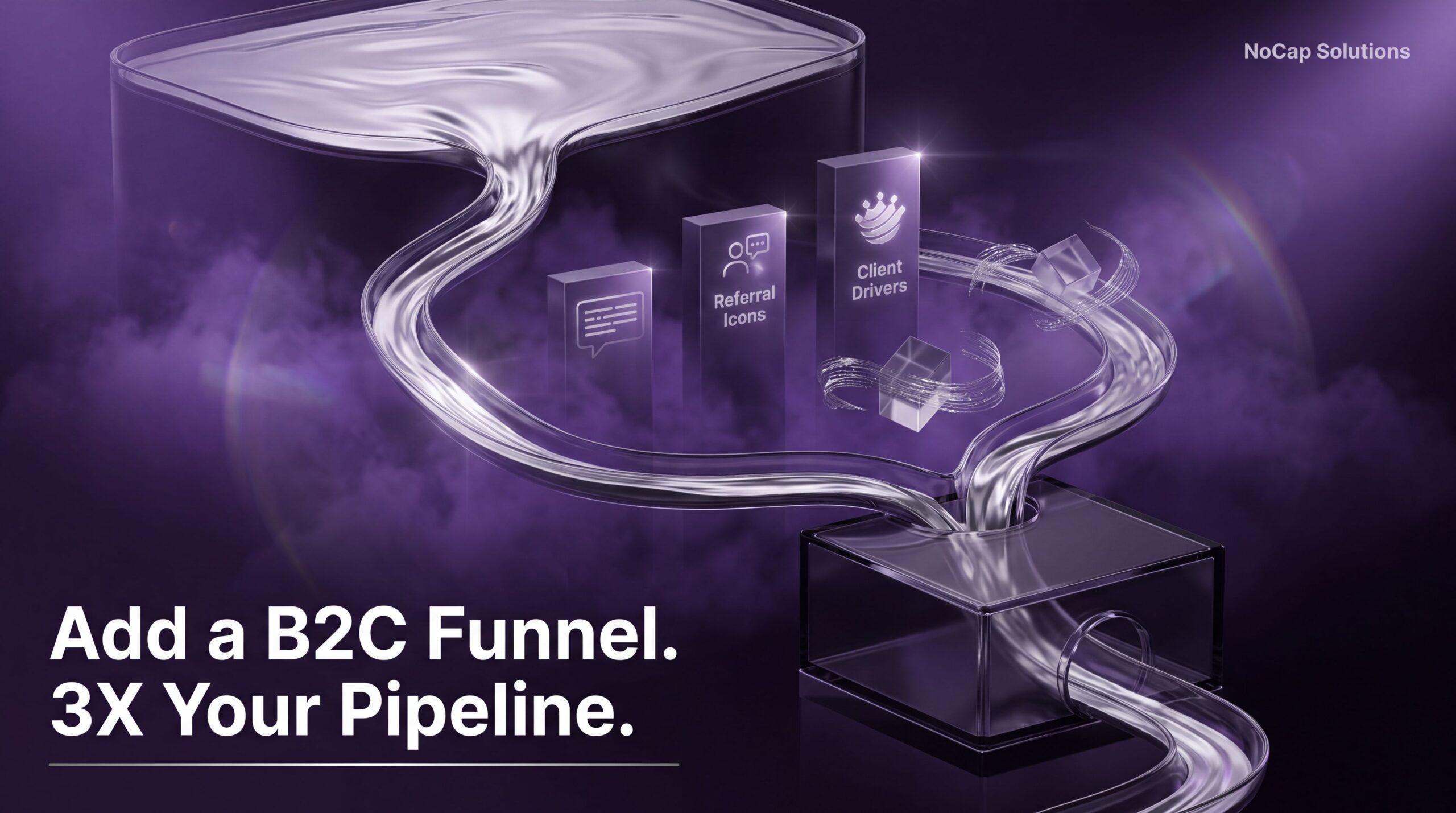
Add a B2C Funnel to 3X Your B2B High-Ticket Pipeline
Triple Your B2B Pipeline: Integrate a B2C Funnel for High-Ticket Growth
Discover how to 3X your B2B high-ticket sales by integrating a value-packed B2C funnel that builds trust, scales volume, and drives revenue.
This article explains an innovative marketing strategy that blends a B2C funnel with a B2B sales approach to dramatically boost high-ticket sales. It details how building trust and offering immense value at the top of the funnel can not only increase brand exposure but also convert leads efficiently. Key concepts like trust, volume scalability, and strategic vendor partnership are explored to help transform your sales pipeline.
Understanding Funnel Fundamentals to Build Trust and Volume
Ever wonder how a well-oiled marketing funnel can transform an entire business model, turning cautious prospects into zealous high-ticket buyers? Picture a massive reservoir where every drop of engagement is collected through a seamless interplay of B2C and B2B strategies. In today’s fiercely competitive landscape, success doesn’t merely depend on quality leads – it revolves around the art of trust-building and volume generation. An intricate dance between strategic nurturing and productized outreach drives this transformation. A robust, integrated funnel isn’t just about collecting names on a list; it’s the engine that powers brands into becoming trusted authorities over time.
The significance of integrating a B2C funnel into a traditional B2B pipeline cannot be overstated. It is about opening a channel that speaks directly to a much larger audience and then filtering out those with genuine buying intent for your high-ticket offerings. At the outset, the focus is on building credibility. In high-ticket sales, trust is priceless. Trust is cultivated when potential clients see that the company stands behind its claims – a vital factor when the price tag soars to lakhs. This trust is built on three core drivers: third-party endorsements, a proven record of deliverability with well-known brands, and an effective nurturing process via a thoughtfully designed funnel.
Trust is like the mortar in a high-rise building. Without a solid foundation of testimonials, referrals, and documented success stories, even the most impressive offers can crumble before reaching their full potential. Businesses that demonstrate a robust track record, backed by client testimonials and referrals, set themselves apart. It’s not just about what you say – it’s about what others say about you. Established track records act as a beacon for prospects who have significant investments riding on reliable outcomes. Client testimonials and word-of-mouth referrals multiply this trust exponentially, especially when shared by recognizable names in the industry.
Consider a scenario where a company has a comprehensive B2B offering but decides to incorporate elements that are aligned with the consumer mindset. At the top of the funnel, the goal is to capture attention by productizing and systemizing the service offering. For example, a webinar or a download might serve as a low-cost, hypervaluable entry point. This not only generates immediate revenue but also builds credibility by showing that the business values transparency, education, and the ability to deliver tangible results.
A well-crafted B2C component also doubles as an effective lead qualification tool. When prospects pay for a modestly priced product up front, it sends a signal – they are ready to invest further once the trust factor has been firmly reestablished. This process creates a healthier pipeline by segregating high-intent leads from casual browsers. Moreover, it sets the stage for future upselling into premium B2B services. In this process, each stage of the funnel addresses a specific need, gradually deepening the potential customer’s relationship with the brand.
Notably, three trust drivers become non-negotiable in this scenario. First, third-party endorsements bring a neutral perspective that can quell any reservations potential clients may harbor. When an independent party vouches for a brand, the endorsement carries weight far beyond self-generated marketing content. Second, the proven deliverability with established brands signifies that results have been consistently delivered in challenging scenarios. Finally, an effective nurturing funnel provides continuous, personalized value – guiding prospects through stages of awareness, consideration, and decision with precision. When all these matter come together, the result is a robust pipeline where trust and volume feed into one another, creating a virtuous cycle that propels businesses forward.
In summary, the integration of a B2C approach into a traditional B2B pipeline is not merely an add-on; it’s the transformation of the entire customer acquisition process. Whether you’re just starting or looking to scale, the concept of trust as an economic asset should be at the core of every strategy. And as the market evolves, the businesses that most adeptly combine high-touch services with automated, systemized top-of-funnel efforts are the ones that will continue to thrive.
Implementing a B2C Funnel in a B2B Business Model
When discussing a successful funnel, think of it as a three-tier pipeline with clear stages: the top capturing a wide net of prospects, the middle warming them up, and the bottom closing them as high-ticket clients. The secret sauce lies in transforming the top of the funnel into a B2C offering – this is where productization meets scalability. Instead of waiting for the slow churn of traditional methods, the first touchpoint can now be a series of easily consumable assets: webinars, live interactive sessions, or even crisp recorded training programs. Each of these elements simplifies complex topics – for instance, demystifying the nuances of social media marketing or strategic positioning.
In practice, these offerings work like an appetizer before the gourmet meal. They’re designed to create immediate value for prospects, paving the way for a deeper relationship. A webinar, for instance, isn’t just a presentation – it is an interactive stage for demonstrating expertise and relatability. When a business can break down complex areas into simple, actionable insights, it immediately builds rapport with its audience. The presentation may cover topics ranging from the fundamentals of social media algorithms to advanced strategies for engaging specific demographic groups. When people experience value from such offerings, their willingness to explore high-ticket options increases naturally.
The process of transforming the top of the funnel involves several tactical components. For starters, outbound campaigns can serve as effective awareness tools. Cold emails, targeted ads, and even native language marketing initiatives all play a part. An account-based marketing strategy can complement these efforts by focusing on key accounts with genuine potential. As the funnel widens, the juxtaposition of B2C elements – where the entry product is hypervaluable yet low-ticket – with the eventual high-ticket B2B services becomes apparent. This strategy ensures that even as the funnel scales in volume, it remains robust in quality.
Local context becomes crucial when you consider that trust often has its roots in native relatability. As illustrated in one of the most innovative strategies today, native language webinars and region-specific messaging help ingrain a sense of familiarity and inclusiveness in the target audience. When prospects see content crafted specifically for their locale – for example, a webinar tailored to regional nuances – it further cements trust. They begin to see the brand not as an out-of-touch impersonal entity, but as a reliable, relatable guide. This local touch transforms the funnel into a nurturing garden where every lead receives personalized attention, and prospects feel understood right from the first encounter.
The value proposition for the entry-level product, therefore, is extraordinarily potent. It’s not merely an introductory offer – it is a powerful confidence builder. When a prospect pays a modest fee to participate in a webinar or access a training module, that financial commitment is a vote of trust. It signals that they are willing to invest in the value the brand brings. That moment of engagement is where the relationship begins, setting the stage for further transactions in the high-ticket realm.
Moreover, a streamlined funnel process has inherent advantages. It automatically qualifies leads by their willingness to engage and invest right at the outset. Such a system shifts the paradigm from a purely qualitative evaluation to one that balances both quality and quantity. When done correctly, every aspect of the funnel – from initial contact to conversion – mirrors the reliability of a well-tested sales engine.
Here are some actionable methods for deploying this strategy:
- Develop webinars or live sessions that simplify complex topics, providing immediate value.
- Use outbound campaigns, including account-based marketing, to generate targeted leads.
- Integrate native language content to ensure local relatability and engagement.
- Offer a hypervaluable, low-ticket product, turning initial touchpoints into trust-building experiences.
- Utilize recorded training programs as evergreen assets in your funnel, refining your delivery continuously.
This approach is a departure from the conventional notion that B2B is solely about high-value, low-volume interactions. By merging B2C tactics, businesses create a dual-impact funnel capable of generating both breadth and depth in lead generation. The strategic infusion of tactical webinars and nuanced, localized marketing has been proven to multiply engagement rates. When prospects convert early on a small-ticket product, it becomes far easier to nurture them towards subsequent, more significant investments.
Spotlight on Advanced AI Lead Generation Systems
One exemplary tool that encapsulates the potential of this integrated approach is the Advanced AI Lead Generation Systems by NoCap Solutions. Engineered to transform traditional pipelines into dynamic, automated revenue engines, this product is the ideal solution for businesses looking to streamline their lead generation processes. By leveraging innovative AI algorithms and intelligent data management, it optimizes funnel dynamics – from initial lead capture to high-ticket sales conversion. This system aligns impeccably with the strategy of using a hypervaluable, low-ticket B2C offering to nurture and qualify a larger volume of leads before transitioning them into premium B2B clients. The Advanced AI Lead Generation Systems tool is designed for forward-thinking companies that want to take control of their sales pipeline by automating lead scoring, data enrichment, and real-time outreach adjustments. Its capacity to distill enormous data sets into actionable insights is a game changer for any business looking to scale quickly while still maintaining the personal touch of a high-quality relationship. This product exemplifies how cutting-edge technology, when integrated with a robust funnel strategy, can revolutionize lead generation and drive consistent revenue growth.
Scaling Your Business with Vendor Partnerships and Measurable Outcomes
Scaling a business in today’s digital age is not solely about expanding in-house capabilities; it is also a smart orchestration of external vendor partnerships that ensure quality and efficiency. In service-based offerings, the challenge isn’t just acquiring more clients – it’s delivering on promises consistently as demand escalates. Vendor partnerships come into play here, serving as key allies capable of offloading delivery responsibilities while ensuring that quality remains uncompromised.
Imagine segmenting your entire client base into budget tiers and aligning each segment with a portfolio of vetted vendors. This modular approach ensures that every customer, regardless of their spending capacity, receives a tailored service that matches their expectations. In effect, the vendor network operates as an extension of your agency, addressing the nuances of social media management and other crucial services. This strategy not only scales operations but also maintains the quality that underpins your brand’s reputation.
One of the most critical outcomes of combining B2C productization with a B2B model is the creation of a natural upsell mechanism. When clients start with a modest commitment – say a low-ticket digital product or a trial webinar – they immediately witness the value delivered. Their positive experience acts as a confidence booster, making them more amenable to upgrading to higher-tier services. As they ascend the funnel, their journey is marked by increasing levels of trust and engagement. The transition from a low-ticket product to a high-ticket service becomes nearly seamless because the client relationship was already nurtured with consistent, authentic value.
The exponential benefits of this upscale mechanism were vividly demonstrated in real-world examples across varied industries. Take, for instance, a firm operating in digital marketing. Initially, they introduced an accessible, entry-level online training program. As clients engaged with the product and began implementing the provided strategies, they observed notable improvements in their own marketing metrics. It wasn’t long before these clients, now emboldened by their first-hand experience, were ready to invest in comprehensive, high-ticket marketing solutions. This kind of metamorphosis – from casual participant to high-value client – is a testament to the scalability of a well-crafted funnel.
Tracking measurable outcomes is another cornerstone of this approach. Companies employing integrated funnel strategies can monitor the impact of their initiatives in near real-time. Metrics such as webinar engagement rates, conversion ratios from the initial low-ticket offering to premium services, and overall agency turnover help reveal the health of the funnel. For instance, if webinar attendance consistently exceeds expectations and leads quantitatively surpass prior benchmarks, the effectiveness of the B2C element is unequivocal. This measurement isn’t merely about numbers – it’s about enhancing brand exposure and refining strategic positioning over the long term.
As businesses scale, the partnership model becomes a dynamic lever that multiplies available resources. By carefully categorizing clients based on spending capabilities and aligning them with specialized vendors, companies ensure that every client receives an optimal solution. This helps maintain a balance between personalized service and massive scalability. A robust vendor network also allows for rapid reallocation of resources when necessary. For example, if one vendor system is overwhelmed by a surge in demand, another can seamlessly take over the role without disrupting the overall service quality.
A noteworthy consideration in this scaling strategy is the aspect of native relatability. Many businesses often overlook the power of localized service experiences. Just as the initial B2C funnel builds trust through region-specific communication and culturally tuned webinars, the vendor partnership model can be localized to match client demographics. This localization ensures that every interaction – not just online content – resonates with the client on a personal level. It’s this authenticity in service delivery that further cements trust and paves the way for long-term client relationships.
The design of a scalable funnel must include robust systems that measure, adjust, and optimize every stage of the customer journey. It’s a continuous feedback loop where every stage informs the next. For instance, an initial high engagement in webinars can lead to additional training modules or direct introductions to vendor-partner services. These services are then tracked through rigorous performance metrics and reviews, ensuring that only the best vendors are recommended over time. Such a system generates self-reinforcing cycles of growth and trust, creating an ecosystem where one success fuels another.
The broader benefits of integrating a B2C funnel into a B2B model extend far beyond immediate lead conversion. Enhanced brand exposure is just the beginning – the approach redefines the strategic positioning of the business in its market niche. Long-term revenue growth, higher customer lifetime value, and a robust brand reputation are the natural outcomes of such a strategy. Essentially, every step taken at the top of the funnel resonates all the way down the pipeline, multiplying returns in ways that traditional, siloed models rarely achieve.
It is this philosophy that underpins the transformative power of modern marketing funnels. When the funnel is designed to be both productized and systemized, it evolves into an asset that captures, nurtures, and converts in a predictable manner. With each client journey meticulously tracked and optimized, businesses are not left scrambling for leads at the last minute. Instead, they enjoy a steady stream of engaged, high-quality prospects that continually enrich the brand’s market positioning.
Moreover, the combined strengths of vendor partnerships and strategic funnel design create a resilient system that can weather market volatility. Even during economic downturns or shifts in consumer behavior, a well-structured funnel anchored in trust and measurable outcomes typically remains robust. In many ways, this kind of system acts as a strategic moat – protecting the brand’s reputation while building a scalable foundation that supports both immediate gains and long-term growth.
To sum up the scaling strategy:
- Leverage vendor partnerships to offload delivery, ensuring top-notch service quality.
- Segment clients by their budget tiers to tailor the vendor solution appropriately.
- Use a successful B2C element as a natural upsell route, where initial trust and value drive high-ticket client conversions.
- Track key performance metrics such as webinar engagement, conversion rates, and revenue growth to continuously refine the approach.
- Enhance brand exposure and strategic positioning through every interaction in the funnel.
The interplay of these elements is not just theoretical; it is a proven model that has already yielded dramatic improvements in agency turnover and overall customer satisfaction. When executed correctly, businesses witness an organic transition from consultation-based models to a system where every part of the funnel – the nurturing, the onboarding, and the successful upsell – works in harmony to generate sustained growth.
The integration of B2C tactics into the B2B sales model is a paradigm shift that offers a competitive edge. By combining the immediacy of low-ticket, hypervaluable offerings with the deep trust required for high-ticket sales, companies can enjoy a dual legacy: immediate revenue streams and the promise of long-term client relationships that are built on unwavering trust and proven success.
For enterprises looking to embody this strategy at its fullest potential, a continuous evaluation of every funnel layer is essential. Each element, from the initial customer touchpoint through to the upscale conversion, must be analyzed, iterated, and refined. This dynamic environment is where agility meets strategy – a space where even minor adjustments can lead to significant improvements in outcomes. As client interactions become increasingly data-driven and insights more granular, the opportunities for optimization grow exponentially.
Another critical advantage is the enhanced memorability and brand recall achieved through this approach. When prospects repeatedly encounter high-quality, useful content at the top of the funnel, their perception of the brand evolves. They begin to see it as a thought leader, a trusted advisor, and a reliable partner in business success. This perception naturally nurtures higher conversion rates later in the funnel, as the groundwork of trust laid early on makes every subsequent interaction more effective.
A robust feedback mechanism also plays a crucial role. As new leads enter and traverse the funnel, continuous data collection on user behavior – such as engagement with webinars, download rates, or inquiries about vendor partnerships – allows businesses to fine-tune their approach in real time. This data not only guides short-term tactical decisions but also informs long-term strategic planning. The cyclic nature of this feedback loop is a key component of scalable and sustainable growth.
Throughout this entire process, the role of technology is indispensable. The integration of sophisticated systems that handle data processing, lead scoring, and real-time engagement metrics enables businesses to remain agile and responsive. When these systems are aligned with a well-conceived funnel, the result is a frictionless experience that cultivates trust at every step and scales organically with the business.
Consider, for example, the way a dynamic system can automatically adjust messaging and follow-up strategies based on a lead’s previous interactions. Such a system ensures that high-potential leads never fall through the cracks, while lower-intent prospects gradually receive more educational content until they are ready for a direct sales pitch. This adaptive capability not only maximizes conversion rates – it also elevates the overall client experience by providing a personalized journey that feels both natural and highly relevant.
In conclusion, scaling a business in the current digital landscape requires a multifaceted, agile strategy. By integrating a carefully crafted B2C funnel into the B2B sales model, companies can benefit from volume-driven growth without losing the quality and trust that are paramount in high-ticket sales. Vendor partnerships, when executed with precision, further amplify this effect by ensuring consistent, reliable delivery across all tiers of service. When each strategic element is thoughtfully implemented and continuously refined, the outcome is a marketing ecosystem that not only drives immediate revenue but also establishes a long-lasting legacy of trust and mutual growth.
As businesses continue to evolve and consumer expectations shift, the agility to adapt both marketing tactics and operational strategies becomes the cornerstone of enduring success. The principles outlined above serve as a powerful reminder that trust, when nurtured through every step of the funnel, is the key driver in turning prospects into lifelong clients.
To sum up the scaling journey:
- Trust is the foundational element that multiplies the effectiveness of volume-driven outreach.
- A seamless blend of B2C engagements with B2B high-ticket sales creates a pipeline that is both expansive and effective.
- Vendor partnerships and data-driven insights provide the operational robustness needed to scale rapidly while maintaining service quality.
- Consistent feedback and iterative improvements ensure that the system remains agile and responsive to market dynamics.
For businesses that are ready to incorporate these strategies into their operational DNA, the model is as much about philosophy as it is about practical execution. It represents a shift from traditional, siloed approaches to an integrated, holistic method that maximizes every interaction and every opportunity for growth.
Reflecting on the broader implications, this approach is not just about increasing revenue. It’s about positioning the business as an industry leader – a trusted partner that understands its market, speaks the language of its audience, and consistently delivers value from first contact to long-term engagement.
Ultimately, by embracing the dual nature of B2C and B2B methodologies within a unified funnel, companies unlock the potential to generate not just more leads, but higher quality opportunities. The natural progression from initial trust-building interactions to fully committed high-ticket sales is where innovation meets execution, paving the way for sustainable business success.
And for those seeking to harness the full power of this integrated approach, advanced technological tools are essential. When paired with strategic insights, such tools become the ultimate differentiator in a crowded marketplace. In this context, the Advanced AI Lead Generation Systems stand out as a beacon of excellence. Designed to streamline every facet of the lead generation and conversion process – from data enrichment to real-time engagement analytics – this cutting-edge solution is tailored for businesses that dare to scale while preserving the nuanced art of trust-building.
In summary, the journey from understanding funnel fundamentals to implementing hybrid strategies and scaling through vendor partnerships is both complex and profoundly rewarding. When every element of a business’s marketing system is aligned with strategic intent and operational precision, the resulting synergy drives unprecedented revenue growth and cements the brand’s reputation as a trusted market leader. Embracing this approach today means laying the groundwork for marketing success tomorrow – a vision that is as bold as it is essential in the age of digital transformation.
By continuously optimizing each stage of the funnel, nurturing leads through seamless B2C engagements, and leveraging vendor partnerships to enhance service quality, businesses not only secure immediate wins but also build a robust pipeline for the future. Every webinar attended, every trust-building testimonial accumulated, and every scalable vendor engagement collectively contribute to a strategic ecosystem that is reliably productive and resilient to market fluctuations.
For companies that aspire to create an indomitable market presence, the integration of these principles is not just a tactical move – it is a strategic imperative. It is this philosophy of merging trust with scalability that paves the way for sustained growth, delivering outcomes that are more than the sum of their parts.
In the final analysis, whether it is through innovative B2C techniques, precisely designed high-ticket B2B sales processes, or dynamic vendor partnerships, the modern business landscape rewards those who can transform fleeting interest into lasting trust. And with the aid of transformative tools like the Advanced AI Lead Generation Systems, companies can navigate this complex terrain with confidence, knowing that every stage of their funnel is designed to capture value, build loyalty, and drive exponential growth.
For businesses ready to embrace this holistic approach, the path forward is clear. The paradigm shift from singular, static marketing methods to dynamic, trust-infused ecosystems is not only a strategic advantage – it is a blueprint for the future of business. And as companies that have already adopted these methods report, the rewards are measured not only in revenue but in the lasting trust and loyalty of a highly engaged customer base that continues to drive success, one positive interaction at a time.
As this comprehensive strategy demonstrates, blending B2C and B2B funnels is more than a marketing tactic – it is a transformation of how businesses interact with their audiences. It is about creating a seamless, integrated experience that educates, nurtures, and ultimately convinces prospects of the unmatched value offered. And in this journey, every element – from the trust generated by localized webinars to the strategic upselling enabled by measured vendor partnerships – plays a pivotal role in the unfolding success story.
Finally, as businesses forge ahead in a rapidly evolving landscape, the integration of innovative systems like the Advanced AI Lead Generation Systems will continue to be at the heart of scalable, sustainable growth. By harnessing the power of technology and a well-structured marketing funnel, organizations can confidently navigate the complexities of modern sales – ensuring that every interaction not only builds trust but also translates into a tangible competitive edge.
Embracing this modern funnel strategy today means opening the door to a future where every lead is nurtured, every client is valued, and every sale reflects a legacy of trust and excellence. This is not just the future of marketing – it is the future of business itself.
Advanced AI Lead Generation Systems serve as a testament to what is possible when cutting-edge technology and strategic marketing converge, underscoring NoCap Solutions’ commitment to empowering businesses with the tools they need to excel in today’s competitive environment.
By taking the leap to integrate these principles, companies position themselves at the forefront of innovation – where every step in the customer journey is optimized for engagement, every vendor partnership is a catalyst for growth, and every new lead reaffirms the trust that underpins high-ticket success. This is the era of intelligent marketing funnels – an era where strategic insight and technology work hand in hand to create business outcomes that are as sustainable as they are spectacular.