
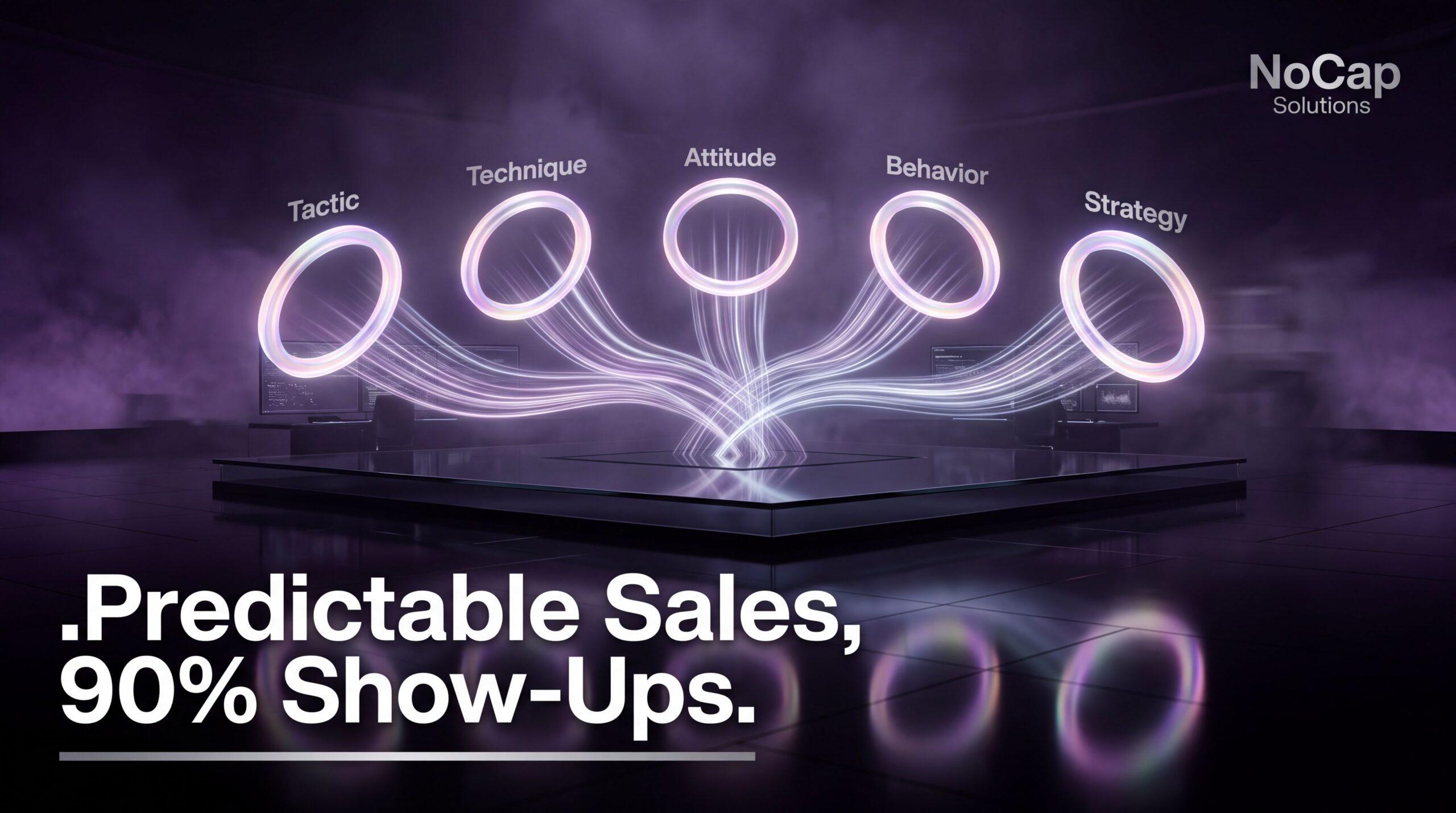
TABS Framework: Predictable B2B Sales and 90% Show-Ups
TABS Blueprint: Unlock Predictable B2B Sales and 90% Meeting Success
Discover the TABS framework to drive predictable B2B sales, boost meeting show-ups, and master tactics, technique, attitude, behavior, and strategy.
This article will explore the TABS framework designed for predictable B2B sales success. It explains how to blend tactics, techniques, attitude, behavior, and strategy for improved client onboarding and higher show-up rates. With real examples and actionable insights, the guide provides a clear road map to transform low conversion cold calls into engaging live events with a 90% attendance rate.
1. Unpacking the TABS Framework for Predictable Sales
Imagine a symphony where every instrument plays in perfect harmony – this is what predictability in B2B sales feels like when every element works together seamlessly. The TABS framework – a five-letter acronym standing for Tactic, Technique, Attitude, Behavior, and Strategy – offers that harmony by uniting what to do, how to do it, the mindset behind it, the measurable performance that ensures results, and the long-term vision that guides it all. Just as a well-rehearsed orchestra doesn’t rely on one instrument playing solo, predictable client acquisition and sales rely on each component being understood and measured meticulously.
At its core, TABS isn’t just a checklist; it’s a blueprint that transforms chaotic, unpredictable sales approaches into a coherent, strategic process. When all five elements complement each other, businesses transition from sporadic outreach to consistently converting prospects into loyal clients. The first letter, Tactic, asks the fundamental question: What actions are taken? Whether it’s phone calls, direct messages, emails, or content distribution – the channels you choose define your approach’s starting point. Too often, organizations throw darts in the dark, hoping something sticks. Tactics bring focus and order to this chaos by identifying and selecting channels that most effectively reach your target audience.
Transitioning to Technique, the “how” of communication becomes paramount. It’s not enough to simply reach out; the manner and style with which your message is delivered have profound implications. Imagine the difference between a monotonous script and an engaging conversation that employs pattern interrupts to seize attention. Real-world data supports this: about 55% of how a message is received comes from body language, 38% from vocal tone, and only 7% from the actual words spoken. This insight underscores the importance of refining your communication technique to ensure that even if your words are carefully chosen, they’re also delivered with the appropriate energy and inflection.
The third element, Attitude, moves beyond surface-level optimism. Here, attitude encapsulates the mindset with which sales interactions are approached. Viewing prospect engagements as opportunities to serve – rather than simply to sell – creates an atmosphere of trust and authenticity. This mindset shift is crucial: when clients sense that the objective is to help them overcome challenges rather than merely to push a product or service, they are more likely to engage meaningfully. Consider the analogy of a doctor who listens carefully to a patient’s concerns rather than a salesman rattling off a prescription. When sales professionals adopt this service mentality, they establish themselves as authorities who guide, advise, and ultimately create long-term relationships.
Behavior, the fourth component of TABS, is the measurable KPI of your sales process. It’s the pulse that tells you whether your tactics, technique, and attitude are actually translating into results. By tracking specific actions – whether it be scheduled meetings, follow-up interactions, or the precise conversion rates of various outreach channels – sales teams can gauge what’s working and where adjustments are needed. This measurement isn’t just for accountability; it’s a tool for continuous improvement. If a particular outreach method isn’t yielding the expected engagement, behavior metrics provide the evidence needed to pivot quickly and redirect energy where it will have the most impact.
Finally, Strategy – the last element – serves as the glue binding the TABS framework together. Without a long-term, cohesive plan that aligns with clients’ needs and business objectives, the other elements risk becoming disjointed efforts. Drawing inspiration from Sun Tzu’s timeless wisdom, where he reminds us that “Tactics without strategy is the noise before defeat” and “Strategy without tactics is the slowest route to victory,” it’s clear that strategy is what infuses purpose and direction into every action. A well-formulated strategy identifies underlying client challenges, anticipates market shifts, and ensures that every sales conversation is not merely transactional but transformational.
To summarize the essence of TABS, imagine a scenario where a company was initially struggling to secure just four scheduling meetings per week. By aligning tactics, refining techniques, adopting a service-based attitude, measuring behavior rigorously, and integrating a solid strategic plan, they were able to triple their meetings and achieve a 90% show-up rate. This isn’t a theoretical model – it’s a proven approach to predictably identify and convert qualified prospects. When every element of TABS is in synchronization, sales inefficiencies diminish, and the path to client acquisition becomes clear and repeatable.
2. Implementing Tactic and Technique in B2B Sales Processes
In the labyrinth of B2B sales, choosing and implementing the right approach can be the difference between sporadic wins and a reliable sales pipeline. The TABS framework’s first two components – Tactic and Technique – serve as the operational heart of your sales processes. They determine not only how you reach your prospects but also how you engage them at a human level.
2.1. Tactic: Choosing the Right Channels
Imagine a ship setting sail without a compass; tactics provide that essential navigation tool. Tactics are the specific actions you take to initiate contact with prospects. In today’s multi-channel world, this could include cold calls, direct messages (DMs), personalized emails, or even curated content spread via social media. The key is to choose channels most likely to resonate with your target audience. For example, while a highly customized email campaign might be ideal for one segment, leveraging DMs on LinkedIn may work better for another demographic.
The transcript explains that tactics involve reaching people through various channels and setting the groundwork for sales conversations. For many organizations, the default approach has long been relying on cold calls – often leading to a barrage of voicemails and a frustrating yield of connection rates in the range of 15% to 23%. When tactics are misaligned with the audience’s preferred modes of communication, the efficiency of the sales process suffers. Refining your tactics means understanding where your prospects actually are and tailoring your outreach to fit that reality. This might include integrating live events as an additional channel, where registrants, by virtue of signing up, are already partly committed, thus elevating the quality and likelihood of engagement.
A modern perspective on tactics recognizes that simply bombarding a prospect with messages across multiple channels does not equate with personalized connection. Instead, businesses should focus on building a multi-touch approach that gradually nurtures the prospect through various stages of the buyer’s journey. Each channel then operates as a piece in a puzzle – helping to build a comprehensive picture of the prospect’s needs before a face-to-face meeting or virtual demo is even scheduled.
2.2. Technique: The Art of Communication
If tactics are the “what,” then technique is undoubtedly the “how.” Technique transforms the generic execution of sales outreach into a memorable experience that truly resonates with prospects. A well-honed technique considers tone, inflection, body language, and the strategic use of pattern interrupts. In practical terms, this means that a salesperson’s delivery style plays as crucial a role as the message itself.
The transcript provides a compelling statistic: 55% of communication influence comes from body language, 38% from vocal tone, and a mere 7% from the actual words spoken. Such data reinforces the fact that even the most well-crafted message can fall flat if not delivered with conviction, clarity, and engagement. Consider a scenario in which two sales professionals deliver an identical script. The one who invests in mastering his tone, employing appropriate pauses, and using expressive body language will naturally command more attention and trust, thus enhancing the chances of converting the prospect.
An effective technique also involves the tactical use of pattern interrupts – unexpected elements introduced during the interaction to recapture the prospect’s attention. These could be as simple as a surprising question or a clever analogy that reframes the prospect’s perception of the problem at hand. By breaking the pattern of expected dialogue, pattern interrupts serve as pivots that re-engage the listener, making it easier to steer the conversation toward meaningful outcomes.
A practical example can be drawn from real-life scenarios where refined communication techniques have led to a boost in meeting quality and improved engagement. A team that had been dependent solely on scripted cold calls saw a dramatic improvement in outcomes when they introduced a more dynamic interaction style. They moved away from simply reciting a pitch to crafting a conversation that actively involved the prospect, acknowledged their concerns, and gently steered them into a dialogue about how their business challenges could be met with bespoke solutions.
This transformation was not merely about changing words – it was a complete overhaul of how communication was conceptualized. Sales teams began to integrate role-playing exercises, recorded practice calls for self-review, and even sought feedback from prospects on their engagement styles. The end result? Improved clarity, increased empathy, and higher conversion rates.
2.3. Real-World Integration: Choosing the Right Product for Enhanced Sales Processes
In today’s competitive landscape, technology and intelligent systems can be your greatest allies. For organizations looking to supercharge their approach to both tactics and technique, NoCap Solutions offers the Advanced AI Lead Generation Systems. This flagship solution is designed to create a complete revenue engine – from sourcing comprehensive prospect data to enriching records and scoring leads with pinpoint accuracy. What makes this product stand out is its ability to seamlessly integrate advanced analytics and real-time intelligence into your outreach processes, ensuring that every call, email, or DM is directed at a prospect who is genuinely positioned to buy.
With the Advanced AI Lead Generation Systems, businesses not only enhance their initial tactics by identifying high-quality leads, but they also refine their communication techniques through data-driven insights. This system continuously updates lead scores based on behavioral signals, ensuring that your tactics align with real-time prospect readiness. Sales teams, empowered with actionable intelligence, can adjust their approach dynamically – fine-tuning the delicate balance between charisma and data precision required to close a sale.
Ultimately, when your tactics and technique work in concert with cutting-edge technology, inefficiencies drop away and your sales pipeline becomes robust and predictive. The role of advanced AI systems here isn’t to replace the human touch but to amplify it, ensuring that your team is empowered with the right insights at the right time, thereby maximizing both impact and efficiency.
3. Cultivating Attitude, Behavior, and Strategic Alignment
Transitioning from the mechanics of how to reach prospects, the next critical phase in the TABS framework is cultivating the right internal mindset, measuring actionable behaviors, and ensuring an overarching strategic alignment. Here, the conversation shifts from “what and how” to “why” – why you approach every interaction with a service mentality, why tracking behavior is indispensable, and, most critically, why strategy forms the sculpting hand that molds every action into long-term success.
3.1. Attitude: Serving Before Selling
Sales is inherently about human connection, and an essential ingredient in any successful process is attitude. Rather than approaching sales as a transactional process aimed solely at selling, a service-oriented mindset is crucial. Think of it as the difference between a concierge at a high-end hotel, who is genuinely intent on anticipating and addressing your needs, versus a cashier simply processing a transaction. When sales professionals adopt a service-first attitude, it transforms the interaction into a relationship-building exercise. The perspective shifts from “How do I make a sale?” to “How do I help you overcome your challenges?”
The transcript illustrates this point vividly when it recounts a live event scenario, where a prospect named Alfred, despite acknowledging the importance of serving, still clung to the expectation of a hard sale. This anecdote underscores a common challenge in sales: the tension between serving and selling. When sales representatives truly embody the intention to serve, they not only establish a rapport with prospects but also gain a position of authority. They then allow these prospects to see them as trusted advisors rather than mere vendors.
This service-driven attitude is more than just a feel-good philosophy – it’s a strategic asset. When prospects feel understood, respected, and genuinely cared for, resistance decreases and relationships flourish. Over time, this approach not only drives higher meeting show-up rates and increased conversions but also paves the way for long-term customer loyalty. When every interaction is seen as an opportunity to solve a pressing problem, sales conversations naturally evolve into collaborative consultations, where both parties work toward the prospect’s success.
3.2. Behavior: Measuring What Matters
In any process, what gets measured, gets managed. Within the TABS framework, behavior pertains to tracking the key performance indicators (KPIs) that confirm your tactics, techniques, and attitude are delivering results. It’s the empirical, data-driven side of sales that ensures every action taken is aligned with achieving measurable outcomes. Behavior metrics could include the number of outreach attempts, meeting scheduled and attended, follow-up communications, and ultimately, conversions.
Consider a scenario where sales teams are sending out hundreds of cold calls or email campaigns without a system in place to track their performance. Without monitoring, it becomes nearly impossible to discern which approaches yield a high return on investment and which ones are merely noise. The ability to measure behavior empowers sales managers to optimize workflows, reallocate resources efficiently, and identify areas where improvements are necessary. This data-driven approach is indispensable, especially when resources are finite and every minute spent communicating counts.
The real-world example outlined in the transcript perfectly illustrates the power of behavior metrics. A client initially struggled with cold call inefficiencies – relying on a method where only 3% of the contacted demographic was ready to make a buying decision. By assessing behavior metrics and switching tactics from cold calls to hosting live events, the same company was able to dramatically improve their meeting show-up rates from a frustrating 40%-55% to an impressive 90%. This dramatic shift wasn’t accidental; it was the result of meticulously monitoring and acting upon performance data.
Behavior in the TABS framework is the feedback loop that irons out inefficiencies. It tells leaders when a particular tactic or technique is underperforming, thereby providing a clear directive to tweak, adjust, or overhaul the current approach. When a sales team actively tracks its performance, there is less guesswork involved. Instead, every decision is backed by solid data that both informs and justifies strategic pivots.
3.3. Strategy: The Grand Unifier
If tactic, technique, attitude, and behavior represent the operational gears of a sales engine, strategy is the master plan that ensures these gears work together harmoniously to drive the business forward. It is the long-term blueprint that aligns all activities, clarifying exactly how every effort contributes to overarching business goals. Strategy begins with a deep understanding of your prospect’s needs, pain points, and aspirations. It is the context that frames every interaction and gives substance to every tactic.
Incorporating strategic planning into sales processes involves more than just setting quarterly goals – it means continuously evaluating the environment and fine-tuning your approach based on both internal performance data and external market trends. The transcript rightly references the wisdom of Sun Tzu, reminding us that “Tactics without strategy is the noise before defeat” while also noting that “Strategy without tactics is the slowest route to victory.” This paradox highlights that neither component can function in isolation; they must be integrated, each reinforcing the other in pursuit of a common objective.
A compelling case study from the transcript underscores the importance of strategic realignment. One client, previously reliant on cold calls, embraced strategy by transitioning to live virtual events – a radical shift that dramatically increased engagement and meeting convertibility. This change wasn’t just about switching channels; it was about rethinking the entire approach to sales. By focusing on creating an environment where prospects were already emotionally and intellectually primed to engage, the company not only boosted meeting show-up rates but also positioned itself as a trusted authority capable of addressing the real challenges its clients faced.
3.4. The Synergy of TABS: A Case Study in Transformation
A holistic evaluation of TABS in action illuminates how the interplay of its components can revolutionize sales outcomes. Consider this real-world transformation: a SaaS company was in the throes of relying on cold calling – a method that, while traditional, was proving both time-consuming and inefficient. Only a small fraction of prospects, roughly 3%, were ready for a buying decision, and connecting with those prospects was even more challenging. Sales teams were left battling low engagement rates, inconsistent follow-up, and a constant stream of no-shows.
Realizing that their approach was flawed, the leadership team recalibrated their entire sales process using the TABS framework. They began by overhauling their tactics – shifting focus from high-volume cold calls to hosting live virtual events. This change immediately transformed the dynamics of the outreach. Live events inherently created a sense of commitment, increasing the show-up rate because attendees had actively signed up to participate. This tactical adjustment was paired with refined techniques: improved communication styles with engaging tone, thoughtful pattern interrupts, and a clear emphasis on empathetic dialogue. Every interaction became a carefully crafted experience designed to resonate on a personal level.
At the same time, the sales teams adopted an attitude that emphasized serving rather than selling. Prospects were now viewed as partners in a mutually beneficial conversation. This shift proved pivotal in establishing trust and authority. Behavior metrics were then implemented with precision. Sales managers began tracking every aspect of engagement – from the number of event registrants to the follow-up communications and eventual conversions. This data-driven oversight allowed for rapid tweaks and realignment of strategies.
Finally, overarching strategy provided the long-term vision that these changes needed. Instead of relying solely on short-term gains from cold calls, the sales strategy pivoted to a more sustainable model: building relationships through value-driven engagements that nurtured leads over time. The combination of these changes resulted in a dramatic turnaround. What had been a nebulous and unpredictable process transformed into a well-oiled machine that consistently attracted the right clients, meeting their needs while also advancing the company’s revenue goals.
In today’s technology-driven market, leveraging advanced, intelligent systems is often the catalyst that propels strategic sales initiatives to the next level. The Advanced AI Lead Generation Systems from NoCap Solutions exemplifies this transformation. This robust solution is built to capture every nuance of lead behavior, score prospects in real time, and optimize outreach based on predictive analytics. By integrating such a product into the sales process, businesses can enforce the principles of TABS on a much larger scale – ensuring that tactics, techniques, attitudes, behaviors, and overarching strategy are always in lockstep.
3.5. Bringing It All Together: The Holistic Benefit of Strategic Alignment
The beauty of the TABS framework is in its synergy. While each component – tactic, technique, attitude, behavior, and strategy – has a distinct role, their combined effect creates a sales process that is both robust and adaptable. This holistic approach not only mitigates inefficiencies at every stage but also empowers sales teams to respond to market dynamics with agility and confidence.
In practical terms, consider the daily challenges faced by B2B sales operations: chasing down leads, engaging hard-to-reach prospects, adapting to rapidly changing market conditions, and always ensuring that every interaction counts. The TABS framework acts as both shield and sword in this arena. By mandating a careful consideration of every element – from the initial outreach channel to the strategic follow-up – TABS ensures that sales efforts are never wasted. Instead, every touchpoint, every communication, and every adjustment is strategically aligned with the ultimate goal of predictable, scalable revenue growth.
Data-driven decision making, a core aspect of behavior measurement, ensures that even as market dynamics shift, the strategic vision remains anchored in measurable performance. Instead of relying on gut instincts or outdated practices, sales teams are equipped with clear indicators that direct them toward the most promising opportunities. When combined with an attitude that prioritizes service over hard selling, the pathway to client acquisition becomes not just efficient but also enriching for both parties.
Moreover, this fully-integrated approach builds a resilient foundation for future growth. Instead of viewing challenges as isolated setbacks, every misstep becomes a learning opportunity – an opportunity to adjust tactics, refine techniques, or recalibrate strategy. The result is a continuous loop of improvement, where every sales call, every event, and every piece of communication is optimized to deliver better outcomes next time.
Inherent in this process is the philosophy that every interaction is meaningful. Sales is far from a numbers game; it is about establishing genuine connections. When every member of the team understands that their role is part of a broader strategic whole – as dictated by the TABS framework – they are more likely to invest not just in reaching targets but in nurturing relationships. This relationship-centric approach, supported by rigorous data and adaptive strategies, transforms what might seem like a daunting challenge into a series of calculated, manageable steps.
Conclusion: Predictable Sales through TABS and Intelligent Systems
The journey through the TABS framework – from refining tactics and techniques to fostering the right attitude, measuring behavior, and consolidating a strategic vision – reveals that predictable sales are not a matter of chance but of careful, rigorous planning. Each element is indispensable on its own, but their true power lies in their integration. A sales process built on TABS is akin to a well-conducted orchestra, where every note, every pause, and every crescendo contributes to a performance that not only captivates but also converts.
The transformation in sales performance – from sporadic and unpredictable outreach to a consistent, results-oriented framework – can be accelerated through the integration of advanced, intelligent systems. Consider once again the Advanced AI Lead Generation Systems from NoCap Solutions. This flagship product epitomizes how technology can amplify every aspect of the TABS framework. By providing real-time lead scoring, enriched data, and predictive analytics, it ensures that every tactic is targeted, every technique is refined, every attitude is reinforced, every behavior is tracked, and every strategic decision is grounded in actionable intelligence.
When sales teams embrace TABS, they not only become more effective – they become transformative. Rather than viewing sales as a battle of numbers and fleeting connections, organizations begin to see it as a discipline where every conversation is a deliberate step toward mutual success. The long-term benefits are profound: higher meeting show-up rates, stronger client relationships, and a sales pipeline that is as predictable as it is scalable.
For modern B2B businesses operating in increasingly complex and competitive landscapes, the combination of a robust sales framework and intelligent lead generation systems is a game changer. It reduces the guesswork, mitigates inefficiencies, and empowers teams to make data-driven decisions that directly impact the bottom line. The TABS framework, when executed with precision and enhanced by technology like the Advanced AI Lead Generation Systems, offers a roadmap to transform each sales conversation into a step toward predictable, sustainable growth.
In a world where uncertainty often reigns, having a clear, actionable blueprint for success is invaluable. The TABS framework provides that blueprint – reminding us that success in B2B sales is not about sporadic victories but about continuous, measured improvement. By setting a clear tactical plan, honing the art of communication, adopting a service-first attitude, rigorously tracking behavior, and aligning every action with an overarching strategy, businesses can turn the unpredictable task of sales into a finely tuned, repeatable process that delivers results time and again.
Embracing TABS and augmenting it with state-of-the-art systems is not merely an option but a strategic imperative for those seeking to excel in today’s competitive markets. It invites sales teams to shift their focus from chasing fleeting opportunities to cultivating enduring relationships that drive long-term growth. The pathway to predictable sales is paved with deliberate choices, constant refinement, and the judicious use of technology that transforms raw data into actionable insight.
As the corporate landscape continues to evolve, the companies that will thrive are those that recognize the value of a comprehensive framework like TABS. They understand that every element – from the initial outreach channel and dynamic communication techniques to the compassionate service orientation, performance metrics, and strategic foresight – plays a critical role in constructing a sustainable sales engine. This is not simply about boosting numbers; it’s about building a robust ecosystem where every component works in unison to create measurable, impactful outcomes.
The TABS framework, bolstered by intelligent lead generation systems such as NoCap Solutions’ Advanced AI Lead Generation Systems, stands as a testament to the future of sales. It is a future where every interaction is purposeful, every challenge is met with data-driven insights, and every sale is the result of a methodical, harmonious process.
By internalizing the principles of TABS, sales organizations can move beyond traditional, reactionary practices and enter a realm of proactive, strategic engagement. This elevation in approach not only boosts immediate operational efficiency – it lays the groundwork for a culture of continuous improvement and relentless growth. With the right tactics, refined techniques, a service-oriented attitude, clear behavioral metrics, and a powerful strategic vision, predictable sales become not just an aspiration, but a realized outcome.
In wrapping up, the TABS framework is more than a model – it is a call to action for modern businesses. It urges decision-makers to rethink, realign, and reengineer their sales processes in a way that is both holistic and highly effective. For those looking to elevate their sales operations and forge lasting relationships with clients, embracing TABS – supported by advanced technology like the Advanced AI Lead Generation Systems – is the pathway to predictable success. This is the future of sales: intelligent, data-informed, and relentlessly focused on genuine value creation for every client.