
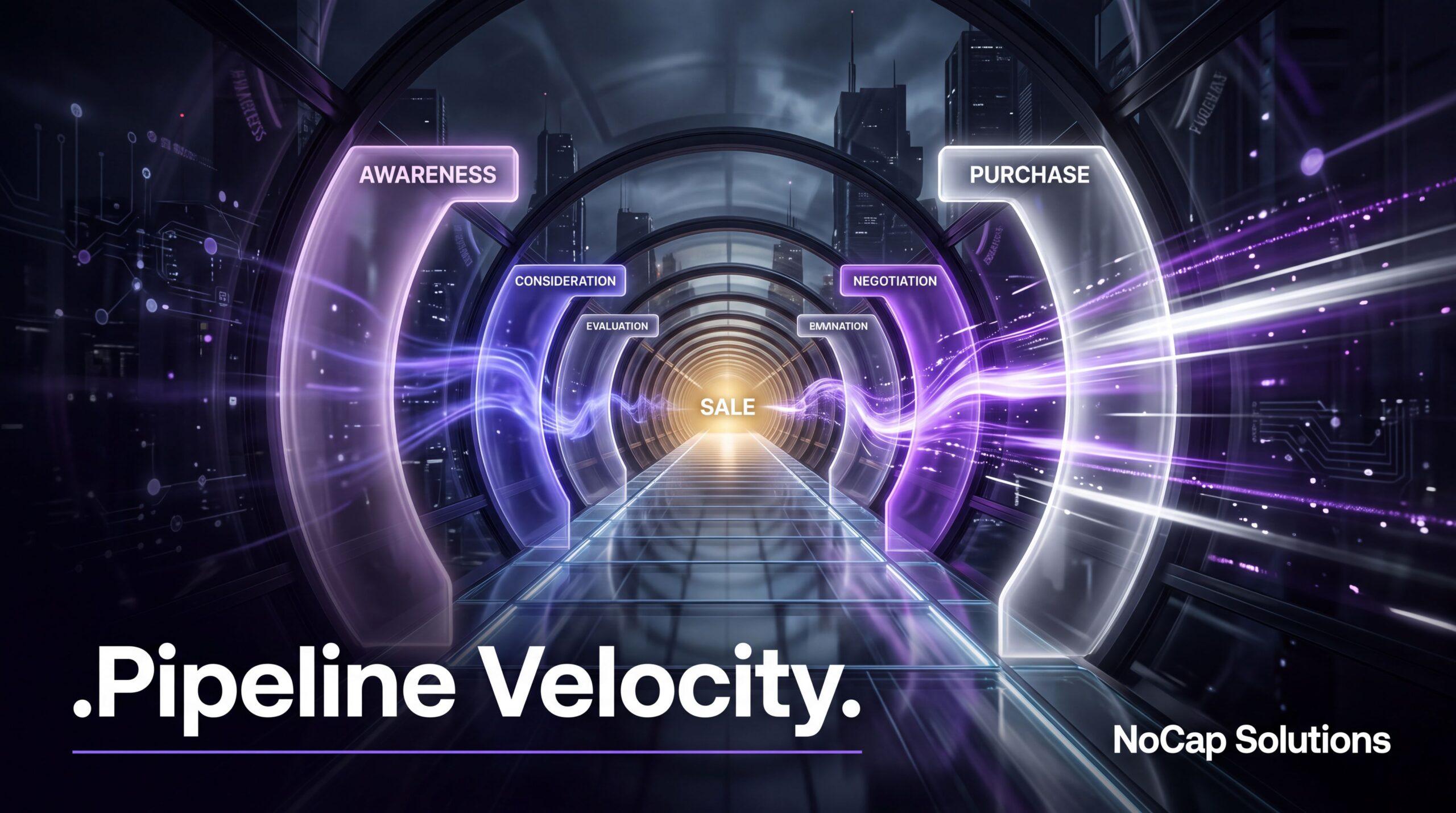
Pipeline Velocity: Track Stages to Boost Sales Faster
Pipeline Velocity: Accelerate Your Sales Funnel
Discover how tracking pipeline velocity and customer journey stages can boost conversion rates and drive faster sales.
This article delves into the critical metric of pipeline velocity and its impact on accelerating sales for both B2B and direct-to-consumer businesses. The discussion covers the entire customer journey – from the first brand impression to the final purchase – and highlights the importance of tracking conversion rates and time spent at each stage. With valuable insights into understanding suspects, prospects, and ideal clients, this guide unpacks essential strategies to refine your sales pipeline and drive rapid business growth.
Understanding Pipeline Velocity and Its Significance
Imagine being able to predict your sales outcomes as clearly as a weather forecast predicts tomorrow’s rain. Pipeline velocity is the strategic equivalent of that power – a metric that measures how quickly potential customers move through the sales funnel from the moment they become aware of a brand until they finally make a purchase. This isn’t just a buzzword coined by marketers or sales gurus; it’s a critical factor in both B2B and direct-to-consumer business models that enables companies to forecast revenue trends with unprecedented accuracy.
Pipeline velocity takes into account every nuance of the customer journey. At its core, it examines the interval between each interaction with a prospect and identifies how these interactions accumulate to influence the final purchasing decision. In traditional sales models many years ago, a couple of interactions might have been enough to convert interest into a sale. Today, however, the landscape has dramatically shifted. Social media, instant access to information, and a heightened level of consumer skepticism have expanded the required interactions from a mere two or three to somewhere between 14 and 21 touchpoints before a customer is even close to making a purchase decision. This explosion in necessary touchpoints is partly due to the constant noise in the digital space where consumers are bombarded with messages, offers, and reviews almost moment by moment.
Consider the journey of an online retail consumer. Initially, they might notice a brand through a sponsored post on Instagram or a targeted ad on Facebook. This first encounter plants the seed of curiosity. As they continue scrolling, they might catch sight of a tweet, see a YouTube review, or even overhear a conversation about the product in a podcast. Over time, each of these interactions is a small nudge, a subtle cue building familiarity and trust, much like assembling pieces of a jigsaw puzzle that ultimately reveal the full picture of the brand’s value. For B2B companies, the process might seem even more intricate, as identifying the ideal client involves not only understanding who could buy but also building nuanced profiles that encapsulate ideal customer attributes, payment terms, industry standing, and even the cultural fit of the prospective client.
The importance of understanding pipeline velocity cannot be overstated – it functions like a crystal ball for sales trends. By identifying the speed at which leads move from one stage of the funnel to the next, businesses can pinpoint inefficiencies, refine their messaging, and strategically allocate resources to maximize their conversion rates. For example, if analytics reveal that prospects stall at the negotiation stage, it might indicate that either the offer lacks sufficient perceived value or pricing is misaligned with market expectations. Addressing these issues can accelerate movement through the funnel, thereby boosting overall sales and revenue.
The customer journey has evolved from a singular or dual interaction to a multi-touch engagement process where each interaction matters – a process significantly influenced by social dynamics and rapid digital communication. Companies must adapt by not only tracking these interactions but also by tailoring the customer experience at each step. In today’s hyper-connected world, every social media post, every ad, every customer review – and even every brand tweet – can influence the pace of decision-making. As AI tools and analytics become increasingly sophisticated, businesses that strategize around pipeline velocity can gain a competitive edge by identifying and acting on real-time insights.
While companies still debate over traditional metrics like lead volume and conversion rates, pipeline velocity uniquely combines these data points into a single, actionable measure. It illuminates patterns, exposes choke points, and reveals opportunities for optimization. Enhancing pipeline velocity isn’t solely about getting more leads; it’s about understanding how fast those leads become sales and then engineering changes to accelerate that progression.
For instance, if interactions such as product tastings or one-on-one consultations are found to significantly speed up conversions, then increasing those touchpoints becomes the priority. Alternatively, if data shows that customer engagement peaks after the first call but drops off right before a demonstration, this could signal that more nurturing content or tailored follow-up strategies are needed. Such insights empower leadership teams to move from mere number crunching to proactive, informed decision-making that truly drives business growth.
To help visualize these insights, consider a high-tech solution like NoCap Solutions’ Live Intelligence and Analytics Dashboards. Designed to integrate data from every customer interaction, it consolidates this information into one coherent, real-time view that aids leaders in making timely, impactful decisions – turning what once was hindsight into a strategic asset. This kind of tool exemplifies how businesses are leveraging cutting-edge technology to streamline analytics and put actionable insights at the forefront of their sales strategies.
Beyond analytics, the modern business landscape demands that companies be agile, always ready to pivot based on fresh data. By harnessing the potential of pipeline velocity, even minute changes in customer behavior become evident, allowing businesses to adjust their strategies immediately, rather than waiting weeks or months for end-of-quarter reports. In a world where consumer behavior evolves almost daily, this agility isn’t just beneficial – it’s essential for survival.
The shift from a simple, transactional approach to a complex, layered customer engagement is both a challenge and an opportunity. It challenges businesses to re-examine every facet of their sales process, from initial awareness to final purchase, and it offers the opportunity to build deeper, more reliable customer relationships by understanding the journey in its entirety.
While the concept might sound abstract, the beauty of pipeline velocity lies in its simplicity when broken down: it tells the story of how a prospect transforms into a customer, highlighting every critical stage along the way. With this understanding, companies can then re-engineer their sales processes to reduce friction, capitalize on strengths, and ultimately drive higher conversion rates, increased revenue, and a more loyal customer base.
In the current business climate, where digital interactions reign supreme and customers are more informed and discerning than ever, pipeline velocity serves as an indispensable metric. It guides businesses on where to invest their time and resources, refines their marketing narrative, and, when executed correctly, can fundamentally transform the sales process from fragmented and reactive into streamlined, proactive, and predictable.
So, whether it’s tightening the early stages of the funnel or smoothing out the later conversion handoffs, understanding and acting on pipeline velocity is the linchpin that connects data-driven insights with tangible revenue growth. The transition from opacity to clarity in sales performance is not just a theoretical advantage – it’s a real-life game changer that defines competitive success in the digital age.
Mapping the Customer Journey from Awareness to Purchase
Think of the customer journey as a winding road through a densely forested landscape, where every landmark represents a unique interaction with the brand. Mapping this journey thoroughly allows companies to not only see where potential customers first encounter their offerings but also to understand the winding path that eventually leads them to commit to a purchase. In an era where consumers interact with brands across multiple channels, creating a clear map of this journey is the first step toward harnessing the full potential of pipeline velocity.
The journey begins with awareness – when a person first stumbles upon a brand. This could be through various touchpoints such as engaging advertisements, creative social media posts, online reviews, or even word-of-mouth recommendations at events and trade shows. Each of these initial interactions is like a tiny spark, igniting curiosity and planting the seed for future engagement. The moment a brand captures attention is pivotal because it sets the stage for all subsequent interactions. As these touchpoints accumulate, the customer’s interest gradually shifts from passive observation to active engagement.
Once awareness is established, the next phase involves identifying prospects. In marketing parlance, leads start as “suspects” – potential customers who have yet to express clear interest but seem promising based on behavior or demographic data. As they begin interacting more deliberately with the brand – through actions like signing up for newsletters, clicking on ads, or engaging with social media content – they transition into the “prospect” phase. This stage is characterized by deeper interest and a willingness to receive more targeted messaging and personalized offers.
Mapping the journey involves breaking down these interactions further. Companies need to develop a well-defined pipeline structure that outlines each stage of the customer journey. Here are some critical stages to map out:
- Initial Identification (Suspect): Where potential customers are first recognized, often through passive engagement like visiting a website or engaging with a sponsored post.
- Engagement (Prospect): Where prospects become active participants by providing contact information, attending webinars, or downloading content. This stage often includes email sign-ups and initial conversations.
- Active Steps: Once a prospect shows genuine interest, the next series of steps could include direct actions like taking a call, scheduling a meeting, attending product tastings, or even participating in demonstrations. For premium products, there might be additional layers of due diligence where multiple stakeholder inputs are considered.
For instance, consider a scenario where a potential consumer sees a well-crafted ad on Instagram. They click the link and land on a blog post that educates them about the product. After reading and perhaps sharing the content, the consumer might be prompted to sign up for a webinar. This progression from casual awareness to active engagement is a prime example of mapping the customer journey effectively – each point of contact is a stepping stone toward eventual conversion.
Different products and price points require different mapping strategies. For low-cost impulse purchases, the journey is typically shorter and more straightforward; a single enticing ad might suffice to push a consumer toward a quick buy decision. In contrast, for higher-end products where customers deliberate for longer periods, the journey is more complex. These consumers will often engage in multiple touchpoints, seeking validation through reviews, product demonstrations, and comparisons before they decide to commit. Their journey isn’t just about the product itself but also about the values, ethics, and community that the brand represents.
Younger generations add further complexity to the mix. They are not only digitally savvy but are also keen on aligning with brands that mirror their values and sense of community. For them, purchasing decisions are heavily influenced by factors such as sustainability, social responsibility, and corporate authenticity. A brand that fails to project these values might see a steep drop in conversion rates despite a high volume of initial interactions. Thus, mapping the customer journey isn’t simply about tracking clicks and conversions; it’s about understanding the emotional and psychological triggers at each stage of the buying process.
A robust mapping strategy considers these varied touchpoints and aligns the marketing approach accordingly. The goal is to create a seamless narrative that guides the customer confidently from the moment they hear about the brand to the point of sale. Each touchpoint should be viewed as an opportunity to build trust, educate, and foster an emotional connection – thus gradually converting a casual observer into a loyal customer.
In the B2B world, mapping the journey can become even more granular. Instead of treating every lead the same, businesses need to engage in extensive profiling to identify the ideal client. This involves not only mapping out how many interactions lead to a successful conversion but also understanding the qualitative aspects of those interactions. A deep dive into customer data might reveal that successful conversions often happen when the business engages in a consultative process – discussing not just the product features but also aligning on values, long-term outcomes, and mutual business growth.
Tracking these touchpoints meticulously allows companies to allocate resources where they matter most. For example, if data indicates that prospects are most likely to convert after participating in a product tasting or demonstration, then investing in those events becomes a strategic imperative. Likewise, if the journey stalls at the point where a prospect transitions from a casual lead to a serious inquiry, it might signal that the educational content or initial engagement strategy needs a revamp.
Real-world examples reinforce the value of a detailed mapping strategy. Consider how major global brands like Apple and Nike have mastered this art. Their marketing strategies are less about pushing a product and more about crafting a story, fanning the flames of interest with a rich tapestry of touchpoints that gradually weave the consumer into their brand narrative. These brands harness the full potential of mapping the customer journey by ensuring that every interaction is purposeful and contributes to a larger objective – building an ecosystem of trust and anticipation.
In today’s fast-paced market, every touchpoint should ideally contribute to accelerating the journey. Businesses that successfully map and manage these interactions set themselves up for reduced friction during the conversion process. They not only retain more customers but also achieve a greater level of operational efficiency by understanding where to focus their sales and marketing efforts.
One way to expedite the process is by deploying advanced analytics tools that provide real-time feedback on customer interactions. Tools like the Live Intelligence and Analytics Dashboards by NoCap Solutions help capture every data point – from the initial ad impression to the final checkout. This interlinked view of the customer journey is priceless in today’s competitive environment, as it allows decision-makers to quickly identify which touchpoints yield the highest conversion rates and which ones might need improvement.
Moreover, as AI continues to play a pivotal role in modern marketing, the ability to track and analyze these touchpoints in real time is only set to become more refined. This means that businesses have an unprecedented opportunity to personalize their messaging, fine-tune customer experiences, and ultimately drive higher conversion rates by leveraging data at every step of the journey. The future of customer engagement lies in this fusion of technology and strategy, creating a dynamic, responsive sales process that evolves alongside consumer expectations.
Mapping the customer journey is much more than a linear process – it is about building and sustaining relationships. Companies must endeavor to understand not only the sequence of events but also the motivation and mindset of the customer at each stage. By doing so, every interaction – from seeing an advertisement to attending a product demonstration – becomes an opportunity to connect on a deeper level, ultimately transforming a fleeting interaction into a meaningful, long-term relationship.
This layered approach helps companies pinpoint exactly where prospects might be falling off and what might need to be improved to shorten this journey. Ultimately, a well-mapped customer journey becomes the backbone of an effective sales strategy, one that prepares the business for scalable, predictable, and sustainable growth.
Strategies to Improve Sales Pipeline Efficiency and Conversion Rates
With the customer journey mapped out in meticulous detail and pipeline velocity serving as a strategic compass, the next logical step is to implement strategies that optimize both the efficiency of the sales pipeline and the conversion rates across its various stages. This stage of the conversation is where theory meets action – where data-driven insights are transformed into concrete strategies that boost revenue and ensure long-term business success.
Improving pipeline efficiency starts with rigorous data tracking. Businesses that fail to monitor how long it takes for a lead to progress from one stage to the next miss out on critical intelligence that could signal either a strength or a weakness in their process. For instance, if it consistently takes six weeks for a lead to move from the initial identification to the final sale, then every minute that can be shaved off this timeline represents extra revenue coming in sooner rather than later.
A key part of this strategy is understanding the conversion rates at every stage of the pipeline. Conversion rates not only reveal how many leads are becoming paying customers, but they also expose where prospects are being lost. For example, if 100 potential customers enter the pipeline every month but only 10 make it through to the final sale, then the conversion rate sits at 10 percent. By focusing on strategies that mitigate drop-off points – such as streamlining the lead nurturing process, enhancing the quality of initial interactions, or even rethinking the pricing strategy – businesses can potentially boost that conversion rate incrementally to 15 or even 20 percent.
There are several actionable insights that can empower businesses to fine-tune their pipeline strategy:
- Track every interaction meticulously by using advanced analytics platforms.
- Measure the time spent on each stage from initial contact to sale closure.
- Identify and monitor drop-off points consistently.
- Test different messaging frameworks and follow-up sequences to see what resonates best.
- Align product value with customer expectations at every touchpoint.
In terms of messaging, aligning the product’s value with customer expectations is critical. If every stage of the sales process communicates a consistent message about what the product does and the value it brings, the pipeline flows more smoothly. This might involve training sales teams to handle objections more effectively, revamping pricing models, or even offering incentives at pivotal stages to secure the sale.
An important strategic objective is to ensure that drop-off points – those critical moments where potential customers hesitate and eventually exit the pipeline – are minimized. Data analytics can reveal patterns, such as customers consistently dropping out at the negotiation stage. This might indicate a misalignment between what the customer expects in terms of value and what is being offered, or it could reveal inefficiencies in the sales process itself. Once these choke points have been identified, businesses can adjust their portfolios accordingly – whether by revising product features, offering additional value propositions, or even restructuring the negotiation process to be more customer-friendly.
Scaling up is another essential element of an optimized pipeline. Businesses need to think about increasing not just the number of customers, but also the value derived from each customer. This involves strategies to grow the maximum spend, the average spend, and the frequency of purchases. For example, upselling complementary products or services at the right moment in the pipeline can transform a stagnant customer journey into a dynamic revenue engine. Additionally, implementing loyalty programs or subscription incentives can encourage repeat purchases, effectively turning one-off buyers into long-term, loyal customers.
Advanced data analytics is the cornerstone of these improvements. When businesses are armed with precise metrics on how many interactions are needed for each stage, they can experiment with altering variables like engagement methods, pricing, or customer support tactics in a way that is methodical and measurable. Even small tweaks – like refining the language on a call-to-action in an email or adjusting the design of a product demonstration – can have outsized effects on conversion rates.
In practice, businesses are finding that by scrutinizing their pipeline with an analytical lens, they not only reduce the time-to-sale but also improve their ability to forecast revenue. This forecasting is no longer a matter of hope and guesswork but becomes an exact science where numbers drive strategy and operational tactics align perfectly with market dynamics.
One strategic tool that aids in this endeavor is the use of real-time dashboards that consolidate all relevant metrics into one visual interface. For example, NoCap Solutions offers the innovative Live Intelligence and Analytics Dashboards. This solution provides leadership teams with a consolidated truth, drawing from every system that the business operates. When decisions are based on what is happening now, rather than outdated reports, companies can pivot quickly, addressing issues like sales drop-offs or unexpected delays in lead conversion before they become entrenched problems.
Moreover, these insights facilitate an environment where product value, pricing strategy, and customer expectations are perfectly aligned. When a business can clearly see that a specific messaging strategy or a particular stage in the pipeline consistently underperforms, targeted interventions can be deployed immediately. The net result is a flatter, more efficient pipeline that not only brings in a higher volume of customers but also ensures that each conversion is as profitable as possible.
Another essential aspect of improving pipeline efficiency is the investment in staff training and process automation. With ever-evolving customer behaviors and increasingly complex buying journeys, the human element in sales and marketing must continuously evolve as well. Training sessions that focus on understanding nuanced customer signals, recognizing the strategic value of early touchpoints, and using data analytics to preemptively address objections can all contribute substantially to reducing drop-offs. Additionally, automating routine tasks – such as scheduling follow-ups or generating personalized email responses – can free up valuable time for sales teams to focus on high-impact interactions.
A further strategy involves aligning the entire organization around the concept of pipeline efficiency. When every department, from marketing to customer support to sales, understands its role in guiding a prospect through the funnel, the overall process becomes more cohesive. Cross-functional collaboration ensures that every touchpoint, whether it’s a social media engagement or a customer support call, contributes to a seamless and consistent customer experience.
Yet another compelling strategy is the use of personalized experiences to drive engagement. In today’s data-driven environment, personalization can be the difference between a quick sale and a lost opportunity. By leveraging customer data, companies can tailor their interactions based on individual pain points, interests, and behaviors. This not only accelerates the journey but also builds a foundation of trust, turning prospects into advocates for the brand over time.
Furthermore, strategic resource allocation plays a massive role. If data indicates that certain channels or touchpoints result in higher conversion rates, then marketing spend can be directed more heavily toward those avenues. This dynamic reallocation of resources ensures that every dollar spent is optimized for maximum return on investment. In scenarios where conversion rates improve from, say, 10 percent to 15 percent after a tactical adjustment, the revenue potential multiplies significantly – not merely in volume, but in profitability as well.
The success of these strategies relies heavily on continuous measurement and iterative improvement. It is not enough to set a strategy and let it run unchecked; constant monitoring, feedback, and recalibration are required to maintain an optimal pipeline. Experimentation should be encouraged, building a culture where every team member feels responsible for contributing ideas that can accelerate conversions or shorten time-to-sale.
An actionable tip for businesses keen on enhancing pipeline efficiency is to adopt a test-and-learn approach. This involves systematically testing different aspects of the customer journey – from ad creatives to landing page copy to follow-up sequences – and then analyzing results in a controlled, data-driven manner. This iterative process often reveals hidden insights that can be scaled up, resulting in incremental improvements that add up to transformative results over time.
Moreover, leveraging internal resources like checklists, expert consultations, and educational materials can further empower the team. NoCap Solutions, for instance, not only builds exceptional AI systems but also provides additional resources like in-depth guides and consultation sessions to help businesses navigate the complexities of sales pipeline optimization. These resources serve as valuable supplements, turning theoretical strategies into practical, actionable plans.
In summary, the journey to improving sales pipeline efficiency and conversion rates is both an art and a science. It demands a deep understanding of the customer journey, meticulous tracking of interactions, and a willingness to experiment with innovative strategies. When businesses focus on these areas, they unlock the potential to transform a slow-moving pipeline into a high-velocity revenue engine that propels sustainable growth.
From tracking minute-by-minute progress to implementing high-level strategic changes, every action taken in the name of boosting conversion rates is a step toward greater operational excellence. With the right blend of real-time analytics, personalized messaging, dedicated staff training, and intelligent automation, the cumbersome sales funnel of yesterday can be reimagined as a streamlined, efficient process that not only meets but exceeds contemporary market demands.
The benefits of these improvements extend far beyond the immediate bottom line. Enhanced pipeline velocity and improved conversion rates lead to better predictability in revenue, greater customer satisfaction, and ultimately, more robust business growth. In the competitive, ever-changing landscape of modern commerce, this kind of agility is not just desirable – it is absolutely essential.
As companies continue to refine their processes and harness the power of data, the transformation from a clunky, reactive sales process to a smooth, proactive revenue engine becomes ever more achievable. In this new paradigm, every interaction counts, every minute saved is revenue secured, and every strategic adjustment can pave the way for a more prosperous future.
To conclude, the strategies outlined above form a blueprint for turning raw potential into tangible success. Whether it is through enhancing transparency with cutting-edge tools like NoCap Solutions’ Live Intelligence and Analytics Dashboards, optimizing every touchpoint along the customer journey, or realigning internal processes to reduce friction, the goal remains the same: to create a sales pipeline that is robust, responsive, and relentlessly focused on optimizing conversions while delivering exceptional customer experience.
In a world where every second counts and every customer interaction can be the turning point between a sale and a missed opportunity, mastering pipeline velocity is not just an option – it is the key to sustainable competitive advantage and long-term business resilience. Embracing these strategies ensures that businesses are not merely reacting to market forces but actively shaping them, setting the stage for continuous innovation, growth, and success.
The journey does not end here. As technology evolves and consumer behaviors shift even more rapidly, the strategies for optimizing pipeline velocity will continue to develop. However, the foundational principles remain the same: measure diligently, adjust continuously, and always keep the customer journey at the forefront of strategic planning. By doing so, companies can turn insights into action, transforming potential hurdles into stepping stones and ultimately driving their business forward into a future where success is defined by agility, precision, and unwavering customer focus.
Through the disciplined application of these principles, the sales pipeline transforms from a simple funnel into a dynamic ecosystem where leads are nurtured, conversion rates soar, and revenue growth is not only predictable but also exponentially scalable. This transformation is the hallmark of modern, digitally empowered businesses that are ready to meet the challenges of today and seize the opportunities of tomorrow.
With pipeline velocity as a critical metric and a well-mapped customer journey as a guide, every stage of the sales process becomes a chance to innovate, improve, and ultimately, excel. The resulting synergy between data, strategy, and execution creates a powerful engine of growth – one that propels businesses to heights previously unimagined, ensuring long-term success in an increasingly competitive market.
In conclusion, understanding and leveraging pipeline velocity is akin to having a strategic superpower in the modern business arena. It unlocks the door to faster, smarter, and more effective sales processes that can meaningfully enhance conversion rates and boost revenue. By investing in sophisticated analytical tools, embracing personalization, and fostering a culture of continuous improvement, businesses can navigate the complexities of today’s customer journey with confidence and clarity. The roadmap is set – optimize, measure, and grow – and the journey from awareness to purchase has never been more dynamic or promising.