
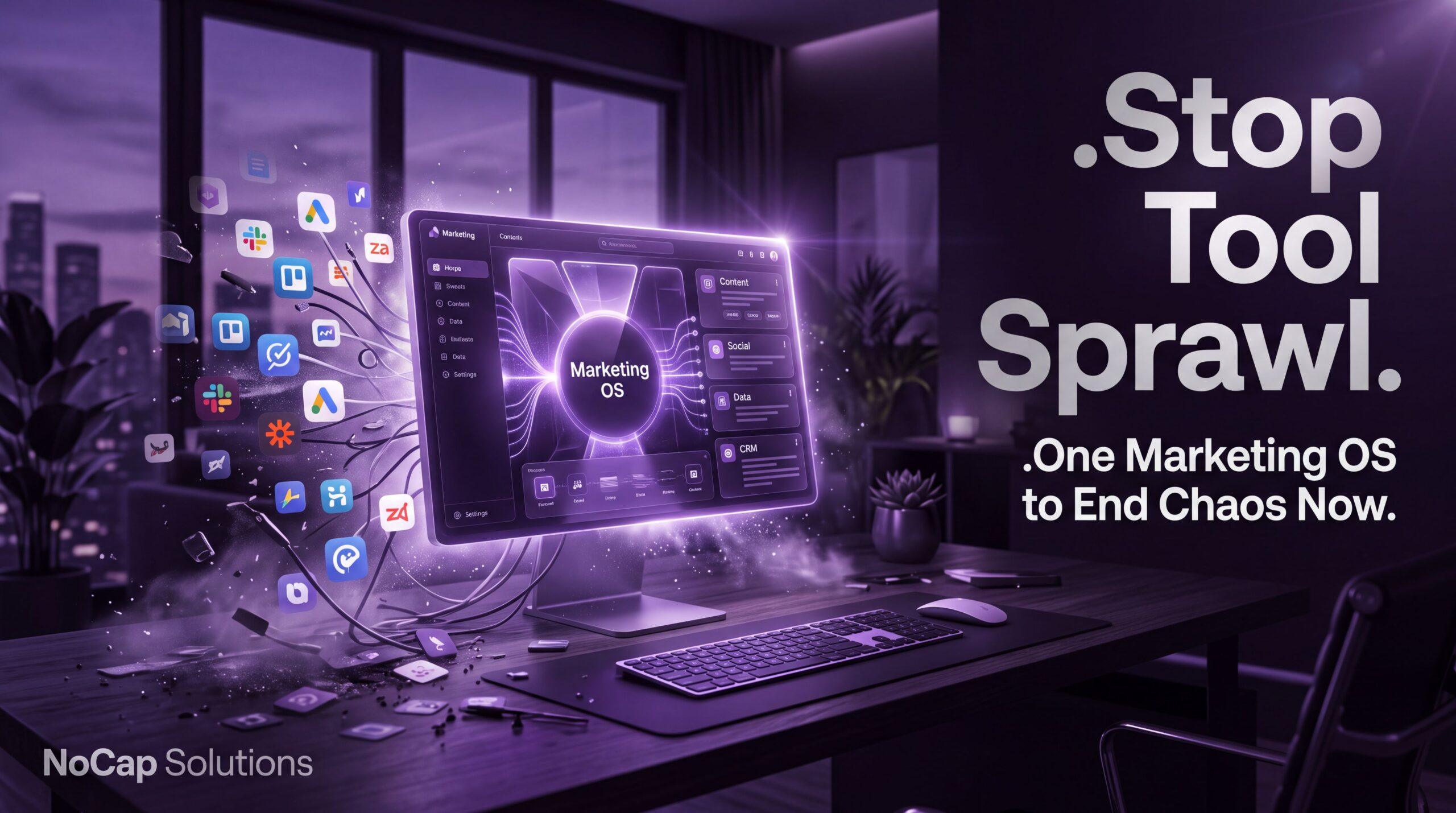
Stop Tool Sprawl: One Marketing OS to End Chaos Now
Conquer Marketing Chaos with a Unified Operating System
Discover how a unified marketing OS eliminates tool sprawl by integrating marketing tools for better efficiency, cost savings, and streamlined processes.
This article will explore how a comprehensive marketing operating system can end the chaos of using multiple tools. It explains how a unified marketing OS streamlines processes and improves productivity. With insight on integration benefits, cost-saving strategies, and reducing duplicate work, the content provides practical advice for service-based businesses aiming to transition from tool overload to a seamlessly connected system.
Understanding Marketing Operating Systems
Imagine a busy airport terminal where every flight is managed separately by different teams, each using its own methods and communication channels. The result? Confusion, delays, and missed connections. In the world of marketing, many businesses face a similar scenario when they operate with multiple isolated tools instead of a unified marketing operating system. At its core, a marketing operating system is not just another piece of software – it’s a comprehensive framework that marries processes with technology to streamline every aspect of your marketing efforts.
Clarifying the Concept
Traditional software solutions often fall into the trap of being misnamed. Business owners may think they have an “operating system,” but what they really have is an implementation of business processes. For instance, the Entrepreneurial Operating System (EOS) is widely recognized for its process-driven approach – it’s less about the software itself and more about how teams organize their priorities or allocate resources. Yet, a traditional software operating system suggests a technological backbone, an integrated platform that manages workflows, data, and communications seamlessly. This confusion in terminology can lead businesses to adopt piecemeal solutions that over time become a maze of disconnected tools.
When the conversation turns to marketing, the difference becomes even more pronounced. Many companies start with the tools they know: email platforms like Mailchimp, web form systems such as Gravity Forms, and niche social media apps. Each of these works well on its own until you realize you’re spending countless hours bridging the gap between them. Business leaders soon notice that the reality of managing separate systems creates its own set of “integration headaches.” A marketer might have to juggle email campaign stats, website visitor behaviors, and social media analytics separately – with little to no communication between those systems.
Process-Driven vs. Software-Based Systems
The distinction is key here. Software-based systems often imply a one-size-fits-all approach, where you install or subscribe to a tool and expect it to run everything perfectly. However, these systems sometimes lack the necessary flexibility to tackle the vast array of tasks a marketing team faces daily. In contrast, process-driven approaches – like EOS, for example – might focus intensely on the human aspect and strategic planning without providing the technological infrastructure on which modern businesses rely.
The transcript from Bisbus illustrates this perfectly. It emphasizes that what many refer to as a “business operating system” is essentially a marketing process implementation rather than a truly integrated piece of software. The conversation between Craig and the host highlights the evolution from using separate platforms such as Mailchimp and Gravity Forms to the adoption of a more comprehensive system like HubSpot. Even though HubSpot is well known as a marketing platform, its strength lies in how it brings together disparate elements of communication, automation, and data tracking under one umbrella.
The Integration Challenge
Businesses that operate on fragmented tools experience several challenges. Picture a scenario where one software handles your email campaigns while another manages your lead forms and yet another tracks social interactions. Every time a potential customer interacts with one facet of your brand, the data is siloed in a separate system, forcing your team to sweat over manual integrations using tools like Zapier or Make (formerly Integromat). The outcome? Duplicate data entry, inconsistencies in customer records, and an overall slowing down of marketing execution.
Moreover, when each tool does its own job well but fails to speak fluently with the others, the business loses the holistic picture of customer behavior. Tracking interactions across emails, websites, and social media becomes a cumbersome endeavor – with each misalignment threatening the very foundation of your marketing strategy. This is akin to trying to solve a puzzle where pieces from different sets don’t quite fit together. The result is inefficiency that drains valuable time and resources, directly impacting revenue and growth.
Real-World Implications
In many practical cases, companies have witnessed firsthand how fragmented tools create inefficiencies. For instance, a business might realize that its marketing team spends upwards of several hours weekly configuring integrations manually, troubleshooting data mismatches, and cleaning up duplicate records. When teams waste time on these repetitive tasks, the more concentrated and critical initiatives – like high-ticket, high-trust sales – are sidelined. The impact is significant because opportunity cost isn’t just about monetary figures; it’s also about the lost potential of investing that time into strategic growth activities.
A business operating strictly with isolated tools may have robust systems in each functional area. However, the lack of centralization means that leadership teams repeatedly find themselves producing numbers rather than making timely, informed decisions. Without a consolidated view of all marketing activities, identifying trends, predicting market shifts, or even troubleshooting issues in real-time turns into an insurmountable challenge. This fragmentation is the antithesis of what a true marketing operating system promises to deliver: a single, integrated platform designed to free up time and energy.
Benefits of Integrating Your Marketing Tools
Consider the immense relief that comes when every moving part of your marketing machinery starts working in harmony – a state where data flows effortlessly from one process to another. The key benefit of using an integrated marketing system is that it eliminates the need for convoluted workarounds, like stitching together multiple applications with Zapier-like tools. With everything in one place, the cumulative advantages become crystal clear.
Streamlining Data Integration
A single integrated system means that every piece of data lives in one central hub. By eliminating the constant need for manual data transfers, businesses can say goodbye to the pitfalls of double data entry or misaligned records. The transcript clearly emphasizes how a unified system can automatically track customer interactions across emails, websites, and social media channels. By using features like progressive profiling, the system continuously builds a comprehensive view of each customer without bombarding them with redundant form fields. Every visit reopens the dialogue with just the right set of questions, slowly but surely building a complete customer profile over time.
This streamlined approach is more than just a technical upgrade. In the realm of marketing, having all data in one place directly translates into enhanced productivity and precise decision-making. Instead of spending precious hours reconciling numbers or jogging between different software interfaces, teams can focus on what truly matters: strategic initiatives and creative problem-solving. The ripple effect of this is profound – better data quality leads to more accurate segmentation, improved targeting, and ultimately, higher conversion rates.
Adaptive Customer Profiling
Progressive profiling within integrated systems delivers a tailored experience where only essential information is requested at any given time. Imagine a system that adapts to each customer as they engage with your content. The first interaction might simply ask for an email address, but as the customer returns, the system introduces additional fields to gradually build a more detailed profile. This adaptive approach not only enhances user experience by reducing form fatigue but also equips your marketing team with deeper, actionable insights for personalized campaigns.
In practical terms, this means that over time, the data amassed becomes rich enough to power sophisticated lead scoring and segmentation strategies. The gathering of incremental details enables businesses to craft more relevant offers, personalized email journeys, and contextually rich interactions that validate the customer’s place in the buying journey. No longer is this a game of hit or miss; it is a carefully orchestrated symphony where every note contributes to a more informed, agile, and dynamic marketing operation.
Cost and Productivity Advantages
When reviewing the benefits of an integrated system, the cost factor is often a major concern. It is not unusual for business leaders to initially balk at the price of a comprehensive tool. However, a closer look reveals that the expense incurred by purchasing multiple, separate tools quickly adds up – often surpassing the cost of one unified platform over time.
The transcript highlights a recurring sentiment: while a platform like HubSpot might seem expensive at first glance, the savings in time, efficiency, and reduced integration headaches make it a financially sound investment in the long run. Integrated systems remove the hidden costs of managing disparate platforms, such as fees for integration tools, additional labor costs for maintaining data consistency, and the inefficiencies related to training teams on multiple systems.
The opportunity cost of managing multiple systems extends beyond mere dollars – it affects the overall productivity of your team. When employees are bogged down by the complexities of switching between tools or troubleshooting integration issues, they have less time to focus on strategic initiatives. The lost hours can be better spent on activities that directly contribute to attracting high-value customers and closing high-trust sales deals.
Enhanced Tracking and Visibility
One of the standout advantages of an integrated system is the enhanced tracking and visibility it offers. With all your marketing data centralized, it becomes significantly easier to monitor customer behavior and measure the efficacy of your campaigns in near real-time. Imagine a scenario where every time a potential customer opens an email, interacts with your website, or follows your social media updates, their journey is recorded in a single dashboard. This comprehensive view naturally leads to more proactive management of marketing campaigns, enabling you to identify patterns or issues as they emerge rather than after the fact.
For leadership teams, this means less time spent crunching numbers for post-mortem reports and more time devoted to strategic decision-making. Consistent, real-time data not only drives a better understanding of current trends but also helps in forecasting future business opportunities. Ultimately, the informed insights you gain from a unified system allow you to allocate resources more effectively, align marketing efforts with broader business objectives, and react swiftly to market developments.
Eliminating Integration-Related Chaos
The chaos born from managing non-integrated systems can stifle any organization, big or small. The constant juggling of different data streams and software interfaces creates an environment where miscommunication and delays are the norm rather than the exception. The integrated operating system on a unified platform is the antidote to this disorder. It streamlines workflows by ensuring every piece of your marketing equation is connected – from the initial customer interaction to final conversion metrics.
In a fragmented environment, each new integration adds another potential point of failure. Whether it’s the occasional glitch in transferring data between Gravity Forms and your email platform, or the tedious manual reconciliation required to combine data from social media analytics and website metrics, each disconnect eats away at business efficiency. By contrast, an integrated system provides a solid foundation, where data consistency and operational reliability are built into the architecture from the start. The end result is a dynamic, cohesive operation where your team can focus on strategy and creativity rather than on troubleshooting systems that refuse to ‘talk’ to each other.
Transitioning to a Unified Marketing System
The journey from relying on one-off tools to embracing an integrated, unified marketing system is both a strategic evolution and an operational necessity. Early on, businesses may find comfort in using a patchwork of best-of-breed services – each a specialist in its own right. However, as the complexity of operations increases, the disjointed nature of these systems starts to reveal its true cost. The conversation from the transcript underscores this turning point: the moment when time and money spent on continually patching integrations begin to outweigh the benefits of each individual tool.
Recognizing the Need for Change
It is not uncommon for businesses to start with familiar tools, believing that adding one more specialized application will help streamline the marketing process. Early on, this approach might suffice when managing a handful of campaigns or a small sales team. But as the business grows and the scope of marketing expands, the walls between these disparate systems become glaringly apparent. The cumulative loss from double data entry, manual integrations, and misaligned customer profiles prompts a critical question: Is it worth continuing with a fragmented setup?
The transcript offers a compelling example – a marketing professional who initially favored platforms like Mailchimp and Gravity Forms, only to realize that a centralized system provided a far more elegant and efficient solution. This realization is a common narrative. When the various software platforms no longer provide the communication and synergy required to support growing business objectives, the need for a more comprehensive approach becomes undeniable. At this juncture, decision-makers must weigh the true costs – not just the sticker price of the tools but also the hidden operational expenses that add up over time, such as lost productivity and error-driven inefficiencies.
Evaluating the Key Factors
Transitioning to a unified system isn’t like flipping a switch. It requires careful evaluation of several key factors:
- Functionality: The new system should encompass all necessary marketing functions – from email management and lead tracking to customer profiling and campaign analytics.
- Integration Capability: Consider the ease with which the new platform can connect with existing processes and data sources. A system that natively integrates with other critical tools (for example, accounting software like QuickBooks) offers tremendous operational advantages.
- Scalability: The ideal solution should grow alongside the business, adapting to increasing demands without becoming cumbersome or inefficient.
- User Experience and Training: Even the most advanced system is only as good as its adoption. Assessing how intuitive the new platform is for daily users and the extent of the required training is essential.
Many businesses have experienced that bittersweet moment when they look back and wish they had transitioned to a unified platform sooner. The frustration of endless data silos and the continuous need for workarounds contrast sharply with the ease and efficiency a comprehensive system can offer. The narrative from the transcript perfectly encapsulates this scenario, where a friend was urged to make the switch and later admitted that the new comprehensive system should have been adopted much earlier.
The Role of a Bespoke System
At this pivotal crossroads, one solution that stands out is the concept of bespoke systems tailored to your business’s precise needs. For companies that have grown tired of constantly battling integration issues and time-draining processes, NoCap Solutions offers its renowned Frontier Business Systems. These systems are engineered from the ground up to reflect the unique operations of each business, rather than forcing the business into a pre-existing mold.
Frontier Business Systems are designed to remove chaos at the operational level. When a company adopts such a system, it no longer needs to worry about disjointed data flows or clunky workarounds. Instead, the system seamlessly connects email tracking, website analytics, and social media monitoring into one coherent narrative, empowering teams to act on real-time insights rather than historical reports. For businesses operating in dynamic, fast-paced markets – where every minute counts – this can be a game changer.
Embracing the Change
Transitioning to a unified marketing system is not without its challenges. Concerns about perceived high upfront costs and the initial learning curve can create hesitation. However, as demonstrated by the transcript, these initial barriers are quickly overcome once business leaders observe the tangible benefits. Productivity improves, operational chaos diminishes, and the overall strategic focus shifts from management of tools to active revenue generation.
The change can be broken down into several practical steps:
- Assessment of Current Processes: Map out existing tools, workflows, and integration points. Identify where redundancies exist and where critical data is being lost in translation.
- Evaluation of Business Needs: Determine which functions are essential for delivering value to your customers. Consider both current needs and anticipated growth.
- Selection of a Comprehensive Platform: Look for a solution that integrates the majority of your processes under a single roof. Platforms like HubSpot have been popular choices; however, tailored solutions such as NoCap Solutions’ Frontier Business Systems offer the added benefit of being custom-built for your unique operational profile.
- Implementation and Training: Once a decision is made, the focus shifts to deployment and onboarding. Solid training programs and support during this phase are critical to ensure that the entire team benefits from the new system from day one.
- Ongoing Measurement and Iteration: As with any system, continuous evaluation is necessary. Monitor key performance metrics and be prepared to fine-tune the solution as your business evolves.
Ultimately, the decision to step outside of familiar, isolated systems is one of strategic foresight. It requires recognizing that the operational efficiencies gained from an integrated platform can far outweigh the challenges of a switch. By embracing a unified marketing operating system, companies position themselves to react faster to market changes, reduce operational friction, and ultimately allocate more resources toward high-impact activities.
Overcoming the Fear of Transition
It is natural for businesses to feel a sense of inertia when the idea of changing systems comes up. After all, the comfort of familiar tools – even if inefficient – often feels safer than the uncertainty of transition. But in the fast-evolving world of marketing, hesitation can be more costly than the perceived risk of change. The time spent wrestling with integration issues on multiple platforms is time stolen from strategic initiatives that drive revenue. When operations are smooth and integrated, decisions are made on current data, and the resulting agility can lead to better, faster outcomes.
One vivid example discussed in the transcript involves a business leader who eventually recognized that the hours wasted on manually fixing integration issues far exceeded what a unified system would require. In high-stakes environments – where a consultant could be billing $200 or $300 per hour – the financial and opportunity costs of a disjointed system are magnified exponentially. This is not an abstract calculation; it’s a very real puzzle that every marketing leader must solve eventually.
Realizing the Full Value of Integration
The journey toward integration is often marked by a critical turning point – a moment when the inefficiencies of a fragmented approach become painfully apparent. Once that threshold is crossed, the benefits of a coherent, unified system reveal themselves in multiple dimensions:
- Time Savings: No more spending hours just to get disparate data sources to talk to each other. Automated updates, real-time dashboards, and seamless data flows free up the team to focus on strategic, revenue-generating activities.
- Improved Data Accuracy: With a central repository for information, there is less risk of errors from duplicate entry or misaligned records. This leads to more accurate tracking of customer interactions and better decision-making.
- Enhanced Communication: Integrated systems facilitate smoother workflows across departments, ensuring that every team member has access to the same up-to-date information. This results in faster, more coordinated responses to market shifts.
In this light, the move to an integrated marketing operating system is not just a technological upgrade – it is a transformative strategic decision that lays the foundation for scalable, sustainable growth.
A Call to Action for Modern Marketers
For organizations feeling the weight of scattered tools and integration bottlenecks, the message is clear: it is time to transition into a unified marketing system. Doing so not only alleviates operational headaches but also paves the way for higher productivity, reduced costs, and improved market agility. While the initial step may be daunting, the long-term benefits are undeniable. With streamlined workflows and a singular focus on what really matters – engaging customers and closing high-value sales – the future of marketing becomes more manageable and infinitely more promising.
The evidence from real-world cases and insightful discussions, like the one captured in the Bisbus transcript, offers a persuasive argument for reevaluating existing processes and embracing change. As more businesses recognize that the time lost to managing fragmented systems can be better spent on core strategic activities, the era of the unified marketing operating system is set to become the defining trend for modern, agile organizations.
In summary, whether you are a small business just starting out or a growing enterprise feeling the strain of disjointed tools, the journey toward integration is one well worth the undertaking. The cost of transition, both in financial and operational terms, is quickly dwarfed by the efficiency gains and enhanced decision-making capabilities a unified system brings. And as the market evolves, those who act swiftly will find themselves not just keeping pace, but leading the charge in turning operational chaos into streamlined success.
By taking this significant step forward, businesses can finally break free from the fragmented past and usher in an era of operational clarity – one where every piece of the marketing puzzle snaps into place, driving success in real-time.
With the future of marketing demanding agility, coherence, and a relentless focus on data-driven insights, the transition to a unified system is not just an option; it is a necessity. For forward-thinking companies ready to step into this new era, exploring tools like the bespoke offerings from NoCap Solutions can serve as the catalyst for transformative change.
Adopting an integrated approach means not only solving today’s challenges but also building a foundation that will support rapid innovation and scalability for years to come. The journey might start with a single, well-considered step toward a unified marketing system – but its impact can resonate across every facet of your organization, turning chaos into clarity and potential into performance.
In the competitive landscape of modern business, the question is no longer whether to integrate your marketing tools, but how soon can you afford not to. Embrace the change, transition from fragmented systems to a comprehensive operating solution, and experience firsthand the liberation that comes from knowing your business operates at its highest potential every single day.