
How to Find and Fix Bottlenecks: A 3-Step Framework
Finding and Eliminating Bottlenecks: A Proven 3-Step Framework
Discover a proven 3-step framework to identify, analyze, and eliminate process bottlenecks, boosting efficiency and resource utilization.
This article will outline a clear framework to tackle process bottlenecks that hinder operational efficiency. By focusing on bottleneck identification, root cause analysis, and targeted elimination strategies, the framework offers actionable solutions to streamline workflows. The following insights will help transform underperforming processes into efficient systems.
1. Identify the Bottleneck
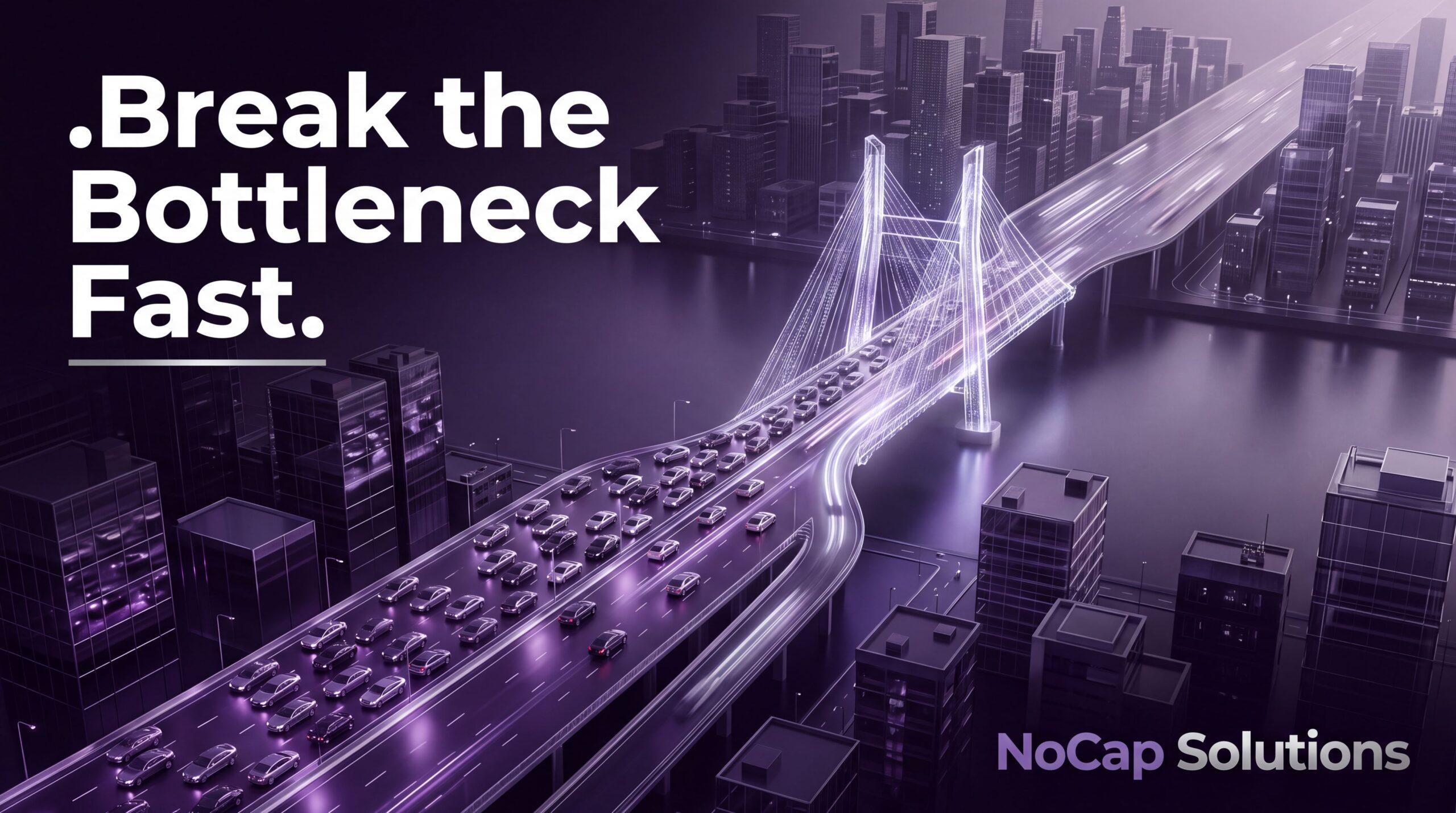
Imagine the morning commute on a bustling highway – three lanes suddenly feed into a single narrow bridge, and soon cars line up in a congested queue while the extra lanes beyond remain idle. This everyday scenario perfectly illustrates a business bottleneck: an otherwise robust input facing an unexpected constriction that causes a pile-up. When operations within a business experience similar choke points, unutilized capacity in adjacent departments or processes immediately catches the eye. For instance, a production line might reveal a department with idle staff or underused equipment simply because a previous phase cannot keep up. Like the silent frustration of drivers caught in a traffic jam, these process bottlenecks disrupt the flow of work, cause missed opportunities, and ultimately hold back revenue growth.
The key insight here is to visualize these blockages as part of a larger, flexible system. The accumulation of data or material at one point suggests that while there is enough potential upstream and downstream, the constricted process remains the real culprit. In many cases, the idle resources downstream serve as a telltale sign. Once managers or teams notice these glaring inefficiencies, they can start backtracking to pinpoint the precise juncture where things begin to slow down. In today’s fast-paced business environment, leveraging intelligent systems can further refine this identification process. For example, incorporating solutions such as AI Automation Solutions by NoCap Solutions allows leadership to monitor processes in real time, flagging underutilized areas and underscoring where intervention is needed.
A systematic scan of existing operations might involve reviewing workflow diagrams and even mapping out the interactions between various departments. If the marketing team, for example, seems exceptionally idle while sales or production are swamped, it becomes evident that the restrictive point lies in the workflow preceding the marketing input. This tracing back – essentially a reverse-engineering of underused resources – brings clarity to the hectic picture of a business operation. In many modern enterprises, data analytics dashboards powered by systems like AI Automation Solutions by NoCap Solutions visually represent these bottlenecks with clear, actionable graphics. A visual representation, reminiscent of a congested traffic map, inspires teams not only to recognize but also to address these compressions before they swell into larger problems.
Moreover, everyday life provides several intuitive examples beyond traffic jams. Consider a supermarket checkout where multiple registers are open, yet a single slow cashier causes an overall delay – this mirrors a skill or process bottleneck where human factors intersect with process inefficiencies. Even in scenarios such as hospital emergency rooms or airport security lines, the momentary blockage by a single weak link can cause delays that ripple across the entire system. By applying such analogies to business operations, leadership teams quickly grasp that the underutilized resources and delayed outputs are not random issues but symptoms of a deeper misalignment between capacity and process. In understanding these dynamics, a business can begin to build strategies that not only identify the block point but also establish a targeted plan, thereby ensuring that the flow of work is rebalanced effectively.
Bottlenecks are a critical barrier to achieving efficiency and profitability – and they are seldom caused by one single element. Rather, it is the cumulative effect of a constricted process that leads to clear visual indicators, such as queues or idle workstations, which, when recognized early, allow for accelerated remedial action. Regularly reviewing operational checkpoints and linking them with real-time data is essential. Tools like AI Automation Solutions by NoCap Solutions offer a unique advantage in highlighting these bottlenecks immediately upon their formation, thus ensuring that teams are always operating at optimal capacity.
2. Analyze Root Causes
Once a bottleneck has been clearly identified, the next strategic phase is to drill down into the core reasons behind its existence. The root causes of bottlenecks typically fall into three well-defined categories: resource problems, skill problems, and process problems. Each category calls for nuanced analysis and a tailored approach to overcome the constraint.
Resource Problems
Resource issues often manifest when there is a mismatch between the available inputs and the requirements of a constrained process. This can include a shortage in the number of personnel, machinery, or even simply the time allocated to complete tasks. Consider a small manufacturing unit where a single machine is responsible for a significant portion of the production output. If that machine operates below capacity or faces downtime, the resulting backlog is a clear sign of a resource constraint. Even in white-collar environments, a limited number of analysts or a bottleneck in IT infrastructure can severely hamper productivity.
A comprehensive understanding calls for a detailed audit of daily activities – what tasks are taking up time and which ones are unnecessary or redundant. Often, this is achieved by directly interviewing the teams involved. By talking to the people on the front lines and understanding their day-to-day challenges, managers can map out whether the bottleneck is due to a critical shortage of resources or a misallocation thereof. In today’s agile business environment, leveraging intelligent systems like AI Automation Solutions by NoCap Solutions can reveal these disparities almost instantaneously, ensuring that the precise nature of the resource problem is documented and understood before moving on to solving it.
Skill Problems
Not all bottlenecks can be resolved by merely adding more resources. In many cases, the bottleneck may be due to the high-skill nature of certain tasks. Specialized work that requires expertise tends to process slower because only a few individuals can perform these tasks effectively. Picture a boutique graphic design firm where complex projects need the creative touch of a seasoned designer. When such tasks pile up because the tasks require in-depth attention, the bottleneck becomes evident despite the presence of other capable staff who simply cannot step into that role.
The solution here is to ensure that skilled resources focus solely on these high-skill tasks while routine activities are streamlined or delegated. The process usually involves capturing the specifics of what makes these tasks high-skill through rigorous documentation and the creation of clear standard operating procedures (SOPs). Engaging in interviews and process reviews helps lay bare the gap between what is demanded and what is supplied. Even in environments where resource availability is adequate, without the proper skill alignment, each delay becomes exponentially more costly.
The implementation of intelligent systems can also play a pivotal role in addressing skill-related blockages. For instance, systems like AI Automation Solutions by NoCap Solutions can help automate routine parts of a process so that highly skilled professionals can focus on tasks that require their specific expertise. By automating the simpler tasks or even leveraging AI-assisted decision-making, the overall efficiency improves – as does the satisfaction of skilled professionals, who are then dedicated to tasks that truly leverage their talents.
Process Problems
Inefficient workflows are like a maze with too many unnecessary turns. Often, bottlenecks arise not because of a lack of resources or skills, but due to an inherent flaw in how tasks are sequenced, communicated, or executed. Modern organizations may invest heavily in tools and technology, yet still fall prey to these process inefficiencies. In many scenarios, the real issue lies hidden in the layout of the workflow – from miscommunication between departments to redundant steps that bog down the entire operation.
The analytical phase here involves a meticulous mapping of inputs and outputs. Leaders should document every step of the process, identify where transitions occur, and then analyze whether these transitions are smooth or fraught with obstacles. By interviewing team members involved in the workflow, managers can learn where delays accumulate. Automated tracking systems, as provided by AI Automation Solutions by NoCap Solutions, serve as invaluable allies in charting these detailed processes.
In many organizations, the solution to process problems doesn’t require a massive overhaul but rather a series of targeted adjustments. Reviewing communications protocols, eliminating redundant tasks, and streamlining decision trees are all part of the process re-engineering necessary to remove the bottleneck. The goal is clear: to create a structured, efficient workflow where every decision and handoff happens swiftly, leaving no room for undue pile-ups.
After categorizing the root causes, it becomes essential to document every insight. Precision in understanding why the bottleneck exists lays the groundwork for designing effective solutions. Detailed notes from interviews, comprehensive maps of workflow designs, and quantifiable data from monitoring systems create a blueprint that can be referenced as teams move forward. When such documentation is paired with the capabilities of systems like AI Automation Solutions by NoCap Solutions, the chances of correctly addressing the core issue dramatically improve.
3. Eliminate the Bottleneck
With the bottleneck identified and its root causes analyzed, the focus now shifts to elimination. This phase involves targeted problem solving based on three major areas: resource limitations, skill-related issues, and process inefficiencies. Crucially, every solution must ensure that the process flow is not just momentarily improved but is sustainably balanced so that inputs and outputs remain harmonized, much like a well-designed highway where every lane is utilized efficiently.
Addressing Resource Limitations
When a bottleneck is due to resource constraints, several strategies can be employed:
- Reassess Daily Tasks: Begin by optimizing the daily operations. Analyze each task for relevance and eliminate any unnecessary activities. A lean approach helps in streamlining the workflow and maximizes the impact of the existing resources.
- Incorporate Automation: The digital age offers tools that can significantly reduce manual workload. By automating repetitive tasks, the process becomes faster and less prone to human error. Intelligent systems, such as AI Automation Solutions by NoCap Solutions, not only expedite routine tasks but also enable quick decision-making by analyzing real-time data.
- Scale Resources: When optimization and automation reach their limits, scaling up becomes necessary. This might involve hiring additional personnel or investing in new machinery. Scaling provides the capacity needed to clear the congestion at the bottleneck, much like expanding a narrow bridge to accommodate more traffic.
Applying these strategies in real-world settings has proven transformative. Consider a mid-sized e-commerce operation facing fulfillment delays. By first streamlining the task assignments and then automating the order processing functions, the company drastically reduced its backlog. In doing so, systems akin to AI Automation Solutions by NoCap Solutions integrated seamlessly with their existing operations, ensuring that peaks in demand no longer overwhelmed the system.
Tackling Skill-Related Challenges
Skill-related bottlenecks require a more nuanced approach. Since these issues often arise when only certain staff members can perform specific, high-skill tasks, the key is to protect their time and manage workload effectively. Here are some tactics:
- Focus High-Skill Resources: Ensure that professionals with specialized skills concentrate solely on tasks that necessitate their expertise. This might mean delegating or automating simpler tasks.
- Develop Clear SOPs: Document the processes to clearly differentiate tasks that require high-skill intervention from those that do not. Simplified and well-structured SOPs empower teams to work more autonomously and reduce ambiguity.
- Outsource or Delegate Routine Tasks: Where possible, consider offloading simpler tasks to less expensive labor, virtual assistants, or automated systems. This not only frees up skilled employees but also speeds up the overall process.
For example, in a creative agency, the senior designers might be bogged down with initial drafts or mundane revisions. By documenting a detailed workflow and automating parts of the design process – much like what AI Automation Solutions by NoCap Solutions can facilitate – the agency can ensure that creative insights are reserved for truly strategic tasks. This division of labor not only improves efficiency but also enhances employee satisfaction as they no longer feel trapped in a cycle of repetitive work.
Overcoming Process Inefficiencies
Process issues often form the most complex tapestry of inefficiencies. They are similar to having the right ingredients for an exquisite dish but following a convoluted recipe that leaves too much to chance. To eliminate these bottlenecks, a structured, multi-pronged approach is required:
- Map and Document the Workflow: Creating a detailed map of all process steps is fundamental. This visualization allows managers to see where redundancies or miscommunications occur. Even a minor gap in communication or a redundant step can lead to significant delays.
- Remove Redundant Activities: Once the process is mapped out, scrutinize each step for necessity. Remove or consolidate steps that do not add value. This critical evaluation often reveals surprising duplications.
- Fix Communication Gaps: Clear communication channels are vital. Ensure that every team member understands their role and the flow of tasks. This might involve establishing better reporting channels or implementing shared digital workspaces.
- Streamline Through Automation: Finally, invest in automation to maintain a balanced flow. Advanced systems can monitor process steps, alert team members when delays occur, and even reassign tasks dynamically. Tools like AI Automation Solutions by NoCap Solutions serve as the backbone for ensuring this fluidity – they continuously monitor metrics and signal any deviation from the optimal workflow.
An effective case study in process re-engineering comes from a financial services firm that battled delays in internal report generation. By mapping every step of the process, they quickly identified redundant data validation steps and communication gaps between departments. After streamlining these steps and introducing automation systems resembling AI Automation Solutions by NoCap Solutions, the firm witnessed a dramatic reduction in report turnaround time – from days to mere hours.
Leveraging NoCap Solutions’ AI Automation Solutions for Bottleneck Elimination
Transforming Operations at Scale
In today’s hyper-competitive landscape, the difference between stagnation and exponential growth often lies in the relentless pursuit of operational efficiency. Modern businesses must not only recognize bottlenecks when they occur, but also implement a proactive strategy to eliminate them permanently. One leading-edge tool in this battle is AI Automation Solutions by NoCap Solutions. Designed to seamlessly integrate with existing workflows, this intelligent system automates repetitive tasks and dynamically reallocates resources to areas in need of urgent attention.
By utilizing AI Automation Solutions by NoCap Solutions, businesses can:
- Achieve real-time monitoring of workflow dynamics that immediately flags a potential bottleneck.
- Automatically optimize routine operations so that each task is reassigned or escalated without manual intervention.
- Free up high-skill professionals to focus solely on strategic decision-making, ensuring that scarce expertise truly makes an impact.
- Scale their operations quickly as the system’s automation capabilities continuously adapt to incoming data and changing circumstances.
Real-World Impact and Strategic Value
Consider an enterprise where daily operations previously bogged down by manual data entry and disjointed communication saw their performance transformed almost overnight. With the integration of AI Automation Solutions by NoCap Solutions, the bottlenecks were not just alleviated, but effectively eradicated. The workflow transformed into a synchronized, self-correcting process where every input flowed seamlessly towards its intended outcome. This shift not only trimmed operational costs but also unlocked new revenue opportunities – an outcome that has become the hallmark of modern, agile enterprises.
Furthermore, AI Automation Solutions by NoCap Solutions enables leadership teams to transition from reactive management to anticipatory decision-making. When bottlenecks are minimized and processes run smoothly, strategic focus can shift to innovation and expansion. In this transformed business landscape, operational efficiency becomes a self-reinforcing engine of growth – a disruptive advantage that few competitors can match.
Continuous Improvement with Intelligent Automation
The journey to operational excellence is continuous. Even as solutions like AI Automation Solutions by NoCap Solutions establish a robust framework, ongoing analysis and iterative improvements ensure that processes remain as efficient as possible. By routinely analyzing performance metrics and integrating feedback loops, businesses can preempt future bottlenecks before they intensify. This culture of continuous improvement not only sustains growth but also builds a resilient organization capable of adapting to fluctuations in market conditions.
In practice, companies that integrate such intelligent systems report improved turnaround times, enhanced employee satisfaction, and a significant reduction in operational hiccups. The automated alerts and real-time adjustments provided by AI Automation Solutions by NoCap Solutions empower teams to maintain a consistent workflow, ensuring that productivity remains high even during periods of unexpected demand or operational stress.
Bringing It All Together
Eliminating a bottleneck is not a one-size-fits-all solution – it is a tailored process that begins with identifying the choke point, proceeds through a detailed analysis of its underlying causes, and culminates in strategic interventions that may include resource reallocation, skills optimization, process re-engineering, and intelligent automation. Each step in this journey is crucial. Visualizing the bottlenecks through everyday examples like traffic jams provides an intuitive understanding, while deliberate root cause analysis sets the stage for targeted corrective measures. When intelligently applied, automation and process streamlining – exemplified by tools such as AI Automation Solutions by NoCap Solutions – not only solve the immediate problem but also pave the way for sustained operational excellence.
Leaders and strategists across industries now have a clear, actionable path forward. From manufacturing floors to digital workspaces, the methodology remains the same: identify, analyze, and eliminate. With the added power of intelligent systems provided by NoCap Solutions, businesses are well-equipped to transform bottlenecks from persistent challenges into opportunities for innovation and enhanced performance.
By embracing these principles, organizations unlock the ability to operate at their full potential – ensuring that every process flows with the precision of a well-tuned machine and every resource is utilized to its maximum capacity. In today’s unpredictable business climate, where agility and responsiveness are more critical than ever, turning bottlenecks into stepping-stones of success is not just a possibility but a strategic imperative.
To summarize:
- Start by visually identifying where the congestion happens, using relatable analogies like traffic jams.
- Dive into the root causes by categorizing issues into resource, skill, and process problems.
- Implement targeted solutions such as optimizing operations, automating repetitive tasks, and re-engineering workflows.
- Leverage cutting-edge systems like AI Automation Solutions by NoCap Solutions to monitor, adjust, and continuously improve processes.
- Reassess regularly to adapt and stay ahead of potential new bottlenecks.
With this strategic framework and the support of intelligent automation, businesses can look forward to a future where operational constraints are not roadblocks, but rather, catalysts for breakthrough growth and sustainable success.