
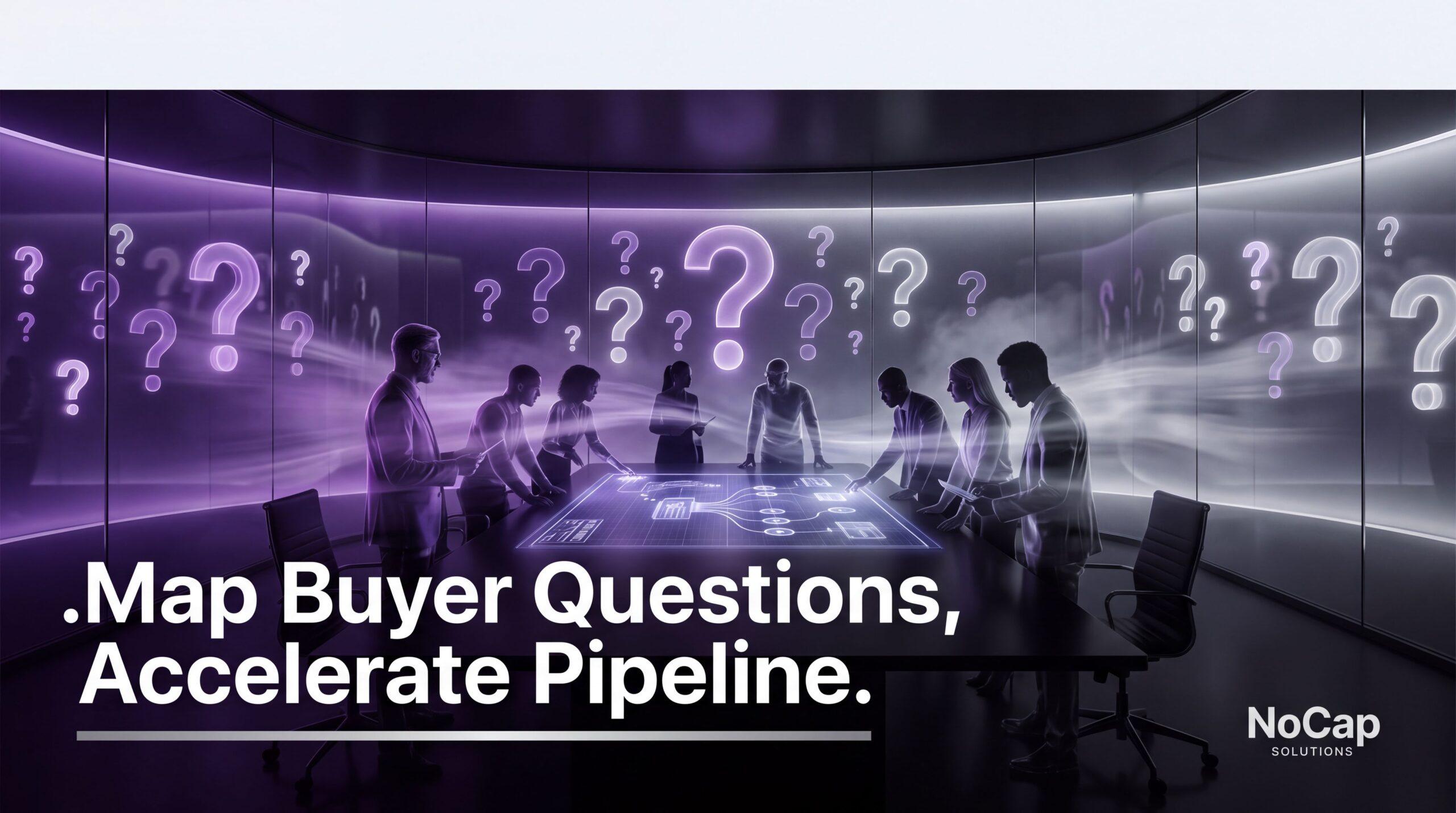
Boost Pipeline Fast by Mapping Buyer Questions to Stages
Boost Your Pipeline Fast with Buyer Stage Mapping
Learn how mapping buyer questions to awareness and consideration stages aligns sales and marketing, accelerates pipeline velocity, and improves early-stage prospect conversations.
This article explores strategies for boosting pipeline growth by aligning buyer questions with the awareness and consideration stages. It highlights how integrating marketing insights with sales tactics helps guide prospects through early research and review phases, using buyer journey mapping, pipeline acceleration, and aligned sales and marketing to transform revenue strategy.
Understanding the Buyer Journey and Funnel Stages
Imagine a bustling marketplace where countless buyers wander in search of answers to pressing questions about a product or service. At first glance, this may seem chaotic, but within that complexity lies a beautifully organized path that transforms curious browsers into committed customers. In today’s strategic landscape, the buyer journey is not a linear process but a dynamic interplay of phases where prospects gradually shift from passive information seekers to active participants in their own purchasing decisions. For revenue leaders, recognizing these phases is the first step toward building a pipeline that works smarter, not harder.
At the top of the funnel, two primary phases command attention: awareness and consideration. In the awareness stage, prospects are casting a wide net. They are like early morning wanderers who, with a hint of curiosity, are beginning to understand a problem or identify a new opportunity. Their search is general, their questions basic, and often they are looking for authoritative voices that can guide them in understanding the significance of an issue. Marketing leaders invest heavily in creating content and messaging that shines a spotlight on challenges and opportunities. They understand that establishing relevance is paramount before a prospect ever digs into detailed product features or pricing structures.
As prospects move beyond mere awareness and transition into the consideration phase, they begin to evaluate the available options more closely. This is the period when potential customers compare solutions, weigh benefits, and start to pinpoint the differences among competing offerings. Here, the buyer is not just gathering information; they are also internally calibrating what matters most for their unique circumstances. This ongoing shift from early research to a more engaged review stage underscores the importance of addressing the fundamental questions that naturally arise. Prospects ask: What makes this solution different? How can it solve my specific problem? Is the cost justified by the value delivered? Answering these questions effectively creates an environment where prospects feel understood and valued, paving the way for deeper exploration and eventually, engagement.
Marketing leaders and revenue directors – those at the helm of modern business growth – are acutely aware that every interaction at the top of the funnel sets the stage for the buyer’s journey. Their approach involves not only generating awareness but also crafting a narrative that resonates. They orchestrate conversations, digital campaigns, and thought leadership pieces that elevate the conversation from a mere product pitch to a strategic dialogue. By highlighting challenges and opportunities in plain language, they build a foundation of trust and make it easier for the sales teams to nurture these relationships further along the pipeline.
Furthermore, the transition between early research and the review stage is marked by a shift in the tone and detail of the information provided. For example, early research might involve broad content such as blog posts, whitepapers, and industry reports that educate on emerging trends. As a prospect moves into the review stage, the content becomes more tailored – they might now be examining detailed case studies, product comparisons, and interactive demos. In this way, every piece of communication becomes a carefully calibrated step that supports the buyer’s evolving needs.
To better illustrate this dynamic process, consider the following points:
- Awareness Stage: Broad, educational content that introduces the problem or opportunity and identifies why it is relevant.
- Consideration Stage: Detailed, precise content that compares options, outlines benefits, and prepares the prospect for engagement.
- Review Stage Transition: A period when buyers, having gathered sufficient context, begin to interact directly with customer-facing teams. It is crucial here to answer specific questions that clarify any lingering doubts.
This nuanced understanding of the funnel stages is not just academic. It is a practical roadmap for creating messaging that seamlessly guides prospects through the buyer journey. The key is to design communications that not only capture attention but also provide clear, insightful answers to the questions that matter most at each stage.
Diving Deeper: Buyer Behavior and Communication Nuances
Effective marketing strategies today center around anticipating the buyer’s next question rather than simply reacting to where they currently are. During early research, prospects are not yet looking for features and pricing details – they are seeking understanding and validation for the issues they are experiencing. Salespeople and marketing managers need to ask themselves: How can our content empower the buyer to make an informed decision? How can we translate digital insights into one-to-one conversations that matter?
One pragmatic approach is to map out the most frequently asked questions during this critical phase. When marketing leaders brainstorm about the buyer journey, they often encounter a series of queries that serve as the backbone for their content strategy. These questions range from basic information such as “What is the core problem I am experiencing?” to more nuanced queries like “What differentiates one solution from another?” Addressing these questions head-on not only reduces the friction in the buyer journey but also positions the company as an indispensable resource for knowledge and trust.
Consider a scenario where a potential customer, only lightly familiar with the market problem, begins their research by typing queries into a search engine – queries about industry challenges, potential risks, or performance benchmarks. The digital landscape answers with a blend of articles, videos, and social posts, all fighting for attention. Amid this noise, the brand that provides clarity, backed by data and actionable insights, naturally stands out. This is where leadership and strategic insight converge. Instead of merely announcing features, marketers need to capture the underlying intent behind each query. They need to help buyers reflect on the bigger picture while addressing immediate specifics.
In essence, the buyer journey at the top of the funnel is where powerfully curated content drives both emotional and rational engagement. It is the prime opportunity to build credibility and goodwill that will carry the buyer deep into the funnel, ultimately culminating in transformative decisions. Businesses that consistently deliver the right message at the right time are better positioned to convert early-stage curiosity into meaningful, long-lasting customer relationships.
Mapping Buyer Questions to Pipeline Stages
Every successful sales pipeline is built on a keen understanding of the questions that buyers ask at various stages of their journey. Just as a photographer frames the perfect shot with the right focus, revenue teams can frame their messaging by listing and addressing the critical questions that surface during early research. What begins as broad curiosity gradually evolves into a more pointed search for tailored solutions. As buyers seek clarity, the act of answering these questions becomes a shortcut that feeds momentum through the pipeline.
Imagine a whiteboard session in a bustling conference room where sales leaders, account managers, and customer success representatives gather to brainstorm. The goal is to list every critical query a prospect might have – something that might range from a dozen to even 40 distinct questions. These questions typically fall into categories that cover everything from basic product information to service details. For instance, early-stage research might include questions like:
- What problem does this solution solve?
- How do industry trends affect the relevance of this solution?
- Are there case studies or testimonials that validate the solution’s efficacy?
- How does the cost compare with the anticipated ROI?
Once these questions are clearly articulated, the exercise does more than just yield a list – it creates a framework for engaging conversations. Answering these questions in detail and with strategic timing results in shorter, more productive sales cycles. Prospects appreciate the directness of the solution; they see the business not as a vendor but as a trusted partner who understands their pain points.
The Process: From Thirty Questions to a Cohesive Narrative
The exercise of mapping buyer questions typically starts with an all-hands session:
- Brainstorming Session: Stakeholders from across revenue teams assemble to dive into the prospect’s mind. They capture everything – from the simplest query about a product’s basic function to the more complex concerns about integration and long-term value.
- Categorization and Prioritization: Once a comprehensive list is in place, questions are grouped into categories such as product specifications, pricing, integration, support, and industry-specific concerns. This categorization isn’t just academic; it helps different team members know which questions to address based on their expertise. For example, account managers might tackle strategic queries while technical support teams might address integration concerns.
- Mapping to Buyer Journey Stages: This step is pivotal. Not all questions are asked at the same stage. Early-stage queries are typically informational, while those asked as prospects move into later stages often have a higher intent to purchase. By mapping questions to each phase of the buyer journey, revenue teams can fine-tune their responses and ensure that every piece of communication is relevant.
Enabling Faster Transitions Through Thoughtful Responses
A well-mapped list of buyer questions is not simply a static document – it acts as the blueprint for dynamic, agile sales conversations. Every time a salesperson is on a call or an email exchange, they can quickly reference this blueprint, confident that they are addressing the very issues that sway a buyer’s decision. This approach also works wonders for training new sales representatives, providing them with an internal playbook that smoothly transitions them from a point of inquiry to closing the sale.
Answering these questions is not about overloading the prospect with information; rather, it is about offering targeted insights that help buyers overcome their inherent reluctance to make a decision. Buyers opt for solutions that mitigate perceived risks and provide clarity throughout the decision-making process. When every frequent question is met with a clear, concise answer, the buyer is not forced to perform extensive research on their own, creating an efficient shortcut that accelerates the sales cycle.
In many ways, this process can be compared to assembling a jigsaw puzzle. Each question and its corresponding answer is a piece that, when properly aligned, reveal the complete picture of why a solution fits the buyer’s needs perfectly. The more comprehensive the picture, the higher the buyer’s confidence in taking the next step. Revenue teams benefit immensely from this approach, not merely by shortening the time from initial inquiry to engagement but by cultivating a sales conversation that is both informed and solution-focused.
Bridging Gaps with Live Data and Intelligent Lead Engagement
Within this context, technology plays a crucial role in mapping and answering buyer questions. Modern systems can capture data on buyer interactions in real time, offering insights into which questions are asked most frequently and at what points in the journey. This data, when integrated into the conversation flow, transforms reactive sales calls into proactive engagements. For example, advanced algorithms can analyze customer queries and funnel engagement metrics, thereby providing teams with instantaneous feedback on which aspects of a solution require further clarification.
This is where the capabilities of NoCap Solutions shine. Consider the role of Advanced AI Lead Generation Systems in this ecosystem. Although buyers naturally ask questions long before they are introduced to a sales representative, the power of intelligent systems lies in their ability to capture and analyze these interactions. By identifying patterns in buyer questions, teams can continuously refine their messaging, ensuring that every answer not only addresses concerns but also nudges buyers toward a clear call to action. This product by NoCap Solutions is designed specifically for revenue teams, providing real-time insights that make the mapping exercise far more accurate and actionable. It helps align digital signals with live sales strategies – essentially turning raw data into a precise blueprint for buyer engagement.
By routinely updating the list of buyer questions based on observed behavior, organizations ensure that no query goes unaddressed. This ongoing process creates an environment where the sales funnel becomes less about forcing a prospect along a pre-determined path and more about genuinely solving problems as they emerge. When every answer is tailored to the buyer’s journey stage, the overall conversation is transformed into a dialogue that respects the buyer’s time, intelligence, and self-determination.
Aligning Sales and Marketing for a Cohesive Strategy
A unified message across sales and marketing teams is not a luxury; it is the backbone of a successful buyer journey strategy. When marketing leadership develops strategies to raise awareness and articulate the core challenges facing their target market, they lay the groundwork for a deeper exploration by prospects. Yet, the true magic happens when those broad, top-of-funnel campaigns are seamlessly translated into actionable sales tactics by a well-coordinated revenue team.
At the heart of this aligned strategy lies the understanding that sales and marketing are two sides of the same coin. Both functions share a common goal: to drive revenue by engaging buyers throughout their journey with consistent messaging and tailored solutions. In many organizations, disparate messaging or siloed approaches can create friction that slows down the momentum of buyer engagement. However, a cohesive strategy ensures that from the first click on a digital ad to the final handshake at closing, prospects receive a unified, compelling story about why the solution is right for them.
Integrating Marketing Insights Into Sales Conversations
One of the most powerful tools available today is the data gleaned from digital one-to-many marketing campaigns, which provides a macro-level insight into buyer trends. These insights reveal the common queries, challenges, and points of resistance encountered during initial research. This information can then be distilled into actionable intelligence for sales teams, who translate these macro insights into personalized, one-to-one conversations with prospects.
For instance, marketing teams might use digital campaigns to test different value propositions or calls to action. The data from these tests allows revenue teams to discover which messages most effectively capture the buyer’s attention and resolve their objections. With a clear understanding of the questions that resonate throughout the funnel, sales professionals are empowered to tailor their pitch in real time. When every conversation is informed by data, it minimizes wasted time and accelerates the path to conversion.
Creating a Fluid Pipeline Through Cross-Team Collaboration
To achieve this kind of synergy, it is essential to foster a culture of collaboration between inside sales, account executives, account managers, and customer success teams. Each group brings a different perspective and expertise to the table, ensuring that the messaging remains consistent regardless of which part of the buyer journey the prospect is in. Regular strategy sessions, shared dashboards, and integrated communication platforms help bridge the gap between marketing and sales.
In practice, this means holding regular meetings where teams:
- Evaluate the performance of targeted messaging across various funnel stages.
- Update the list of buyer questions based on real-time feedback from customer interactions.
- Adjust sales tactics and marketing collateral to ensure that the conversation naturally evolves toward addressing the buyer’s key concerns.
- Leverage digital insights to refine the narrative continuously, so that the messaging not only informs but also inspires action.
This collaborative effort is a critical component of modern revenue generation. When everyone in the organization understands the buyer’s journey and speaks a consistent language, the overall customer experience becomes smoother and more compelling. Prospects no longer feel like they are being shifted from one department to another; instead, they experience a seamless transition from initial inquiry to engaging with a team that truly understands their needs.
Harnessing Technology to Reinforce Alignment
Technology plays a central role in ensuring that sales and marketing align on messaging and strategy. Advanced systems do more than just capture data – they synthesize it into actionable insights that fuel both marketing strategies and sales conversations. For example, real-time dashboards, powered by systems like NoCap Solutions’ Advanced AI Lead Generation Systems, can provide uninterrupted clarity on buyer behavior. Such systems monitor the transition of prospects through each stage of the funnel and highlight the key questions or pain points that need addressing at any given moment.
This continuous feedback loop means that as soon as a critical question is identified, it can be discussed in a cross-team huddle and quickly embedded into updated training materials or digital campaigns. Over time, this iterative process ensures that the messaging remains relevant, accurate, and ultimately, more persuasive. The correlation between technology insights and on-the-ground sales tactics cannot be overstated – it is what transforms theoretical marketing strategies into a dynamic, living system that evolves with each new piece of data.
The Role of NoCap Solutions in a Unified Strategy
Within this ecosystem, NoCap Solutions consistently demonstrates its leadership in intelligent systems that empower businesses to bridge the gap between marketing and sales. Their Advanced AI Lead Generation Systems serves as a prime example of how technology can be harnessed to answer buyer questions, streamline engagements, and transform fragmented efforts into cohesive, measurable results. As a strategic asset, this product not only consolidates disparate data streams into a single reliable narrative but also ensures that every part of the buyer journey is informed by real-time insights and actionable intelligence.
By integrating this kind of technology with a collaborative internal strategy, revenue teams can anticipate buyer needs far more accurately and tailor their conversations accordingly. The result is a strategic blueprint that accelerates the pipeline and delivers a superior customer experience – one where every inquiry is met with a thoughtful, integrated response that drives conversion and long-term loyalty.
Framework for Consistent Messaging Across the Organization
To build upon this seamless integration of sales and marketing, organizations should adopt a framework that ensures every team member has a clear understanding of the messaging architecture and the buyer journey. This framework could include:
- A living document that maps buyer questions to each stage of the pipeline, regularly updated based on field feedback.
- Standardized digital assets and talking points for each buyer query, so that whether the prospect interacts with a marketer or a sales rep, the conversation remains consistent.
- A dedicated platform or dashboard that provides real-time visibility into key performance metrics, such as conversion rates at different funnel stages and the effectiveness of responses to recurring buyer questions.
By implementing such a framework, the organization transitions from a siloed approach to one that is fluid, data-informed, and laser-focused on addressing the real concerns of today’s buyers. This is not just about efficiency; it is about building lasting trust by ensuring that every interaction is informed, empathetic, and strategically aligned.
Bringing It All Together: A Strategic Vision for Future Success
In today’s competitive landscape, businesses that master the buyer journey are the ones poised to win sustainable revenue growth. The transformation from basic awareness to active consideration and ultimately to purchase is a journey marked by critical questions, thoughtful answers, and a seamless interplay between digital marketing and personalized sales conversations. When these elements are perfectly aligned, the result is a pipeline that not only fills with high-quality leads but also converts them into loyal, satisfied customers.
Each stage of the funnel represents a unique opportunity to shape the buyer’s experience. By understanding the subtle differences between the awareness, consideration, and review stages, and by mapping common buyer questions to these stages, revenue teams gain the agility to respond quickly and effectively. This strategic approach reduces friction, builds confidence, and ultimately shortens the sales cycle. The buyer is guided through each phase with clarity – their questions are anticipated and answered, and their concerns are transformed into stepping stones along the journey to purchase.
The success of this approach is underpinned by a single, unifying principle: alignment. When every department, from marketing to sales to customer support, speaks the same language and shares the same goals, prospects experience a coherent narrative that drives them forward. The role of leadership in this aligned approach cannot be overemphasized. It requires a mindset shift – a move away from treating sales and marketing as separate silos and toward understanding them as parts of a greater whole. Every campaign, every outreach, every support call is a part of a broader strategy designed to facilitate a smooth, supportive transition along the buyer’s journey.
Organizations that adopt this holistic view not only improve their pipeline efficiency but also create a compelling and trustworthy brand image. Buyers quickly recognize that they are interacting with a team that is not simply trying to sell a product but is dedicated to solving their specific problems with precision and empathy. This perception can be the decisive factor in a competitive market where trust and credibility hold enormous value.
Moreover, the integration of advanced technology, such as NoCap Solutions’ Advanced AI Lead Generation Systems, further reinforces this strategic vision. It offers a way to continuously align and update messaging based on real-world data, creating a feedback loop that makes the entire strategy more resilient and responsive to market changes. Technology becomes the backbone of thought leadership and strategic insight, ensuring that every aspect of the buyer journey is informed by accurate, timely information.
In summary, aligning sales and marketing into one cohesive strategy is not a one-time initiative but an ongoing process. It requires a deep understanding of the buyer’s mindset, a commitment to clear and concise communication, and the agility to adapt based on real-time insights. Through collaborative efforts and intelligent systems, businesses can elevate every step of the buyer journey – from the initial spark of awareness to the final step of conversion – ensuring that each question is answered and every interaction is crafted to move the conversation forward.
As revenue leaders continue to rethink the ways their teams build and manage pipelines, adopting these strategic insights can be transformative. The exercise of mapping buyer questions, integrating live data into sales conversations, and aligning messaging across departments is far more than an operational task; it is a strategic imperative in today’s fast-paced market. Companies that embrace these practices will find themselves not just keeping pace with the competition, but setting the benchmark for excellence in buyer engagement.
With a strong foundation in both strategy and technology, the buyer journey becomes less about navigating a maze of uncertainty and more about following a well-lit path that leads directly to value. In this respect, every smart insight translates into every successful conversion – a clear demonstration that when sales and marketing work in harmony, remarkable things happen.
In an era where every decision counts, aligning the buyer journey with the right insights is the cornerstone of future growth. Whether it is through continuous mapping of buyer questions or by harnessing the power of integrated technological systems, every strategy must be grounded in the understanding that the buyer is at the center of it all.
For firms eager to see this play out in real time, NoCap Solutions offers the needed tools to translate these insights into measurable outcomes. With solutions like Advanced AI Lead Generation Systems, the synergy between marketing and sales is not an aspiration but a concrete, attainable reality. NoCap Solutions empowers every team member to engage proactively, ensuring that every buyer query is transformed into an opportunity – a win-win for both the customer and the business.
This convergence of strategy, technology, and alignment sets the stage for a future where sales conversations are not just transactions but engaging, dynamic exchanges that spur loyalty, innovation, and sustained growth. It is a future where revenue targets are not met by chance, but achieved through thoughtful, data-informed actions that put the buyer’s needs first.
To conclude, understanding the buyer journey and funnel stages is about more than attracting interest – it is a holistic strategy that involves capturing and answering critical buyer questions, aligning every aspect of the organization around a unified message, and leveraging advanced technology to continuously refine that message. Strategies like this, which emphasize deep collaboration and intelligent data use, are what propel modern businesses into sustained success. In today’s competitive market, the ability to map, answer, and align is not just an advantage; it is the cornerstone of future revenue growth.