
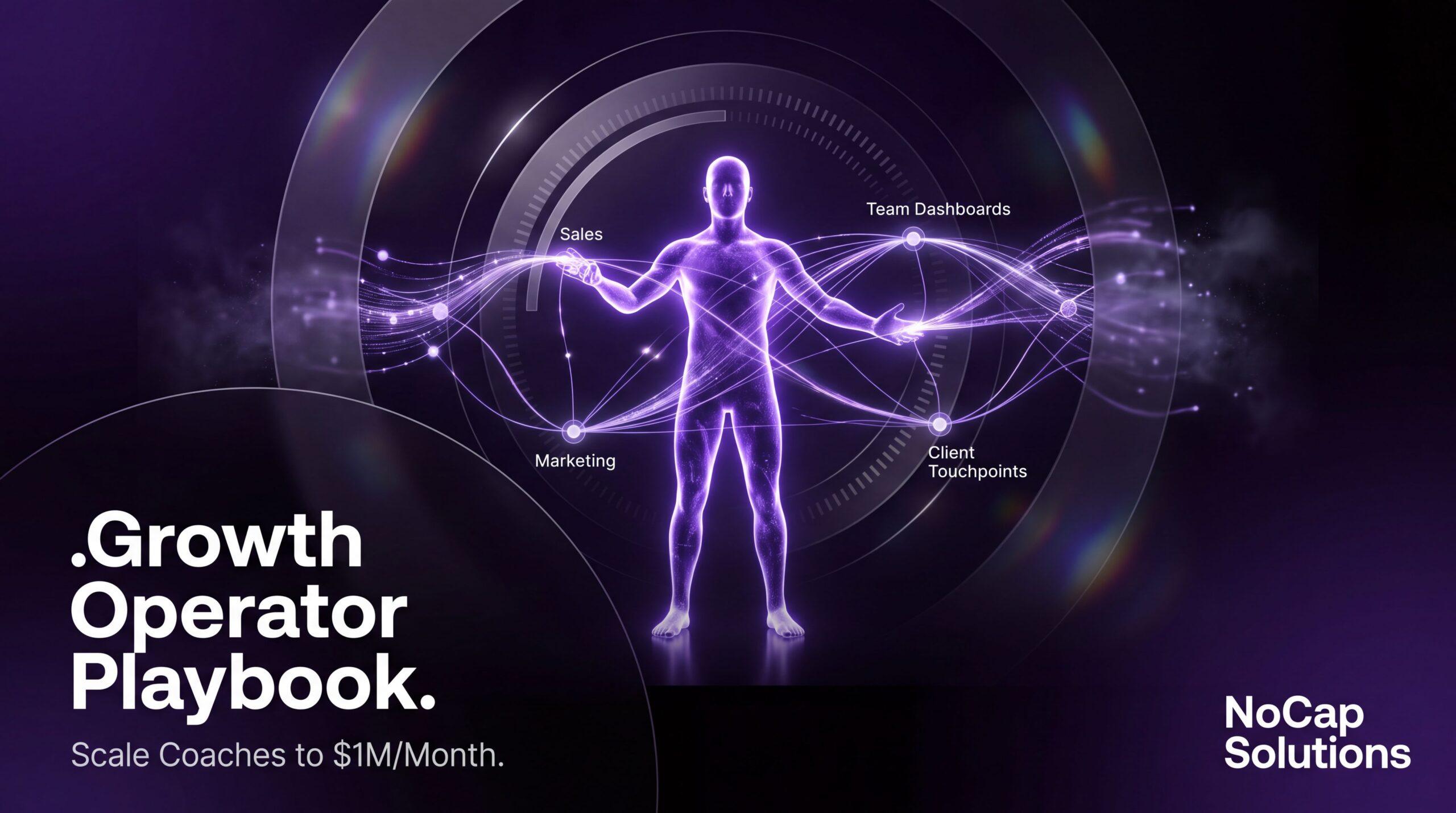
Growth Operator Playbook: Scale Coaches to $1M/Month
Growth Operator Secrets: Scaling Coaches to a Million a Month
Discover proven growth operator strategies to skyrocket coaching businesses and scale revenue to a million a month with optimized funnels and systems.
This article explores the powerful role of a growth operator in transforming coaching businesses. By leveraging growth operator strategies and optimizing systems, coaching programs can scale from six figures to remarkable revenue levels. The insights include methods to enhance lead generation, implement high-conversion funnels, and optimize fulfillment. Read on to uncover the techniques behind scaling to a million dollars a month and boosting your services to a premium level.
1. Understanding Growth Operating and the Shift from High-Ticket Sales
Imagine a sophisticated engine where every cog works seamlessly together to transform raw potential into a well-oiled revenue machine. Growth operating is exactly that – an intricate but highly efficient system that bridges the gap between traditional high-ticket sales techniques and strategic, systems-driven revenue models. This concept goes beyond the old-school sales methods by shifting the focus from one-on-one, high-stakes closing to a collaboration that leverages process optimization, team coordination, and continuous system improvements.
Growth operating is defined as a hybrid role where a specialist integrates into a coaching or service-based business, not merely to make sales, but to implement comprehensive strategies that combine marketing, sales management, system architecture, and revenue-share models. The traditional high-ticket closing approach typically poured resources into direct, face-to-face interactions where a salesperson earns commission only on the closed deals. In contrast, a growth operator works behind the scenes – analyzing systems, optimizing processes, and ensuring that every client interaction, from the first touchpoint to the final sale, is refined and scalable.
Bridging Coaching Businesses with Strategic Systems and Revenue-Share Models
In today’s fast-paced market, coaching businesses are uniquely positioned to benefit from a holistic approach that aligns strategic systems with revenue-share models. The role of a growth operator extends far beyond closing individual sales. They are responsible for designing and integrating systems that enable the business to operate at scale. Instead of focusing on a one-off commission from a high-ticket sale, growth operators are incentivized by performance metrics that revolve around overall business growth. This systemic perspective ensures that every layer of the business – from marketing and outreach to client fulfillment and after-sales support – is working towards a common goal: maximizing revenue while minimizing human friction.
Coaches and service providers, often strapped for time and energy when managing numerous tasks, find relief in having an operator who can focus on building a robust infrastructure. The operator’s role may include auditing existing processes to pin down inefficiencies, integrating new digital tools, and ultimately ensuring that strategic decisions are made based on real-time data rather than gut feeling. This shift from transactional selling to transformational management represents a fundamental change in the coaching industry, where the focus shifts to building long-term, scalable revenue models.
Traditional High-Ticket Closing Versus Growth Operator Roles
The world of high-ticket sales has always been glamorous – flashy presentation skills, persuasive tactics, and the potential for huge commissions. However, this method has its limitations. High-ticket closers are often constrained by the finite number of deals they can close in a day. Their earnings are capped by the volume of sales, and they rarely influence the broader business strategy.
In contrast, growth operators take a step back to view the big picture. Instead of solely relying on direct sales, a growth operator manages a team, sets up automated systems, and continuously audits processes to improve performance. This role brings a strategic mindset to the table, turning one-off sales interactions into repeatable and scalable business models. It’s about seeing the forest rather than just the trees – acknowledging that revenue growth derives not only from remarkable sales pitches but also from the systems that drive sustainable performance over time.
By shifting from a personal vendetta on closing each client to catalyzing team efforts and systemic improvements, growth operators ultimately create a more stable and resilient revenue stream. Their value lies in transforming the operational fabric of a coaching business so that every metric and every process contributes to long-term growth, even when direct sales calls have long ended.
Transition from Direct Sales to Managing Teams and System Solutions
The transition from a high-ticket closer to a growth operator involves a profound change in mindset and tactics. The former focuses on short-term results and commissions, while the latter invests in building interlocking systems that continuously generate value for the business. The growth operator becomes a central hub that coordinates multiple facets of the business. This includes:
- Team Leadership: Leveraging the skills of sales representatives and support staff by training, supervising, and ensuring that everyone is aligned with a unified strategy.
- System Integration: Incorporating digital tools – such as CRMs, dashboards, and automated follow-up systems – to monitor performance, manage leads, and streamline client interactions.
- Strategic Auditing: Regularly reviewing the business processes to identify weak points and areas for improvement, such as inefficient outreach methods or gaps in client fulfillment.
This evolution is not merely about shifting responsibilities but about redefining success. The growth operator’s success is measured in overall revenue growth, customer retention, and the efficient functioning of the entire system, rather than the traditional metrics of individual sales figures. A high-ticket closer might be celebrated for a single $50,000 deal, but a growth operator builds the structure that makes it possible to close multiple such deals consistently over time.
Recognizing the Value of Being an Indispensable Operator
A truly effective growth operator becomes indispensable by cultivating a unique blend of strategic insight, operational discipline, and relentless innovation. When a coach or service provider realizes that the operator is not simply performing tasks but actively removing operational bottlenecks and uncovering hidden value, the operator transitions from an expendable resource to a crucial partner in achieving business goals.
There is immense value in identifying gaps that may go unnoticed in an outbound or inward-looking approach. Coaches are often inundated with routine tasks – scheduling, lead management, and customer support – which distract them from delivering quality content and engaging with their audiences. An operator, therefore, becomes a linchpin who ensures that the business runs like a well-oiled machine. By taking charge of integrating systems, tracking sales performance, and implementing new offers, they free up the coaching team to focus on what they do best – sharing expertise, mentoring clients, and driving transformation.
Real-World Example: Unlocking Hidden Revenue Streams through Outreach and Auditing
Consider a coaching business that was once topping out at $150,000 per month despite significant investments in paid advertising. The operator stepped in, not to simply revise the sales pitch, but to overhaul the entire operational model. The first step involved embedding a comprehensive outreach strategy across various platforms like Instagram, YouTube, Twitter, TikTok, Facebook, and LinkedIn. This ensured that no potential client was left unreachable.
Simultaneously, the growth operator conducted an in-depth audit of the business, revealing inefficiencies in the existing processes. A new CRM was implemented, calendars were synchronized, and an extra pair of skilled sales representatives were added to the team. The operator identified that a significant portion of potential revenue was being lost due to low webinar attendance rates and a lack of follow-up mechanisms for leads who did not convert immediately.
To remedy this, the operator introduced a multi-layered sales funnel. After the initial high-ticket offer, they rolled out a “waterfall method” that focused on converting non-attendees into low-ticket buyers. This strategy not only ensured that the business captured additional revenue streams but also nurtured leads until they were ready to be upsold into the higher-ticket programs. Over time, this comprehensive approach transformed the business – from a sporadic revenue generator into a predictable, scalable system that eventually generated over a million dollars monthly.
This real-world case illustrates how embracing the role of a growth operator can unlock hidden revenue streams that were once invisible under traditional high-ticket sales models. The key ingredient was not merely making more calls or increasing advertising spend – rather, it was about fundamentally reengineering the business’s internal systems to work together harmoniously.
2. Strategies and Systems to Scale Coaching Businesses
Scaling a coaching business in today’s dynamic market means harnessing the power of multiple platforms and testing creative strategies that drive both lead generation and customer conversion. It demands an acute understanding of how to integrate modern marketing tactics with proven sales operations. In this phase, the focus is on employing systems that not only attract clients but also nurture them through a series of optimized touchpoints. The approach is designed to ensure that each step – from initial outreach to final sale – creates a seamless, frictionless journey for the client.
Utilizing Multi-Platform Outreach to Identify Clients
The digital landscape is more diverse than ever, and a one-size-fits-all marketing approach simply no longer works. Successful coaching businesses leverage a multi-platform outreach strategy that spans Instagram, YouTube, Twitter, TikTok, Facebook, and LinkedIn. Each platform has its unique audience and engagement style, and an effective operator tailors the messaging to fit the channel. For instance, a succinct, visually captivating message might work best on Instagram, while a more detailed, thought-provoking narrative fits well on LinkedIn.
A savvy growth operator identifies where the target audience spends their time and crafts personalized strategies for each channel. By using video snippets, live sessions, and interactive stories, the business not only garners attention but also builds relationships that are essential for converting digital interest into tangible revenue. Moreover, each platform provides valuable data that can be harnessed to further refine outreach strategies, making the entire process a dynamic cycle of testing, learning, and scaling.
Enhancing Marketing with Front-End Funnels, Paid Ads, and Webinars
In a successful coaching business, front-end marketing is as crucial as outbound sales. A well-designed funnel guides prospective clients from initial awareness to engagement, gradually building trust before presenting them with a high value offer. Front-end funnels typically start with free webinars or virtual classes, which serve as a non-threatening entry point for a wide audience. These webinars are not just educational sessions – they are strategic touchpoints where potential clients begin to see the value of the coaching and are primed for upselling later.
Paid advertising plays an integral role here. By strategically investing in online ads, a business can ensure that these funnels get the right audience. Coupled with retargeting strategies and lookalike audiences, paid ads help in generating a consistent flow of leads. The meticulous alignment between creative content, targeted advertising, and post-engagement nurturing has been shown to drastically improve conversion rates.
A growth operator understands that while drawing in new clients is vital, optimizing existing audiences is just as important. The front-end funnel is often the first stage of an ongoing relationship, where subsequent interactions – whether through email campaigns, additional webinars, or one-on-one consultations – gradually convert a curious lead into a committed client.
Implementing a Robust Sales Team and Technology
A well-oiled sales process depends on two key elements: a capable team and the right technology. When scaling a coaching business, it is essential to set up a dedicated sales team that not only handles inbound leads effectively but also actively reaches out to potential clients. This team benefits enormously from an integrated technology stack that includes Customer Relationship Management (CRM) tools, automated calendars, and analytics dashboards to track performance in real time.
For example, a growth operator might introduce systems that sync webinar schedules with follow-up calls, ensuring that every lead is accounted for. By leveraging technology, the business can minimize manual errors, improve response times, and maintain a high level of client engagement. Operational efficiency is boosted when every team member has access to live data that informs their daily activities, making it easier to identify what is working and where adjustments are needed.
Strategic teams that operate with clarity and real-time intelligence can also pivot quickly. Understanding that the coaching industry is fast-changing, the sales team can act on emerging trends right on schedule. This is where the value of an integrated technological platform becomes undeniable, as it allows the business to scale operations rapidly while maintaining a personalized touch.
Leveraging the “Waterfall Method” to Convert Non-Attendees
Not all prospective clients will make it to the webinar or live session, but that does not mean they should be lost opportunities. One innovative strategy that has shown significant success is the “waterfall method.” Think of it as a safety net designed to capture the interest of leads that might have slipped through the initial funnel. This method involves introducing a series of low-ticket offers to those who did not immediately convert, enabling them to experience the value of a smaller, more accessible commitment.
In practice, after a webinar, leads who did not attend are automatically funneled into an email sequence that presents a low-priced entry point. This might be an introductory course, a short consultation, or access to a mini-module that reflects the coaching program’s core value proposition. By converting these non-attendees into paying customers – even at a lower ticket price – the business creates additional revenue streams. Over time, as these customers become familiar with the brand, there is a natural progression towards higher-ticket offers.
The key here is not to lose sight of the customer journey. A well-executed waterfall method ensures that every lead is nurtured carefully, converting momentary interest into measurable revenue. This layered approach means that rather than discarding potential customers who initially seem disengaged, the business captures and nurtures them until they are ready for the full offering.
Real-World Impact: From $150K to Over $1M per Month
One of the most compelling narratives in the coaching industry involves a transformation from a modest revenue generation of $150,000 per month to exceeding $1M per month. This dramatic scaling was achieved through a meticulous mix of targeted optimization and diversified offers. The process began with a simple strategy: audit the client’s business to identify inefficiencies and non-optimized processes. Once these gaps were identified, changes were systematically applied – starting with building out a dedicated sales team, integrating a state-of-the-art CRM, and organizing weekly webinars.
As the coach’s operational model evolved, the business was able to segment the audience more effectively, deploying the waterfall method to capture non-converting leads. Each element of the sales funnel was optimized based on real-time data and strategic insights. The constant refinement of the outreach method, coupled with the seamless integration of technology, not only boosted the initial conversion rates but also created an environment where every lead was maximized for its revenue potential.
This transformation was not solely driven by marketing spend or a sudden increase in advertising budgets – it was a direct effect of strategic, cohesive system improvements that redefined how the business operated. One notable example is the successful use of Advanced AI Lead Generation Systems by NoCap Solutions. This system encapsulates the modern approach to sales and outreach, offering an integrated engine that combines data enrichment, personalized outreach, and real-time analytics to ensure that no lead is left behind. By implementing these systems alongside traditional methods, coaching businesses have created revenue engines that operate with minimal friction and deliver exponential growth.
Balancing New Lead Generation and Optimizing the Current Audience
While scaling a coaching business often focuses on continuously generating new leads through multi-channel outreach, it is equally important to nurture the relationships with the existing audience. Optimizing the current audience ensures that the investments already made in gaining those leads continue to provide returns over time. This balancing act requires a dual strategy: one that attracts new prospects and another that deepens engagement with loyal customers.
To achieve this balance, a growth operator might deploy a series of strategies that include:
- Regularly updating content to keep the audience engaged and informed.
- Implementing feedback loops where current clients can suggest improvements or new content areas.
- Running exclusive webinars and Q&A sessions for existing customers to add value.
- Offering loyalty programs or tiered service structures that reward long-term engagement.
By focusing on the dual objectives of attracting new leads and nurturing current relationships, a coaching business can create a cycle of continuous growth. Effective use of metrics and performance dashboards helps in calibrating this balance, ensuring that both new and repeat customers are catered to without cannibalizing each other’s potential.
3. Optimizing Fulfillment and Sustaining Long-Term Revenue Growth
At the heart of every successful coaching business lies a commitment to client fulfillment, operational efficiency, and sustainable scaling. Even the most sophisticated marketing systems and outreach strategies fall short if the initial interest does not translate into excellent customer experiences and reliable service delivery. Growth operators understand that the final chapter of the revenue journey is as crucial as the first page – it’s about taking all the efforts of outreach, sales, and system design, and turning them into consistent, long-term results.
The Importance of Client Fulfillment and Efficient Inquiry Management
Fulfilling client expectations isn’t just about delivering a product or service; it’s about creating an end-to-end experience that reinforces the value communicated during the initial engagements. Efficient management of inquiries, prompt customer support, and clear communication all fall under this umbrella. When a client reaches out, whether due to a question or a problem, the process for addressing that inquiry must be seamless and efficient.
For coaching businesses undergoing rapid expansion, integrating systems that automate and support fulfillment can be a game changer. For instance, advanced support systems and customer relationship tools allow teams to handle hundreds of inquiries simultaneously without compromising quality. This means that while the front end of the business is focused on generating interest and creating revenue, the fulfillment side works quietly in the background to solidify the trust that was built every step of the way.
The operational efficiency achieved by these fulfillment systems ensures that client satisfaction remains high, even as the volume of inquiries grows. This not only improves retention but also reinforces the overall brand reputation – critical for businesses aspiring to scale to the next level of growth.
Scaling Operations with Additional Offers and a Layered Sales Strategy
Once the primary sales engine is operational, a natural next step in scaling is to diversify the revenue streams. Many coaching businesses start with a flagship offer and then expand to introduce additional products or services. This layered sales strategy not only maximizes the value derived from each client but also distributes risk by not relying solely on one revenue channel.
For example, after a successful high-ticket coaching program is established, businesses can introduce complementary products like mini-courses, low-cost webinars, or exclusive group coaching sessions. Each of these additional offers caters to different segments of the audience and helps upgrade overall sales. The growth operator’s role here is to ensure that every new offer is thoughtfully integrated into the current system, supported by robust operational processes and clear performance metrics.
A layered sales strategy also benefits from a continuous feedback loop. Metrics collected from each phase of the customer journey – whether through direct interactions or through automated systems – can be analyzed to determine which offers perform best and what adjustments might be needed. This analytical approach helps in spotting constraints before they become bottlenecks, allowing the business to reallocate resources quickly and efficiently.
Analyzing Business Operations to Identify Constraints and New Opportunities
Even the best-designed system may hit roadblocks if operational constraints are not continuously identified and addressed. A growth operator must regularly audit the business processes to identify areas where inefficiencies could cost the company significant revenue. Turnover in sales processes, misaligned performance metrics, or even a simple delay in inquiry responses can create friction points that sap growth.
This constant analytical process is central to sustainable scaling. For instance, by reviewing key performance indicators (KPIs) on a regular basis, growth operators can pinpoint which part of the funnel is underperforming – be it low webinar attendance or sub-optimal conversion from the low-ticket offers introduced via the waterfall method. Tools like real-time analytics dashboards, which consolidate data from various sources, provide an invaluable resource in this process, offering instant insights into operational performance and areas for improvement.
As margins improve and obstacles are removed, the business’s operational capabilities expand to uncover new revenue opportunities. The feedback gathered from customers, sales teams, and even the technology stack itself directs the evolution of both marketing strategies and fulfillment processes. This relentless pursuit of improvement ensures that growth becomes not just a goal, but a built-in feature of the entire business operation.
Planning for Sustainable Growth: Investing in Robust Infrastructure
For a coaching business to reach monumental revenue milestones – say, aiming for a consistent seven-figure monthly income – it must invest heavily in its infrastructure. This isn’t just about software and digital tools, but also about cultivating an operational culture that values continuous improvement over short-term gains. It may involve hiring additional experts, upgrading technology stacks, or even partnering with specialized external vendors to fill in capability gaps.
Investments in robust infrastructure should target two main areas. The first is the front-end systems that drive lead generation and customer acquisition. Here, sophisticated analytics and customer engagement tools can continuously feed into the sales funnel, ensuring that new leads are consistently sourced and nurtured. The second area is back-end fulfillment and client management, where automation and streamlined processes allow teams to support an ever-growing customer base without compromising on service quality.
A key element of this infrastructure is the strategic use of intelligence systems. For example, integrating tools that offer advanced analytics can help leadership teams make informed decisions about where to invest next, ensuring that resources are allocated efficiently. This systematic approach to scaling, where every decision is backed by data, creates an environment where sustainable growth is not only possible but predictable.
Strategizing for Future Scalability: High Investments in Ads and Exploring Exit Strategies
Once the infrastructure is solid and the business model proves scalable, it’s time to think about strategies for long-term dominance in the market. This often involves a shift from purely operational concerns to more strategic, big-picture planning. For example, as revenue streams stabilize, businesses can start investing in large-scale ad campaigns, confident that the underlying systems can support the resulting influx of new clients.
In parallel with aggressive advertising strategies, many coaching businesses also begin exploring exit opportunities such as SaaS integrations or AI innovations that add a competitive edge. These initiatives are not meant to replace the core business; rather, they serve to future-proof the company by diversifying its assets and revenue channels. When done right, such strategies can create an attractive proposition for future investors or even serve as a pathway to an eventual exit from the coaching market – transforming the business into a high-value enterprise that operates at the cutting edge of technology.
For high ticket closers, copywriters, and media buyers, these expansive strategies offer a new horizon of opportunities. With advanced operational systems in place, professionals in these roles can not only justify charging premium rates but also drive consistent growth by tackling multiple facets of revenue generation simultaneously. The alignment between strategic foresight and operational excellence is what enables a business to transition from short-lived spikes in earnings to a sustainable, industry-leading performance.
Tips for High Ticket Closers, Copywriters, and Media Buyers to Leverage These Strategies
For professionals looking to elevate their game, here are some practical tips drawn from the growth operating model:
- Embrace Systems Thinking: Understand that every client interaction is part of a larger process. Optimize not just individual sales calls, but every touchpoint from initial outreach to post-sale support.
- Invest in Data-Driven Insights: Regularly audit your campaigns and strategies using comprehensive analytics. Tools that offer live dashboards and real-time updates can help pinpoint what’s working – and what isn’t.
- Foster Continuous Innovation: The market always evolves. Stay curious about new platforms, emerging technology, and innovative sales techniques. Experiment with multi-layered funnels and the waterfall method to capture every potential lead.
- Collaborate Across Teams: High ticket closers and copywriters should work closely with marketing and tech teams. When sales strategies are aligned with robust data and a seamless client experience, premium pricing becomes justifiable.
- Plan for Long-Term Fulfillment: Scaling is not just about acquiring new leads; it’s also about ensuring that each client is supported through every stage of their journey. Sustainable growth relies on excellent fulfillment and after-sales service.
The role of a growth operator inherently demands a mastery of these strategies, and coaching businesses operating at this level are more likely to see consistent increases in revenue rather than drastic, unsustainable spikes.
The Role of NoCap Solutions’ Advanced AI Lead Generation Systems
While the strategies and systems discussed here are effective on their own, integrating intelligent platforms can provide a quantum leap in performance. For instance, NoCap Solutions offers the Advanced AI Lead Generation Systems. This solution encapsulates a modern approach to sales and outreach by combining data enrichment, personalized messaging, and real-time analytics. It serves as an exemplary tool that aligns perfectly with the growth operating model – enabling seamless integration of advanced technologies to capture, nurture, and convert leads in a way that optimizes every aspect of the revenue engine. By slipping in this system where it fits naturally, coaching businesses can ensure that their lead generation is as efficient as it is innovative, paving the way for sustainable long-term growth.
Conclusion
In the dynamic realm of coaching businesses, the transition from traditional high-ticket sales to the integrated, data-driven approach of growth operating marks a turning point in revenue generation. By combining strategic systems, automated processes, and continuous refinement of both marketing and fulfillment methods, businesses can scale in a way that is both predictable and exponential.
The journey begins with an understanding that growth operating is not simply a role or a title – it is a comprehensive mindset shift. It involves stepping away from the limitations of traditional sales methods and embracing an operational philosophy that values long-term client fulfillment, real-time data analytics, and system-wide integration. By auditing existing processes and aligning outreach efforts with advanced technology, a growth operator transforms the business from a series of isolated transactions into a cohesive, scalable revenue engine.
From multi-platform outreach techniques and front-end funnels to the innovative waterfall method for converting non-attendees, every component of this model has been proven to unlock hidden revenue potential. Real-world case studies show that such integrated strategies can propel a coaching business from modest earnings to generating over a million dollars per month – and beyond. The secret lies in the balance between generating fresh leads and optimizing every element of the existing customer journey.
Furthermore, successful scaling demands a parallel focus on operational efficiency. Investing in robust infrastructure, leveraging advanced analytics dashboards, and systematically addressing fulfillment challenges are crucial steps that ensure each success is sustainable. The ripple effects of these improvements are seen not only in immediate revenue gains but also in the long-term value created for every client who walks through the door.
For professionals such as high ticket closers, copywriters, and media buyers, the rise of growth operating offers an exciting avenue for elevating their services to premium levels. By aligning more closely with comprehensive systems and adopting a mindset that values continuous innovation, these professionals can not only justify their premium fees but also contribute to a client’s transformation on a much larger scale.
In an era where the competitive edge is determined by data-driven decisions and the seamless integration of technology with operational strategy, embracing growth operating is no longer optional – it is essential. As coaching businesses continue to evolve, those that invest in bridging the gap between traditional sales practices and advanced system architectures will find themselves positioned not just for a one-time success, but for a sustained leadership role in the industry.
The future of coaching is a blend of art and science. It is where human insight meets technological innovation, and where every aspect of the client journey is optimized for excellence. And in this evolving landscape, the advanced AI solutions offered by NoCap Solutions serve as a powerful ally – facilitating transformations that elevate both revenue and reputation, without overwhelming the inherent human touch that makes coaching so impactful.
In summary, growth operating represents a paradigm shift that redefines how businesses scale and succeed. It transforms isolated sales efforts into a comprehensive strategy that integrates team management, automated technology, and systematic process optimization. This evolution not only unlocks hidden streams of revenue but also builds a foundation for ongoing, sustainable success. With the right approach and the integration of advanced tools like NoCap Solutions’ Advanced AI Lead Generation Systems, the potential to scale beyond traditional limits becomes a tangible reality.
By taking decisive action, embracing innovative systems, and nurturing both new leads and existing audiences, coaching businesses can steadily raise the bar for what is possible. In this brave new world of growth operating, every interaction becomes an opportunity not just to sell, but to build lasting, measurable value – and that is the key to thriving in today’s competitive market.
This strategic overhaul, where operational excellence meets integrated sales funnels, is the foundation upon which future coaching empires will be built. When every element – from multi-platform outreach to client fulfillment – is optimized, businesses are not only prepared to scale rapidly but are also equipped to innovate continuously. The shift to growth operating is a journey towards realizing the full potential of every customer interaction, ensuring that every opportunity, big or small, is efficiently converted into sustained revenue growth.
In conclusion, the evolution from high-ticket closing to growth operating is a critical transformation for coaching businesses aiming to lead and innovate in today’s crowded marketplace. By leveraging a balanced mix of multi-channel outreach, automated systems, and strategic operational audits, these businesses can unlock new levels of performance and profitability. The integration of advanced systems, such as NoCap Solutions’ offerings, further underscores the importance of marrying technology with strategy for a future where operational success is measured not just in dollars but in long-term, sustainable growth.
With growth operating at the helm, coaching businesses can look forward to a future where every client interaction is optimized, every process is data-driven, and every revenue stream is continuously nurtured. The journey is progressive and dynamic – a cycle of innovation, measurement, and improvement that transforms potential into performance over and over again. In this vibrant landscape of opportunity, the businesses that invest in building a robust, integrated operational system today will be the ones who set the pace for the industry tomorrow.