
Break Growth Bottlenecks: Find Your #1 Constraint Fast
Break Free from Growth Bottlenecks: Spot Your Primary Constraint
Discover how to identify and overcome your business’s top bottleneck to boost revenue and streamline operations for sustainable growth.
This article will explore how the right mindset and strategic focus can break growth bottlenecks that block business progress. With actionable insights and a simple exercise, learn to identify the primary constraint that restricts your growth. The discussion covers proven strategies to balance excellent customer service with aggressive revenue-building and process improvement.
Identify and Overcome Your Primary Bottleneck
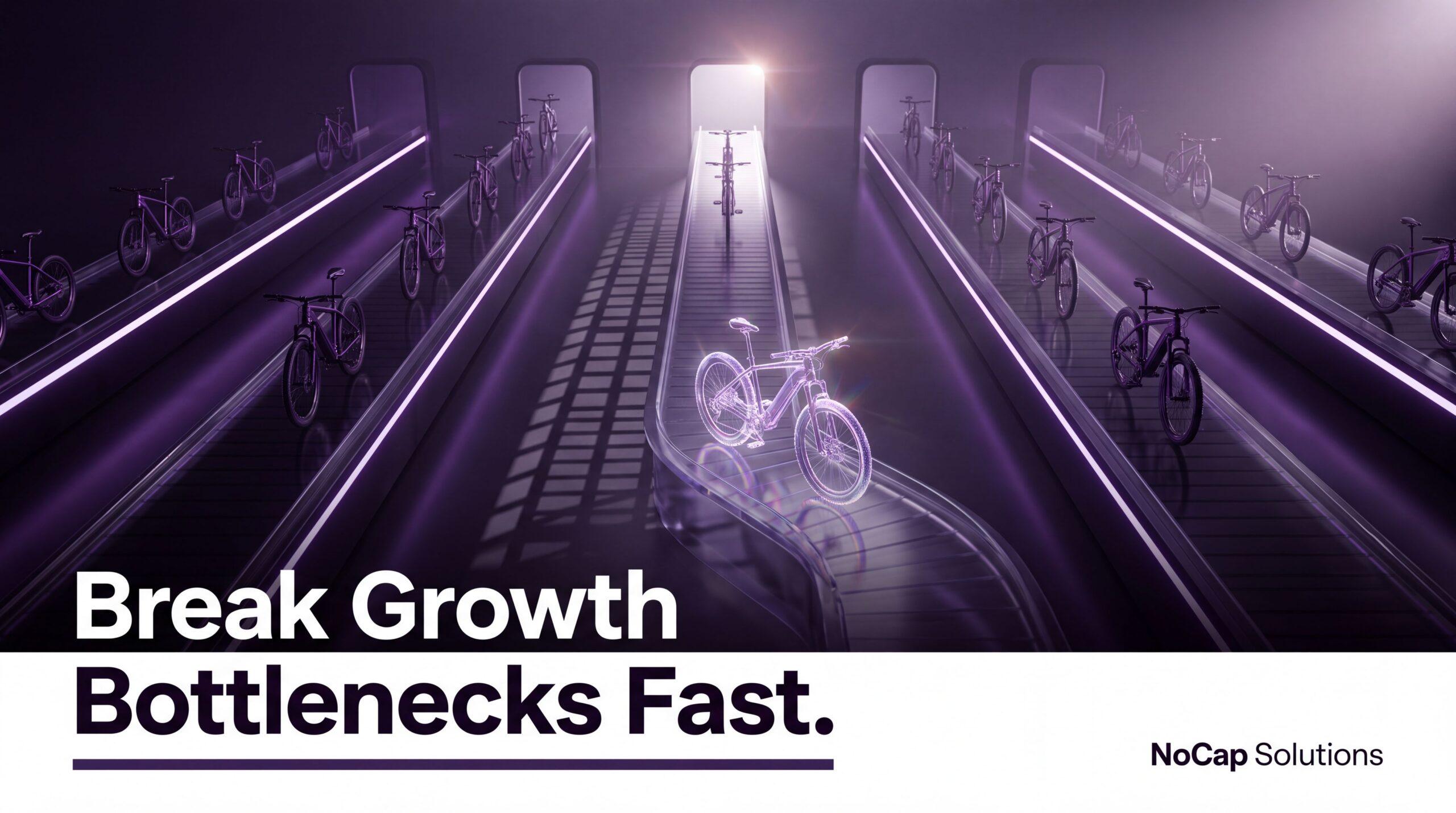
Imagine a bike factory where four assembly lines work together to build a bike – the raw materials line, the framing line, the painting line, and the final assembly line. Even if three lines work at breakneck speed, the overall production is ultimately capped by the slowest line. This scenario perfectly mirrors the challenges businesses face when growth is hindered by a single bottleneck. What if the key to unlocking your business’s full potential is first identifying and then overcoming that one limiting factor? Every leader has wrestled with the struggle of balancing service excellence with aggressive growth, and the secret often lies in finding that one point in the process where things decelerate. In today’s comprehensive deep dive, we explore how to identify your business’ primary bottleneck and realign resources to transform it into a lever for exponential growth.
The concept may seem straightforward at first glance: focus on the slowest step, optimize it, and suddenly the whole machine runs smoother. However, the journey to uncovering that knot in your operational process involves a mix of strategic thinking, real-world testing, and sometimes a shift in mindset from simply serving your existing base to actively chasing growth opportunities. Let’s untangle this complex dynamic and uncover how each business element – from marketing and sales to service delivery and operations – plays a crucial role in either hindering or accelerating progress.
Defining Business Bottlenecks: The Hidden Obstacles
Business bottlenecks are obstacles – whether in sales, operations, or service delivery – that impede overall growth. They are the parts of your enterprise that take longer to perform their function than other parts, thus slowing down the entire machine. Think of a production line where one station lags behind: no matter how efficient the other stations are, the overall output is determined by that slowest station. Essentially, your business’s throughput is only as high as your most constrained process.
Consider companies in the IT and professional services sectors. These organizations often rely on referrals and sustained customer support for survival. They excel at providing high-quality service but frequently struggle with scaling their sales and marketing operations. While the efficiency in delivery is commendable, the failure to drive consistent, predictable sales growth creates a bottleneck that sets a ceiling on overall performance. This recognition is crucial because once the obstacle is clear, you can shift your resources to dismantle these limitations.
In practical terms, these bottlenecks can take many forms. For instance, a business might have an excellent product and high customer satisfaction but still be unable to generate enough new leads because its sales team is overwhelmed by the demands of servicing existing clients. This creates a scenario where growth stagnates because the pipeline for new business isn’t filling up at a sustainable rate. Similarly, in operations, if inventory builds up because one step in production is too slow, costs can skyrocket, and competitive agility can be compromised.
Real-life businesses often exhibit these constraints without even realizing it. The lesson from the classic business book The Goal is enduring: continuous improvement is not about overhauling the entire system at once, but rather about focusing on the specific parts that hold up the whole operation. The key is to apply a methodical approach to identify, address, and eventually overcome these bottlenecks so that each department seamlessly contributes to overall success.
The Bike Factory Exercise: Understanding Through Visualization
To put this into perspective, consider the simple yet powerful exercise of the bike factory. Picture a factory with four assembly lines:
- The first assembly line processes raw materials, capable of generating enough inputs for 200 bikes per hour.
- The second assembly line focuses on framing, with a capacity to build frames for only 100 bikes per hour.
- The third assembly line handles painting, operating at a brisk pace of 500 bikes per hour.
- The fourth assembly line assembles the components, matching the third line with the capacity to complete 500 bikes in an hour.
Even though three out of the four lines could produce 200 or more bikes per hour on their own, the overall production is restricted to just 100 bikes per hour because the framing step is the bottleneck. This exercise is not just an abstract thought experiment; it is a direct analogy to how real businesses operate. Every process, whether it’s generating leads, nurturing prospects, onboarding new clients, or fulfilling orders, is interconnected and dependent on the slowest step.
In the exercise, the bottleneck is the framing process. No matter how much raw material is available or how efficiently bikes are painted and assembled, production is limited until the framing line is optimized. Similarly, in your organization, you might have excellent marketing campaigns and top-of-the-line service delivery teams, but if the asset conversion point – be it sales calls, client onboarding, or order processing – is slow, then overall performance will suffer. The clarity of this metaphor is what makes it such a valuable tool for business leaders seeking to streamline their operations.
This visualization forces decision-makers to scrutinize each phase of their operations. It encourages an honest assessment: Where is the pace-limiter? Is it in the sales funnel, where quality leads are not converting into paying customers? Or is it in the service delivery process, where exceptional work is undermined by inefficiencies in project handoffs? Thinking through these questions, much like noting the production figures in our bike factory, can help pinpoint the bottleneck that requires immediate attention.
Bottlenecks in IT and Professional Services: A Closer Look
In many modern businesses, particularly in the IT and professional services industries, the bottleneck is not in the quality of service but in the ability to scale sales and marketing efforts. These sectors often exhibit a classic problem: excellent service delivery is hampered by an underdeveloped system for acquiring new customers. A company might have a base of loyal clients, but when each new project demands a significant amount of customized attention, the scaling process becomes unsustainable.
In these industries, the tendency is to prioritize immediate customer satisfaction over investing resources in building a robust sales infrastructure. This short-term view makes sense when every contract is seen as sacrosanct, yet it lays the groundwork for long-term stagnation because the pipeline for new business is left underdeveloped. The reality is that every business, regardless of its industry, must balance the need for service excellence with the need to continuously grow its client base. Ignoring this balance means that even a thriving service operation may eventually stall because of an inability to secure sufficient new deals.
Take the example of a consulting firm that thrives on delivering stellar service to its handful of high-profile clients. The firm might be so immersed in the day-to-day demands of serving these clients that the sales process gets neglected. When a breakthrough comes in the form of a referral or a single new lead, there might not be enough capacity to capitalize on the opportunity immediately, leading to lost revenue and missed chances for scalable growth. This is the same trap illustrated by our bike factory: if the framing process (or sales process, in this analogy) is too slow, it becomes the de facto limit on overall production or growth.
To remedy this, the solution is not necessarily to overhaul every operational aspect at once, but to strategically target the bottleneck. Concentrate resources on enhancing the efficiency of the sales process – whether through training, marketing investments, or process automation. Address that slow step robustly, and the ripple effects will be felt across the entire business. The focus should be on making every stage as efficient as possible, ensuring that each department has what it needs to operate at peak capacity.
Focusing Resources on the Slowest Process
Once the primary bottleneck is identified, the next step is to focus resources on that area. In our bike factory metaphor, that means upgrading the framing assembly line. In a business context, it might mean reallocating funds and talent to boost the performance of your sales team or upgrading your marketing funnel to better generate and nurture leads. The logic is simple: by eliminating the choke point, the overall throughput of the entire system increases. Yet, this reallocation of resources must be done thoughtfully and systematically.
The first crucial step is to identify the cause of the slowdown. Is it due to outdated technology, inefficient processes, or simply a lack of skilled personnel? For example, a company might be using outdated CRM software or relying on manual processes that delay follow-ups with potential clients. In this case, the investment should be directed towards modernizing these systems, perhaps even considering automation or real-time analytics to speed up decision-making. The key takeaway is that the slowest process typically holds back the potential of the whole operation. By improving that specific step, you not only increase capacity but also create room for subsequent growth phases.
A common pitfall, however, is the temptation to overcorrect by investing equally in all areas. When the primary bottleneck is known, shifting the majority of resources toward that area is paramount. For instance, if a sales process is identified as the primary constraint, then it may make sense to invest in sales training, better marketing systems, or even specialized software that streamlines lead generation and conversion. Tools designed to provide real-time insight – such as NoCap Solutions’ approach to mapping business operations and bottlenecks – can be instrumental in diagnosing the exact points of friction. In fact, through careful strategic analysis, leadership teams can deploy targeted interventions that raise overall throughput without wasting resources on areas that are already performing well.
An effective strategy is to set clear, measurable goals for improvement. This may involve focusing on a specific metric, such as reducing the time to close a lead by a certain percentage or increasing sales conversion rates over a set period. Establishing these metrics provides a tangible benchmark for success, ensuring that efforts in one area translate into visible improvements for the entire business. Such focused targeting is a strategic necessity; spreading resources too thinly across multiple areas can fail to deliver the necessary boost to overcome the bottleneck.
Balancing Customer Service Excellence with Stronger Sales and Marketing Execution
It is often said that customer service is the heartbeat of a business. Outstanding customer care is undoubtedly critical, but when service delivery monopolizes all resources, it can obstruct growth. In the context of the bike factory, even if the painting and assembly lines operate with precision, if the framing line falls behind, the end product suffers. Similarly, a company might excel in delivering exceptional service to its existing customers while simultaneously stifling the sales engine that fuels future growth.
Balancing the dual imperatives of service excellence and business growth requires a strategic reallocation of resources. On the one hand, maintaining high-quality service ensures that current customers remain satisfied and loyal. On the other, dedicating sufficient investment to sales and marketing paves the way for acquiring new business and fueling future growth. In operational terms, this means that businesses must continuously evaluate where their time, energy, and capital are being deployed. By systematically reviewing marketing, sales, service delivery, and operations, managers can prevent a new constraint from replacing the old one.
This is not a call to neglect customer service; rather, it is a reminder that every success in one area is interconnected with opportunities in others. The balance is delicate and must be maintained through ongoing review and adjustment. As the business environment shifts, what was once a strength may become a bottleneck if left unattended. Maintaining a dynamic, flexible approach ensures that the business is never caught off-guard by emerging constraints. Leaders must adopt a holistic view, understanding that improving one facet of the business can trigger unexpected efficiencies (or inefficiencies) in others.
For example, when a sales team finally starts to generate an influx of new leads thanks to a reinvigorated marketing strategy, the service delivery team might suddenly face an overwhelming surge in demand. If the organization is not prepared for this subsequent challenge, the initial gains could quickly be eroded. To preempt this scenario, leaders should design a growth strategy that not only addresses the immediate bottleneck but also anticipates the ripple effects across other departments. This might involve cross-training staff, investing in scalable technology, or rethinking resource allocation to ensure that projects, once sold, are delivered with the same level of excellence that built the business in the first place.
The Foundational Wisdom of “The Goal”
For those seeking further enlightenment on process improvement and continuous efficiency, the seminal book The Goal provides invaluable insights. Written as a work of fiction by a physicist-turned-author, the narrative explores the intricacies of managing production lines, identifying bottlenecks, and continuously refining processes to achieve lasting operational improvement. The principles outlined in The Goal have resonated with many business leaders precisely because they demystify the complexities of scaling a business. They also offer a clear blueprint for addressing internal constraints through a systematic, prioritized approach.
The ideas in The Goal remind decision-makers that every process has a limit, and that limit is often dictated by the slowest component of the system. This concept is intimately familiar to any organization that has experienced a period of stagnation after initial growth. The book’s key message – that focused improvements in the constraint area yield the greatest impact – is a clarion call to leaders constantly searching for that next lever to push overall performance higher. It reinforces the idea that sustainable growth is not about adding more resources indiscriminately, but about strategically investing in the areas that truly move the needle.
In practice, these lessons translate into a series of actionable steps: continuously monitor the various components of your business, pinpoint where the blockage occurs, and channel your efforts into alleviating that pressure point. This approach not only optimizes immediate production or service delivery but also creates a robust system that can handle the success that comes from overcoming the bottleneck. As one studies the principles presented in The Goal, a recurring theme emerges – improvement is a never-ending process, one that demands vigilance, adaptation, and above all, a willingness to focus on what matters most.
Anticipating and Preventing the Next Bottleneck
Once the primary bottleneck is addressed, the work does not stop there. Business operations are dynamic by nature, and the removal of one constraint often leads to the emergence of another. Just as a river adjusts its course over time, the internal dynamics of an organization shift, and what was once the slowest process may evolve into a competitive advantage before another element begins to slow down overall progress.
The process of reviewing marketing, sales, service delivery, and operations should be continuous. After improvements are made, decision-makers must ask themselves: What is the next potential choke point? How can resources be reallocated to preemptively address new issues before they hinder growth? This proactive stance is akin to a visionary leader who not only focuses on the present obstacle but also maps out the entire journey ahead. The goal is to maintain a state of continuous improvement, where bottlenecks are identified early and resolved before they can cause significant disruption.
This forward-thinking mindset requires developing a robust system of feedback and performance metrics that highlight changes in operational capacity. By leveraging real-time data and analytics, businesses can detect even subtle shifts in productivity that might indicate an impending bottleneck. A practical example might be noticing that after the sales process is streamlined, the load on customer service increases substantially. In response, investments in scalable support systems or additional training may be warranted to ensure that the new challenges are met with equal efficiency.
Notably, this approach calls for a disciplined commitment to improvement. It is not enough to simply fix one problem and then return to business as usual. Instead, there must be an ongoing process – of regular reviews, targeted interventions, and strategic reallocation of resources – to ensure that as one constraint is alleviated, another does not silently take its place. This cycle of improvement is both challenging and exhilarating, as it continuously pushes the boundaries of what the organization is capable of achieving.
Allocating Resources to Unlock the Next Stage of Growth
Breaking through the primary bottleneck is only the beginning. The next phase of growth demands that resources – time, energy, and capital – are continuously reallocated in a manner that supports further expansion. Every successful business eventually encounters a new stage of constraint, and the process of identifying and addressing these challenges becomes a core part of the operational strategy.
At this juncture, the decision-making process must be both rigorous and adaptive. Leaders need to develop a clear map of business priorities, segmenting operations into key areas such as marketing, sales, service delivery, and overall operations (including financial management). This mapping is crucial because it identifies potential weak points where improvements could yield significant returns. In essence, the business must create an environment where each department not only functions efficiently but is also poised to support the growth initiated in another area.
One effective strategy for unlocking the next stage of growth is to reallocate resources dynamically, ensuring that every part of the business is equipped to handle increased activity. When the bottleneck in sales is resolved, for instance, customer acquisition rates can spike, introducing additional pressure on the service delivery and operational wings of the organization. By preparing in advance – whether through hiring, training, or upgrading systems – the transition becomes smoother, and the risk of new constraints emerging is minimized.
In practical terms, this means cultivating cross-departmental communication and a culture of continuous learning. Regular strategy sessions, performance reviews, and scenario analyses can help ensure that no single area is left overburdened. Not only does this strategy safeguard against operational hiccups, but it also fosters a mindset of collective responsibility, where every member of the team is aware of the broader mission: unlocking sustainable and scalable growth for the organization.
A compelling way to visualize this is to return to our bike factory analogy. Once the framing line is enhanced and can keep pace with the other lines, the next obvious question might be whether the raw material supply, painting, or assembly processes might become the new bottleneck. Addressing this requires a proactive mindset, where anticipatory investments and strategic resource shifts are constantly in motion to keep the entire production chain operating at peak capacity.
Integrating Strategy with Intelligent Systems
While strategic reallocation and process improvement remain fundamental, leveraging intelligent systems can elevate your approach to an entirely new level. In today’s fast-paced business landscape, tools that consolidate data and provide real-time insights play a crucial role in pinpointing bottlenecks exactly when they occur. For instance, NoCap Solutions offers an innovative approach to business mapping through their AI Strategy and Systems Architecture service. This solution is designed to help leadership teams chart every facet of their business – from marketing and sales to operations and finance – and identify precisely where resources are most needed.
Intelligent systems gather and analyze data from across the organization, enabling decision-makers to act before small issues become large hurdles. By integrating such systems, businesses not only detect bottlenecks earlier but also ensure that resource reallocation becomes a data-driven process. This marriage of strategy and technology ensures that every improvement is both timely and effective, driving sustainable growth that is responsive to real-world changes.
Using intelligent systems also means that businesses can experiment with dynamic reallocation in a controlled, analytical environment. This approach gives leaders the confidence to shift gears rapidly when needed. The feedback loop created by such technology minimizes guesswork, allowing for improvements that are continuously refined and aligned with organizational goals.
A Real-World Example: From Stalled Growth to Scalable Success
Consider a professional services firm that, like many in the IT industry, excelled at client retention but struggled with scaling sales. For years, the firm’s leadership focused on delivering exceptional service, ensuring every client felt valued. While this approach fortified the company’s reputation, it inadvertently led to a sales process that was underinvested in and underdeveloped. The result was a classic bottleneck: a robust service wing paired with a sluggish sales pipeline.
The turning point came when the firm decided to systematically diagnose its operational steps using the bike factory model. By mapping out each component – from lead generation and client onboarding to project delivery – the firm identified that its sales function was indeed the weak link. Rather than simply doubling down on client service, leadership reallocated resources toward revamping the sales process. This reallocation included investing in targeted sales training, upgrading their lead management systems, and setting clear, measurable targets to track improvement.
Within a matter of months, the firm observed a dramatic turnaround. The streamlined sales process resulted in a consistent influx of new leads, which, when combined with the already excellent service delivery, fueled a self-reinforcing cycle of growth. With each new client, the firm not only increased its revenue but also had the necessary capital to keep its operations agile and responsive. Over time, the initial bottleneck in the sales function was alleviated, and the organization was poised to address and optimize subsequent areas of constraint. This example underscores the transformative power that a targeted approach to overcoming bottlenecks can have on an organization’s entire growth trajectory.
Creating a Culture of Continuous Improvement
Successfully identifying and resolving bottlenecks is not a one-off project; it is a continuous journey. The business environment is perpetually evolving, and processes that work today may need refinement tomorrow. Cultivating a culture of continuous improvement is essential – a culture where every team member is on the lookout for inefficiencies, where feedback is actively sought, and where resource reallocation is not seen as a punitive measure but as an opportunity for collective growth.
Leaders can champion this culture by establishing regular review protocols where each aspect of the business is evaluated against performance metrics. These sessions can serve as brainstorming forums where potential bottlenecks are discussed openly and strategies for preemption are developed collaboratively. When every department understands that the goal is not to assign blame but to collectively enhance the efficiency of the entire organization, improvements become part of the operational DNA.
This ongoing process requires both discipline and flexibility. Strategic tools, such as robust performance dashboards and live intelligence systems, help maintain a real-time pulse on how different parts of the company are performing. They also empower managers to react quickly as soon as early warning signs emerge. By making continuous improvement a core part of the organizational ethos, businesses can continually evolve, ensuring that today’s solution does not become tomorrow’s new bottleneck.
Actionable Steps to Overcome Your Primary Bottleneck
The insights shared above coalesce into several actionable steps for business leaders looking to overcome their primary bottleneck and unlock future growth:
- Map out every critical process in your organization, drawing parallels with the bike factory exercise to visualize throughput.
- Identify the slowest step in the process – whether it is sales, marketing, service delivery, or operations – and diagnose its underlying causes.
- Reallocate resources smartly by investing in areas that directly address the bottleneck. Establish clear, measurable performance targets.
- Balance the urgent need for service excellence with targeted efforts to improve under-resourced growth areas.
- Embrace continuous improvement by instituting regular reviews and leveraging real-time performance dashboards.
- Use foundational insights from resources like The Goal to develop a mindset focused on process optimization rather than reactive fixes.
- Finally, prepare for the next stage by anticipating how improvements in one area may shift the bottleneck elsewhere, and remain agile in resource reallocation.
By following these steps, a business can not only overcome its current constraints but also build a resilient operating model that adapts as it scales.
Integrating NoCap Solutions into Your Growth Strategy
For companies seeking to implement these strategies with minimal disruption to existing operations, NoCap Solutions offers methodologies and intelligent systems designed with the modern enterprise in mind. By integrating high-caliber tools that provide real-time insights and a holistic view of the business, leaders can pinpoint exactly where resources need to be most effectively deployed. One notable example is the AI Strategy and Systems Architecture solution by NoCap Solutions, which not only maps out every operational facet but also helps anticipate the next bottleneck before it becomes a problem. This approach encapsulates the strategic vision of aligning operations with growth objectives and ensuring that every process works in concert towards sustainable scalability.
Conclusion: Embrace the Bottleneck as an Opportunity for Transformation
The journey to overcoming your primary bottleneck is a transformative one. It requires a shift in perspective from seeing obstacles as insurmountable roadblocks to recognizing them as opportunities for profound growth. By meticulously mapping out your business processes, identifying the slowest link, and strategically investing in improvements, you not only increase overall throughput but also create a competitive advantage that propels your organization to new heights.
In today’s dynamic business landscape, where every decision counts and the pace of change is relentless, the ability to diagnose and overcome bottlenecks can be the difference between stagnation and scalable success. The bike factory exercise, as simple as it may seem, embodies a powerful lesson: overall performance hinges on addressing the constraint, no matter how small it appears. As each bottleneck is resolved, the entire system benefits, and the business moves closer to realizing its full potential.
Ultimately, unlocking growth isn’t about doing more with less; it is about doing the right things better. It is about harnessing a mindset of continuous improvement, where every process is scrutinized, every slow step is refined, and every resource is utilized to its utmost potential. Embrace your bottlenecks, learn from them, and let them fuel your journey toward operational excellence.
By reframing challenges as opportunities and leveraging both proven methodologies and cutting-edge intelligent systems, businesses can achieve the delicate balance between maintaining exceptional service and scaling for growth. The future belongs to those who approach problems with curiosity, strategy, and a determination to transform limitations into catalysts for innovation and success.
In this quest for excellence, every improvement is a victory, and every resolved bottleneck is a stepping stone toward greater achievements. The insights shared today are more than just theoretical musings; they are a call to action for leaders who are ready to harness the full power of their organizations. The path is clear: identify the constraint, focus your efforts where they matter most, and unlock the next stage of growth with unwavering determination.
The journey may be challenging, but much like redesigning that slow framing process in our bike factory, every strategic improvement sets the stage for a brighter, more efficient future. Let this be a roadmap to not only overcome your next hurdle but to transform it into the cornerstone of a robust, scalable business strategy that propels your organization forward into new realms of success.