
Scale Smarter: Fix Your Tech Stack, Processes, Team
Smart Scaling: Optimize Your Tech Stack, Processes, and Team
Discover proven strategies to optimize your tech stack, streamline operations, and build a high-performance team for faster business growth.
This article explores key strategies for scaling operations by optimizing technology systems, refining business processes, and cultivating a high-performance team. The discussion highlights practical steps for troubleshooting disconnected tech stacks, eliminating operational bottlenecks, and fostering a positive, growth-oriented culture. With a focus on automation, AI integration, and effective team management, the insights provided aim to help organizations maintain excellence as they expand. Key phrases such as tech stack optimization, process streamlining, and team performance drive the narrative throughout the article.
Optimize Your Technology Stack
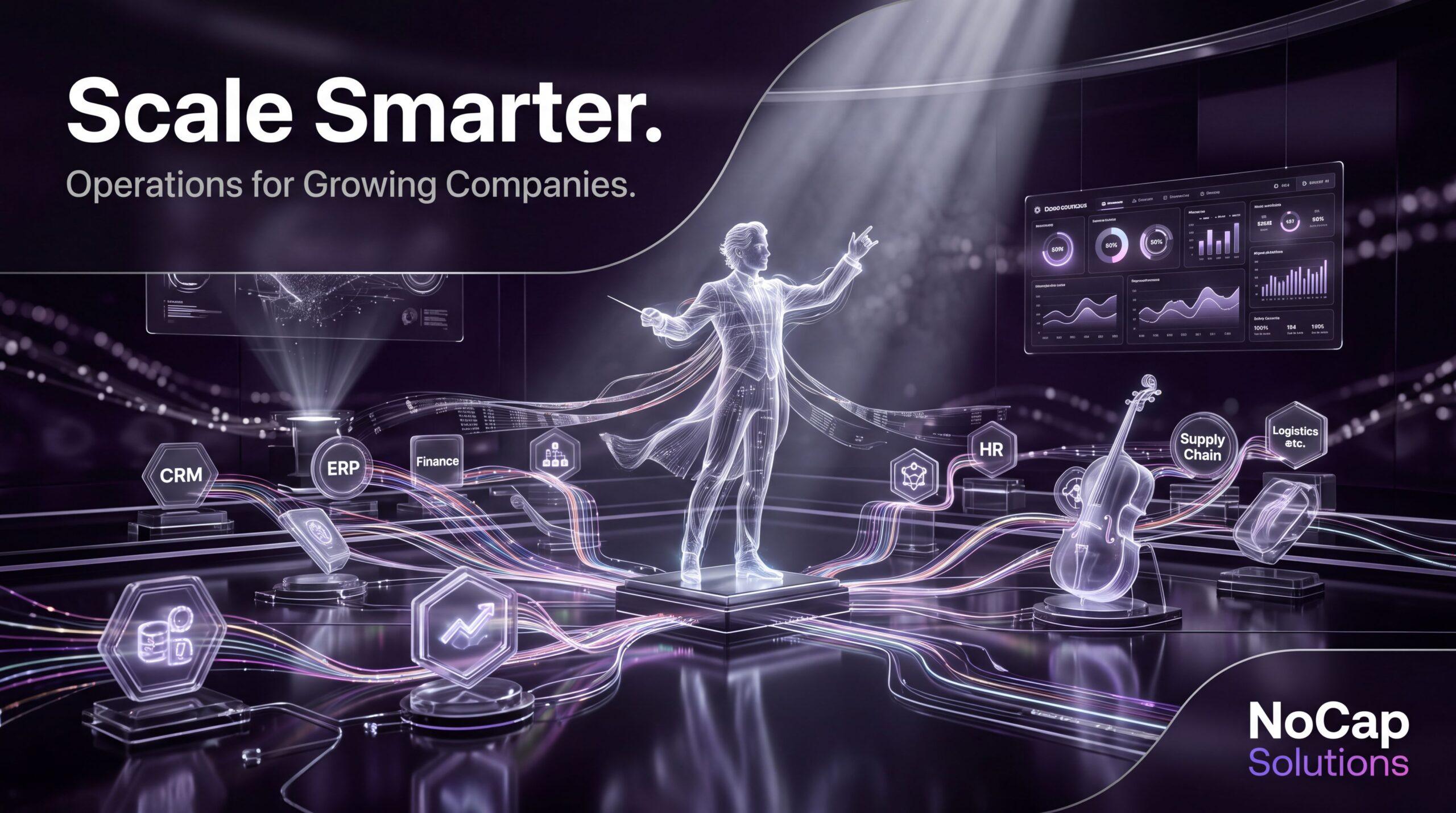
Imagine a symphony in which every instrument is playing its own tune – not harmonizing, but clashing. In business today, the technology stack is much the same. An ecosystem composed of HR systems, finance software, CRMs, project management tools, and workflow solutions must operate like a finely tuned orchestra. Yet all too often, each section sings in isolation, creating disjointed notes that rob the enterprise of efficiency. For organizations poised to double or triple in size, revisiting and optimizing the technology stack becomes not just a necessity but a strategic imperative.
Review the Entire Technology Ecosystem
In every business, success depends on a holistic approach to its operational backbones. Consider the myriad systems deployed across departments: HR platforms recording employee data, finance tools managing bills and forecasts, and customer relationship management systems tracking valuable interactions. As companies grow, these systems – and the processes built around them – must interact seamlessly. When one system lags or remains out of sync, the ripple effect can cause critical data to fall through the cracks, misinterpretations of performance metrics, or even delayed decision-making.
A review of the entire ecosystem must include mapping out every tool and technology in use. By performing this comprehensive audit, leaders can uncover redundancies and identify gaps that may hide beneath the surface. For instance, a business might be using separate applications for expense management and forecasting in finance, or separate workflow tools across divisions that, while each effective on its own, create overlapping functionalities. This fragmentation often leads to communication breakdowns across the organization – when finance debates with sales over the accuracy of figures, or marketing’s efforts get stifled by outdated project management practices.
This critical audit should never be a one-off event but rather a continuously recurring strategic review. As market conditions change and as teams adapt, so too must the technology that supports them. The result is a dynamic blueprint that ensures the entire system works as a unified whole. Establishing a rhythm for these reviews creates an environment where technological evolution is expected and embraced, rather than resisted.
Challenges of Disjointed Systems
As companies scale, it is not uncommon to witness a patchwork of technological solutions emerging from different points of need. Think of the time when one division adopts a well-known communication platform because of a colleague’s suggestion, while another division stubbornly sticks with a legacy system. Spreadsheets become the meeting ground for unintegrated data, and workflow tools that were meant to streamline operations instead create confusion. This mosaic of disjointed systems raises significant challenges:
- Data Inconsistencies: When different data sources do not speak a common language, companies grapple with multiple versions of the truth. For example, the finance department might report figures that conflict with sales forecasts simply because each team relies on different technology.
- Inhibited Communication: The lack of integration forces employees to manually transfer data from one system to another. This not only drains time but increases the probability of errors.
- Lost Efficiency: When team members must toggle between disjointed systems, valuable time is lost in trying to piece together a complete picture. Rather than focusing on decision-making, employees find themselves mired in administrative overhead.
The analogy here is like trying to conduct an orchestra where each section plays by its own sheet music. The resulting performance is chaotic and uncoordinated. Addressing these challenges involves consolidating technology platforms and ensuring that data flows naturally from one department to the next. For businesses looking to modernize, this isn’t just about switching software – it’s about fundamentally rethinking how information moves through the organization.
Evaluating and Streamlining Your Tech Stack
To streamline and integrate your technology ecosystem, begin with an honest evaluation of each individual tool’s role and effectiveness. Ask critical questions such as: Does this software align with the company’s growth objectives? Is it scalable? How well does it integrate with other systems? A successful evaluation involves not only identifying tools that are outdated or redundant but also recognizing where technology is underutilized.
One proven strategy is to consolidate systems that serve similar functions. Instead of juggling multiple applications that rarely share data, it is often better to invest in a robust, integrated solution that can handle multiple needs. For companies facing challenges with collaboration across HR, finance, and other departments, the answer lies in unification. Streamlining the tech stack leads to improvements in communication, operational efficiency, and data reliability.
A powerful example of streamlined technology in action is found in systems that offer live data integration. These solutions pull data from a variety of sources and consolidate it in real time – reducing the need for manual consolidation. When every department accesses a single, up-to-date source of truth, internal debates over numbers and figures become a thing of the past. Embracing this unified view is not simply about cost savings; it transforms the way decisions are made and executed across an organization.
The Critical Role of Dashboarding
One of the most potent tools in a modern tech stack is the dashboard – a command center that provides a consolidated view of key business metrics from various technological solutions. Dashboarding is not just a mechanism for visualization; it is the nerve center for real-time strategic decision-making. In today’s fast-paced business environment, waiting until the end of the month to review performance metrics is a luxury no growing company can afford.
NoCap Solutions’ Live Intelligence and Analytics Dashboards is an excellent example of how dashboarding can revolutionize operations. These dashboards pull data from every system that a business relies on and present a consolidated, real-time snapshot of crucial metrics. Such a solution enables leadership teams to see where discrepancies exist immediately, rather than waiting for monthly reports that are outdated by the time they are reviewed. With a consistent set of definitions and metrics applied across every department, disagreements about numbers become a relic of the past.
Visualizing data in one centralized location means that every decision is informed by the same timely, accurate data. This eliminates internal friction, ensures that departments can coordinate without having to cross-check each other’s figures, and keeps everyone aligned to the same strategic imperatives. The ability to act immediately on a metric moving outside its expected range – before it snowballs into a larger problem – is a key competitive advantage. And with dashboards that are configured to provide plain-English explanations for each metric, even the most complex datasets become accessible and actionable.
The Need for Periodic Analysis
The technology stack and its components are not static – what works well today may falter tomorrow. Business growth, market dynamics, and technological innovation constantly reshape the landscape. This is why it is critical to incorporate periodic analysis into your operational strategy. A one-time modernization effort may yield initial wins, but without regular checkups, slippage in system performance and alignment is inevitable.
Periodic analysis involves scheduled audits and evaluations of every facet of an organization’s tech ecosystem. It means asking questions such as: Are new users fully integrated? Has a recent acquisition introduced additional legacy systems? Are there new market tools that could provide a competitive advantage? Continuous refinement ensures that the tech stack evolves in parallel with the business. It’s akin to performing routine maintenance on a high-performance vehicle – failure to do so could lead to breakdowns or suboptimal performance when you need it most.
Incorporating these regular reviews into long-term planning creates a culture of continuous improvement. Metrics are not just monitored; they are interrogated to determine causality and opportunity. For instance, if a dashboard highlights a drop in sales forecast accuracy, the immediate response is to diagnose whether the root cause is a data integration issue, an outdated tool, or perhaps a misalignment in process. Each analysis not only fixes a problem but adds to a growing library of insights that improve future strategic planning.
Streamline Operational Processes and Embrace Automation
As operations expand, inefficiencies can begin to pile up like unaddressed potholes on a busy highway. Operational processes that once sufficed in a nascent enterprise soon reveal themselves as bottlenecks. Optimization here means more than cutting costs – it means streamlining workflows, eliminating manual interventions, and creating a coherent, automated system that lets talented teams focus on strategic initiatives rather than mundane tasks.
Identifying Bottlenecks and Manual Processes
In any operational framework, identifying pain points is the first step toward improvement. Bottlenecks manifest in almost every area: in prolonged response times, manual data entries, redundant meetings, and communication loops that could be automated. For instance, when teams rely on multiple disjointed systems, the process of reconciling information can become rife with errors and delays. Manual processes, like repetitive data entry or follow-up tasks in support workflows, drain valuable time and mental energy.
A practical approach is to map out each process end-to-end and then identify where delays or friction points occur. This could involve creating flowcharts or using process-mapping software to visualize steps from start to finish. Every pause and every check becomes a potential candidate for automation. When these inefficiencies are exposed, leadership can then prioritize improvements that offer the highest return in time savings and performance elevation.
Rethinking Meeting Rhythms and Communication
Meetings have traditionally formed the backbone of team communication, yet their overuse can become a significant drain on productivity. As companies grow, there is often an almost knee-jerk reaction to add more meetings to ensure everyone is aligned. However, excessive scheduling can interrupt work flow and prevent focused, uninterrupted work time. Leaders must instead strike a balance between necessary communication and operational autonomy.
Adapting meeting rhythms involves redefining which interactions require a scheduled discussion and which can be resolved through integrated project management tools or real-time dashboards. For example, when metrics and performance indicators are readily visible through a well-designed dashboard, as provided by NoCap Solutions’ Live Intelligence and Analytics Dashboards, there is less need for frequent update meetings. Teams can instead focus on critical problem-solving sessions only when anomalies are detected.
In many organizations, the trend is shifting from micromanaging with constant check-ins to empowering employees with the right tools for autonomous decision-making. When communication channels are clear and data is transparent, teams naturally reduce unnecessary meetings, leading to more innovation and less bureaucratic inertia.
Automation, AI, and the Generative AI Opportunity
At a time when artificial intelligence is capturing the imagination of industries worldwide, the temptation is to jump onto every new tool that promises automation or smarter operations. Yet, as with all tools, the key question must be: What problem is this technology solving? Whether through automation, AI, or the emerging field of generative AI, effective implementation requires a careful, measured approach.
Before investing in these advanced solutions, companies need to delve into underlying operational challenges. For example, if a high volume of repetitive tasks is clogging the workflow, then automation is not merely a luxury – it is an imperative. However, a hasty adoption of the latest AI tool simply because it is in vogue may lead to wasted resources and integration headaches if the core problem is not clearly defined.
The philosophy here is to always start with the fundamentals. Comprehensive process analysis should reveal the tasks that are best suited for automation, and only then should technology like generative AI be introduced in a way that aligns with those needs. The goal is to leverage these tools to not only streamline operations but also to create an environment where human ingenuity can focus on higher value activities rather than being mired in routine tasks.
Selecting the Right Tool for Operational Challenges
With a landscape crowded by emerging AI solutions, choosing the right tool is crucial. Businesses must be cautious of trends and ensure that the selected solution addresses specific operational challenges rather than just following the market buzz. It is not uncommon to see a premature investment in technology that promises the moon but fails to recognize the unique needs and nuances of a business.
Evaluating potential tools requires a firm understanding of internal pain points. For example, if a company struggles with data disintegration across various systems, the solution should be one that consolidates and harmonizes data rather than adding another layer of complexity. An imperative part of this evaluation process is to assess how well a prospective tool integrates with the existing ecosystem and whether it can scale in tandem with business growth.
Consider the value of a centralized dashboard that gathers insights from every department. When every piece of vital information is brought into one place, the decision-making process becomes more coherent and informed. In this context, NoCap Solutions’ Live Intelligence and Analytics Dashboards exemplify a pragmatic solution that not only aggregates data but also provides an analysis narrative for each metric in plain language. This approach ensures that leadership teams not only have access to numbers but also understand what those numbers truly mean for their strategic objectives.
Moreover, the process of selecting the right operational tool should always involve pilots, feedback loops, and a willingness to retrench if the solution does not meet expectations. A successful integration does not result from a one-off purchase decision but rather from continuous collaboration among IT, operations, and business leadership.
Cultivate a High-Performance Team Culture
The strongest technology in the world is only as effective as the team behind it. Even the most sophisticated dashboards or cutting-edge automation tools mean little if the people using them are not supported by a high-performance culture. Building such a culture is as much about disciplined recruitment and onboarding as it is about continuous feedback and clear role delineation.
Building and Nurturing Talent: Recruitment to Onboarding
A robust team culture begins at the very first interaction with a prospective employee. The recruitment process must be rigorous and meticulously designed to attract candidates not only with the right skills but also with the right mindset for growth. A well-defined recruitment strategy ensures that new hires bring with them the values and competencies that align with the organization’s long-term vision.
Onboarding is equally important. Proper onboarding processes that include detailed training programs, clear expectations, and accessible support systems help new team members integrate smoothly into the operational rhythm of the company. When every new hire receives a structured introduction to the role, and when leadership sets clear performance expectations, the risk of misalignment is minimized. In many ways, this mirrors the discipline of a well-drilled sports team, where each player understands their position and how their role contributes to the overall winning strategy.
During onboarding, it is beneficial to introduce tools that track progress, capture feedback, and visualize growth. In addition to traditional training programs, real-time dashboards – such as those provided by NoCap Solutions’ Live Intelligence and Analytics Dashboards – can help new employees understand how their contributions affect the broader organizational performance. Such tools not only reinforce strategic goals but also foster a sense of ownership and accountability among team members.
Performance Reviews, Feedback, and the Art of Tough Conversations
Building a high-performance culture means continuously elevating individual and collective performance. Regular performance reviews and timely feedback sessions are essential to nourishing this culture. However, constructive criticism is not always easy. Leaders must create a safe space where tough conversations are framed as opportunities for growth rather than punitive measures.
An effective performance review system involves objective metrics that track progress over time. When integrated with a dashboarding solution that offers a consolidated view of individual and departmental performance, these reviews become data-driven rather than opinion-based. The conversation then shifts from personal blame to collective problem-solving. The ability to leverage real-time data to back up feedback not only provides transparency but also builds trust. In this way, feedback becomes a catalyst for performance improvement rather than a barrier to collaboration.
Furthermore, incorporating regular feedback loops into the daily fabric of work can help preempt performance issues before they become systemic. Managers and team leads who cultivate a habit of frequent, short check-ins often find that they can address concerns promptly and sustain ongoing improvement. This continuous improvement approach ultimately leads to a more nimble and resilient organization – one that evolves as the business scales.
Defining Roles and Responsibilities for Maximum Impact
Teams struggle when their roles and responsibilities are ambiguous. One of the critical components of scalable operations is ensuring that every team member is clear about what is expected of them. Just as players on a sports team have clearly defined roles, each department and individual should know how they contribute to the overall strategy.
Role clarity eliminates redundancy and minimizes conflict. When every employee knows which decisions they are empowered to make and where they fit within the larger operational framework, the workflow becomes smoother and more efficient. The practice of defining roles goes hand in hand with an effective onboarding process, as well as with performance reviews. In time, this leads to a culture where accountability is woven into the fabric of the organization.
To facilitate this process, tools that map out responsibilities, relay progress, and offer real-time alerts when tasks slip can be invaluable. For instance, integrating a live data dashboard can offer immediate insight into both individual and team performance. NoCap Solutions’ Live Intelligence and Analytics Dashboards not only tracks metrics but also highlights where bottlenecks occur, ensuring that every team member is aware of their impact on the overall workflow. The result is clear communication, reduced friction, and an empowered team that understands the importance of every role.
Lessons from Sports Teams: The Power of Team Dynamics
Sports teams offer compelling lessons in teamwork and performance. In many sports, success hinges on more than just the individual talent of players – it requires a deep understanding of how each member’s strengths can be leveraged for the collective good. Coaches study each player, understanding what motivates them, how they best contribute to the team, and how to bring out their best during high-pressure scenarios. This approach is directly applicable to a high-performance business culture.
Effective leadership in business is about building a team that works in concert. It is vital to draw parallels between sports teams and corporate teams by encouraging communication, cooperation, and mutual respect. When every team member understands their role and sees how their work contributes to a larger goal, they become more engaged and motivated. Even in times of crisis, a well-connected team can rely on each other for support, much like a sports team rallying after a setback.
Leaders should invest in regular team-building sessions and strategic off-sites that allow for open dialogue and cross-departmental interaction. Such activities not only boost morale but also underline the importance of unity. In an ideal scenario, the team functions as a single, cohesive unit – where individual brilliance is amplified by seamless collaboration. It’s about turning a group of talented individuals into a high-performance team where the sum is greater than its parts.
Continuous Improvement: The Secret Weapon for Scalability
In today’s ever-changing business landscape, stagnation is the enemy of growth. Continuous improvement – both at an individual and collective level – is essential for sustained success. A culture that embraces regular, incremental improvements is poised to adapt more swiftly to market changes, technological disruptions, or internal challenges.
The process of continuous improvement is deeply iterative. It starts with objective measurement and honest reflection on current performance. When gaps are identified, processes are reengineered, roles refined, and strategies fine-tuned. The implementation of feedback systems, performance dashboards, and agile methodologies all plays a role in fostering an environment driven by constant evolution.
For example, consider how periodic performance reviews coupled with real-time data visualization empower team members to understand their own progress. NoCap Solutions’ Live Intelligence and Analytics Dashboards provide a live feed of performance metrics that can quickly highlight areas for improvement. This dynamic approach not only drives individual accountability but also fuels collective ambition – ensuring that the entire organization continually refines its practices to pursue excellence.
Moreover, a commitment to continuous improvement signals to clients and investors that the organization is not complacent. It conveys a message that every facet – from technological infrastructure to team performance – is under constant scrutiny for ways to excel further. This proactive stance can differentiate a company in a competitive marketplace, positioning it as a leader that is prepared to innovate and evolve with industry trends.
By reexamining the technology stack, streamlining operational processes, and cultivating a high-performance team culture, businesses can unlock new levels of efficiency and strategic advantage. The journey toward these improvements is not a one-time overhaul but a dynamic process that evolves alongside the business itself. Leaders must remain agile, continuously questioning existing systems and willing to adopt new approaches that foster unity, clarity, and proactive problem-solving.
For companies committed to achieving long-term operational excellence, the integration of a unified data view cannot be overstated. In today’s fast-paced environment, where every minute counts, having a centralized source of truth provides not only the competitive edge needed to act swiftly but also builds an organizational culture that values transparency and precision. When every executive can instantly access a single version of the truth, the decisions made are both timely and accurate – transforming potential risks into opportunities.
Take, for instance, the challenge of integrating disparate data systems into one coherent whole. It mirrors the complexity of managing multiple teams who have never operated together before. To achieve harmonious synchronization between departments, the first step is to let go of outdated methods and embrace integrated solutions that streamline communication. This is where modern dashboard solutions come into play. By aggregating data from HR, finance, CRM systems, and more, NoCap Solutions’ Live Intelligence and Analytics Dashboards serve as a beacon for clarity – ensuring that everyone from the boardroom to the frontlines is on the same page.
Similarly, automating routine operations and removing redundant processes frees up valuable human capital. Instead of manually transferring data between systems or scheduling unnecessary meetings, technology-driven automation paves the way for a more agile operational model. When routine tasks are delegated to intelligent systems, teams can focus on strategic initiatives that drive growth and innovation. The ability to quickly identify and eliminate operational bottlenecks is not just about speed – it’s about creating a sustainable workflow that adjusts with the pace of business evolution.
Furthermore, as teams expand, it becomes imperative to instill a culture of continuous feedback and improvement. It is in the crucible of regular performance evaluations and honest, data-backed discourse that true growth is forged. High-performance team dynamics, much like championship sports teams, thrive on clarity of purpose, well-defined roles, and unyielding commitment to collective success. In this environment, every team member can see how their contributions ripple outward, influencing not only their immediate circle but also the organization on a broader scale.
The lessons drawn from such integrative and automated approaches extend far beyond internal metrics. For instance, when decision-making is data-driven and aligned across departments, businesses are better positioned to respond to market shifts, customer needs, and competitive threats. This adaptability is the foundation of sustainable growth, ensuring that operations remain robust even in the face of disruption.
By periodically reassessing technology, processes, and team performance, organizations create a virtuous cycle of improvement. This cycle begins with a candid appraisal of current methodologies and evolves into targeted interventions – such as consolidating software, reconfiguring meeting structures, or embracing the right mix of automation and human insight. Ultimately, efficiency is not an endpoint; it is a continual journey of learning, adaptation, and growth.
In conclusion, companies that excel in the modern business arena know that their technology stack, operational processes, and team culture must be continually optimized. Visionary leaders understand that the tools they use are not merely support mechanisms, but integral components of a strategic system designed to drive success. Investing in a comprehensive technology review, embracing automation where it counts, and fostering a culture of high performance are the cornerstones of operational excellence. These endeavors not only prepare businesses for scaling but also empower them to stay ahead in fast-paced and ever-changing markets.
By taking these steps, a modern enterprise can ensure that it does not struggle with legacy systems or inefficient processes. Instead, it emerges as a nimble, integrated powerhouse where data flows seamlessly, processes are streamlined, and teams are aligned with a shared vision. As the business grows, so does the need for effective communication, faster decision-making, and smarter integrations – all elements that converge harmoniously when the right technology and team culture are in place.
A strategic solution that ties these elements together is the investment in sophisticated, real-time dashboarding technology. When every facet of the business is captured in a single, intuitive view, leadership can respond to challenges with agility. NoCap Solutions’ Live Intelligence and Analytics Dashboards not only epitomizes this integration but also stands as a testament to how intelligent design can transform raw data into actionable insights. In today’s competitive world, such integration isn’t just beneficial – it’s essential.
Maintaining a competitive edge in the digital age requires embracing a mindset where operational efficiency and high-performance team culture are continually refined. With technologies that consolidate disparate systems into a single, actionable interface, and with a leadership team that values clear communication and relentless improvement, businesses can overcome the challenges posed by disjointed processes. The result is a resilient organization that not only survives but thrives amid constant change.
Every strategic move – from rethinking routine meetings to automating bottleneck processes – feeds into a broader vision of an agile, accountable, and forward-thinking organization. As each component of the operation aligns with the overall mission, it creates a self-reinforcing ecosystem where technology and talent drive one another to achieve new heights.
Embracing these principles, companies can set the stage for accelerated growth and enhanced performance. When every team member, every process, and every technological tool is operating in sync, the seemingly insurmountable challenges of scale become manageable. It becomes less about keeping pace with change and more about setting the pace for innovation and excellence.
With each periodic review of their technology stack, coupled with targeted automation initiatives and a culture that prizes excellence, organizations transform themselves into agile entities prepared to tackle market volatility with confidence. Every operational insight gained, every efficiency unlocked, and every feedback loop engaged adds to a repository of strength – fueling future growth and competitive advantage.
Ultimately, the convergence of a well-integrated tech ecosystem, streamlined processes, and a high-performance team culture heralds an era where businesses are not just reactive, but proactively secure. In such a future, decision-makers operate with unparalleled clarity; teams perform with razor-sharp focus; and the organization as a whole turns every challenge into an opportunity for evolution.
By continuously optimizing the technology stack, stripping away operational bottlenecks, and nurturing a team culture built on clarity and continuous improvement, companies are not merely chasing efficiency – they are building a resilient foundation for lasting success. In this transformative journey, every innovation, every feedback session, and every integrated data point converges to illuminate a path toward sustained competitive advantage.
In summary, the path to operational excellence is paved with strategic reviews, technological consolidation, and a steadfast commitment to team empowerment. Constant introspection coupled with a willingness to adapt ensures a robust, scalable organization ready to meet the challenges of tomorrow. For those looking to harness the power of real-time data, aligned processes, and robust team dynamics, investing in solutions such as NoCap Solutions’ Live Intelligence and Analytics Dashboards is more than a technological upgrade – it is a strategic leap toward a more agile, data-driven future.
Embracing these strategies today lays the groundwork for a tomorrow where every decision is informed, every process is seamless, and every team member contributes to a legacy of operational mastery. The harmony achieved through unified systems and high-performance cultures is the hallmark of organizations that lead rather than follow – a testament to the power of integrating technology, automation, and human ingenuity into one cohesive strategy.